
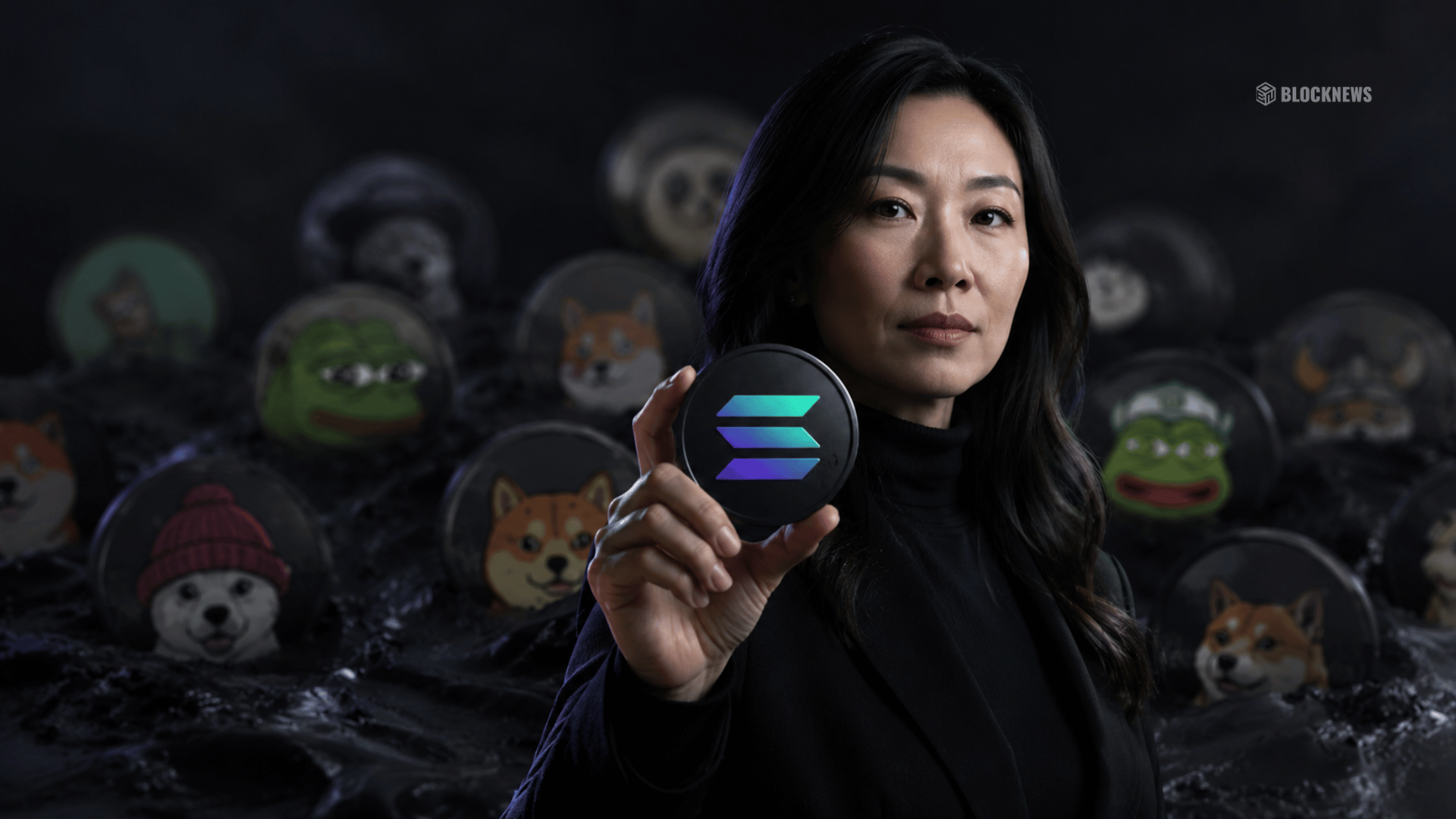
- Solana President Lily Liu called memecoins a “production test” for the network, not its core identity
- Co-founder Anatoly Yakovenko publicly described memecoins and NFTs as “digital slop”
- Solana’s long-term strategy appears increasingly focused on finance, tokenization, and AI infrastructure
Solana leadership is openly debating what the blockchain should actually represent as memecoins continue dominating attention across the ecosystem. While traders still associate Solana heavily with speculative meme token activity, Solana Foundation President Lily Liu says that was never supposed to be the chain’s endgame.
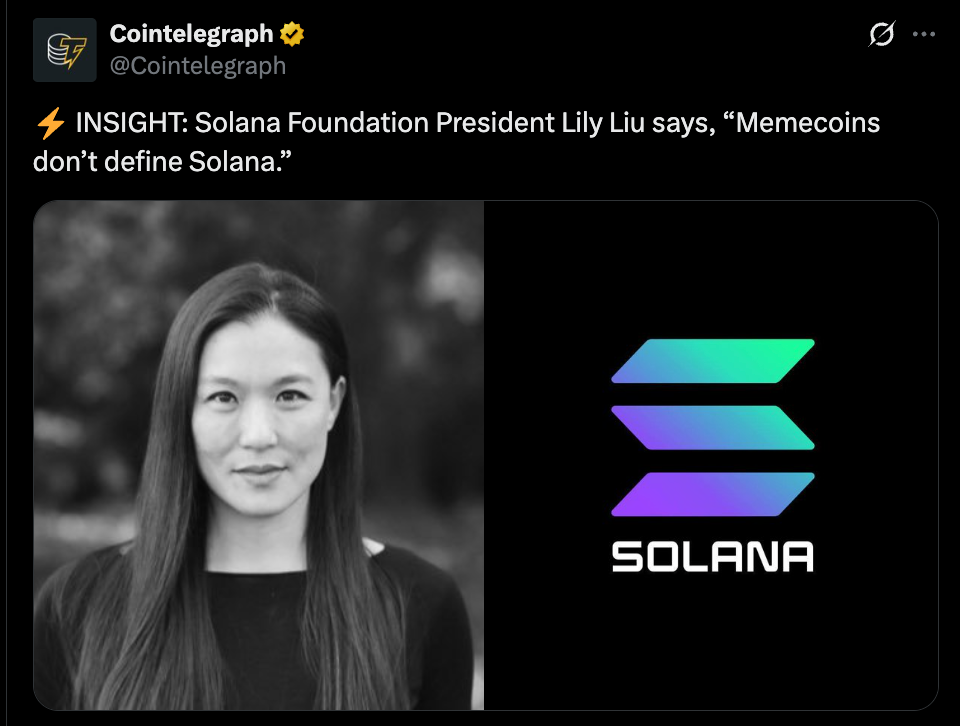
According to Liu, memecoins are better understood as large-scale stress tests for Solana’s infrastructure rather than the platform’s defining purpose. In her view, every wave of speculative trading essentially acts as a live performance benchmark proving Solana can handle massive transaction volume under real market conditions.
Solana Leadership Isn’t Fully Aligned
What makes the situation interesting is that Solana’s own co-founder, Anatoly Yakovenko, appears far less enthusiastic about memecoin culture itself. Yakovenko has publicly described NFTs and memecoins as “digital slop” lacking intrinsic value, creating a surprisingly visible split in messaging between two of the chain’s most recognizable leaders.
Most major crypto projects would likely avoid letting that kind of disagreement play out publicly. Solana, however, seems comfortable allowing both perspectives to exist openly, even if it creates very different narratives around the ecosystem’s future.
The Real Solana Vision Is Much Bigger
Liu’s broader vision for Solana appears centered around tokenized finance, institutional infrastructure, and AI rather than purely speculative token mania. She has been openly critical of past blockchain industry attempts to force adoption through gaming and vague “Web3” marketing campaigns, arguing many lacked genuine economic utility.
Instead, Liu sees Solana evolving into a broad financial infrastructure layer capable of supporting everything from institutional money market products to decentralized trading systems and AI-integrated financial applications.
In that framework, memecoins simply become one category of assets living alongside more serious financial products rather than defining the network itself.
Memecoins Still Carry Cultural Weight
Even so, Solana’s memecoin ecosystem remains one of the biggest drivers of activity, liquidity, and public attention surrounding the chain today. Massive trading frenzies tied to tokens like $TRUMP and $MELANIA helped generate enormous transaction volume while also reinforcing Solana’s reputation as crypto’s fastest-moving speculative playground.
The challenge moving forward may be whether Solana can successfully attract institutional financial adoption while still carrying the cultural baggage tied to memecoin speculation.
For now, Solana leadership seems to agree on one thing at least: the network’s long-term future is supposed to be much bigger than dog coins alone.