

- Forward Industries attempted to acquire Solana Company through an all-stock merger proposal.
- Solana Company rejected the offer without entering discussions, highlighting growing competition among SOL treasury firms.
- Public companies now collectively hold more than 18.4 million SOL as the race for institutional dominance intensifies.
The battle to become the leading public-market gateway to Solana is getting more competitive.
Forward Industries (NASDAQ: FWDI) recently revealed that it approached Solana Company (NASDAQ: HSDT) with a merger proposal aimed at creating a larger and more influential Solana-focused treasury business. The offer, however, never made it to the negotiation stage. According to a statement released on June 15, HSDT’s board voted to reject the proposal outright and declined further discussions.
The development arrives at a time when Solana treasury companies are growing rapidly, accumulating millions of SOL as investors look for alternative ways to gain exposure to the ecosystem through traditional markets.
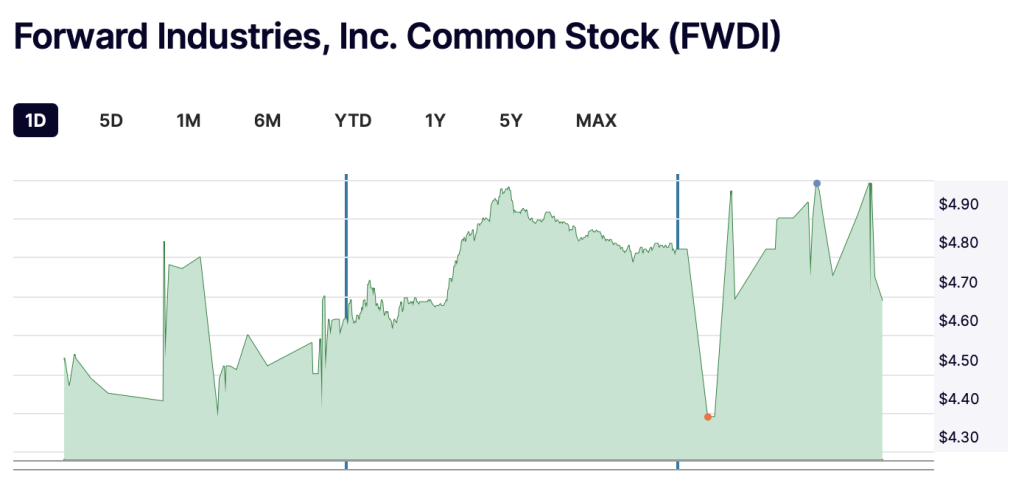
Forward Industries Wants to Build a Solana Giant
Forward Industries framed the proposed merger as more than just a business combination. The company described it as part of a broader strategy to consolidate the expanding Solana treasury sector and strengthen its position as a major institutional player.
Under the proposed deal, HSDT shareholders would have received 0.386 newly issued Forward shares for every HSDT share they owned. Based on market prices at the time, the offer represented roughly a 10% premium.
Forward believes the industry is reaching a point where scale matters.
Management argued that combining resources would create stronger operational efficiencies, improve shareholder value, and accelerate development across the broader Solana ecosystem. The company even compared its long-term vision to becoming the “Berkshire Hathaway of Solana,” a bold goal that reflects how seriously it views its treasury strategy.
Beyond Simply Holding SOL
Unlike many crypto treasury firms that primarily accumulate digital assets, Forward says it has already expanded deeper into the Solana ecosystem.
The company currently controls more than 7 million SOL, making it the largest publicly disclosed Solana treasury holder. Much of that position is actively deployed rather than sitting idle. Forward stakes a significant portion of its holdings through validator infrastructure, operates the fwdSOL liquid staking token, and allocates capital into Solana-native protocols.
According to Chief Investment Officer Ryan Navi, the proposed combination would have benefited both companies while creating additional opportunities for shareholders and the broader Solana community.
Even so, HSDT was not interested.
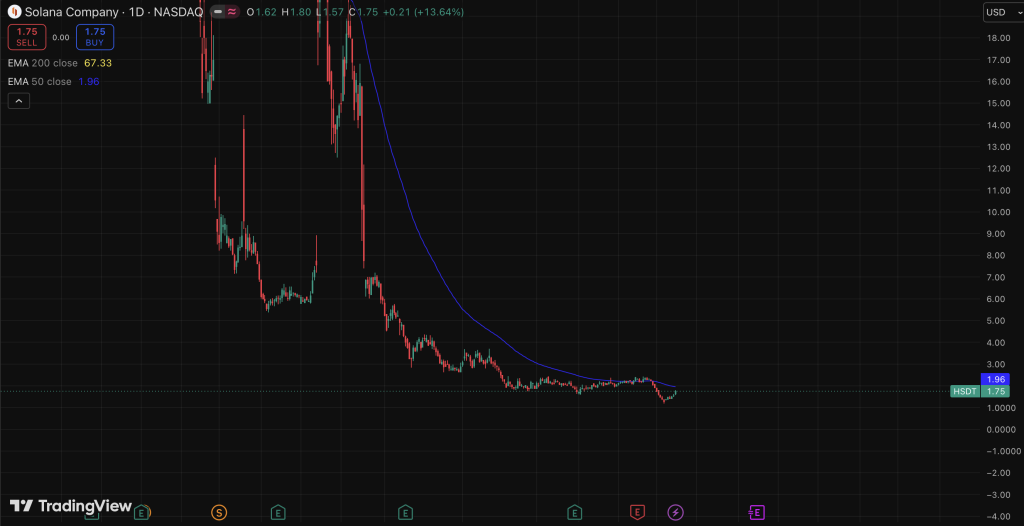
Competition Is Intensifying Across the Solana Treasury Sector
The rejected proposal shines a spotlight on just how crowded the Solana treasury landscape has become.
Data from CoinGecko shows that public companies collectively hold more than 18.4 million SOL, valued at approximately $1.39 billion. Forward leads the pack with around 7 million SOL, while HSDT controls roughly 2.06 million SOL.
Several other companies have also entered the race.
Firms such as DeFi Development Corp., Upexi, and Sharps Technology have accumulated sizable Solana positions as treasury strategies increasingly expand beyond Bitcoin. What started as a niche corporate crypto trend is quickly becoming a highly competitive segment of the market.
As more companies pursue similar strategies, investors are beginning to separate winners from laggards.
Market Valuations Are Starting to Diverge
One of the more interesting trends emerging from the sector is the growing valuation gap between treasury companies.
Forward currently trades at approximately 0.69 times its modified net asset value (mNAV), while some competitors command significant premiums above the value of their underlying holdings. That difference suggests investors are becoming more selective when evaluating treasury models.
And that could create pressure.
If companies struggle to attract liquidity, institutional interest, or shareholder attention on their own, consolidation may become increasingly attractive. The failed proposal to HSDT could be an early sign of that shift rather than an isolated event.
Solana Treasury Firms Are Evolving
Perhaps the biggest takeaway is that these businesses are no longer positioning themselves as passive crypto holding vehicles.
Across the sector, treasury companies are becoming active ecosystem participants. They are building validator operations, launching staking products, investing directly into protocols, and exploring blockchain-native financial services.
That evolution is especially visible within the Solana ecosystem, where firms are competing to become the preferred institutional access point for SOL exposure.
Forward also noted that its shares are expected to join both the Russell 2000 and Russell 3000 indexes in the coming weeks. Inclusion in those benchmarks could increase visibility among institutional investors and strengthen its standing within traditional financial markets.
Whether additional merger attempts follow remains uncertain. What is clear, though, is that the race to dominate the Solana treasury sector is only getting started.