
- There is no universal answer for how much XRP is “enough,” as ideal holdings depend on timing and personal finances
- Early adopters accumulated large XRP positions at far lower prices, making comparisons with new investors misleading
- Long-term success is tied to disciplined strategy and affordability, not matching community benchmarks
The question of how much XRP someone should hold never really goes away. It keeps resurfacing inside the XRP community, especially now that prices are far higher than they were in the early days. As XRP’s value has grown, so has the gap between early adopters and newer investors, and that gap fuels a lot of debate.
One recent voice weighing in was community commentator Oscar Ramos. His message was simple, and maybe a bit uncomfortable for some. There is no universal number. No perfect XRP target that works for everyone. According to Ramos, what’s “enough” depends entirely on personal finances, timing, and what someone actually wants out of the investment.
Early Buyers Played a Very Different Game
Ramos pointed out something that often gets overlooked in online discussions. Many of the large XRP holders people admire today didn’t build those positions under current market conditions. They entered when prices were dramatically lower, often well below the $1 mark.
He used his own experience as an example. Ramos accumulated a sizable XRP position when the token traded around $0.50. At those levels, reaching a six-figure token count required meaningful capital, sure, but it was still realistic for many retail investors at the time.
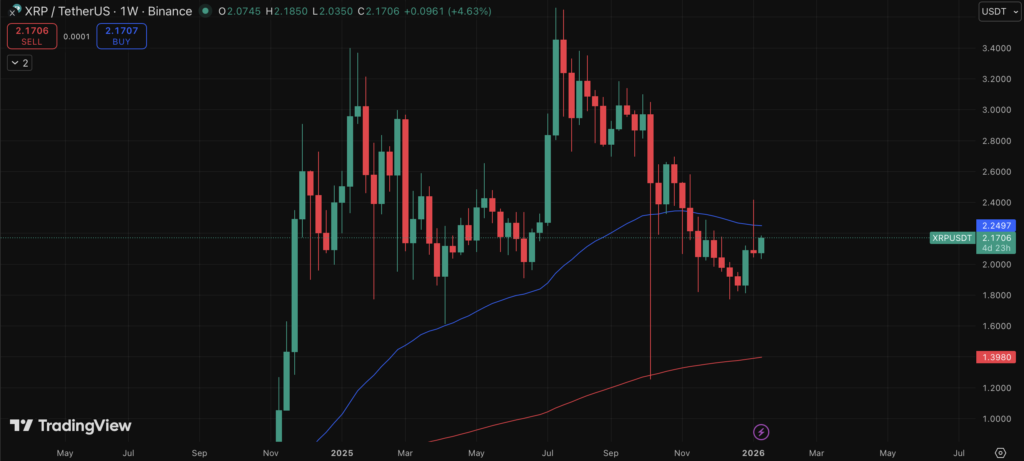
Fast forward to today, with XRP trading near $2.07, and the math changes quickly. Accumulating the same number of tokens would now require more than four times the original investment. That doesn’t reflect weaker conviction from newer buyers. It reflects higher prices and higher barriers to entry.
Why Cost Basis Changes Everything
A major point Ramos emphasized was cost basis. Holdings that look massive today often appear that way because they were built early, not because the investor had extraordinary buying power.
As assets mature and prices trend upward, accumulating large quantities naturally becomes harder. That’s just how markets work. Timing plays a huge role in shaping long-term outcomes, and ignoring that reality leads to unfair comparisons.
Ramos warned newer investors against anchoring expectations to the experiences of early adopters. Market conditions evolve. Strategies that made sense five or ten years ago don’t always translate cleanly into the present. Trying to replicate someone else’s path, without accounting for price changes, usually leads to frustration.
Personal Limits Matter More Than Community Numbers
Instead of pushing any fixed XRP target, Ramos encouraged people to focus on what they can comfortably afford. Risk tolerance, income, and broader financial responsibilities should drive allocation decisions, not community benchmarks or social media flexing.
He also pushed back against the idea that portfolio size should act as a status symbol. That mindset, he argued, distracts from what actually matters, discipline, patience, and having a strategy that fits your own situation.
Everyone enters an asset at a different stage in its lifecycle. Comparing holdings across wildly different entry points can be misleading, and sometimes discouraging. What matters more is whether an investment aligns with a person’s broader financial plan, not how it stacks up against someone else’s wallet.
A Range of Views, No Single Answer
Ramos’s perspective lines up with opinions shared by other XRP-focused analysts over recent cycles. Some point out that even relatively modest XRP holdings rank surprisingly high within wallet distribution data. Others argue for larger exposure if someone believes strongly in XRP’s long-term upside.
Those differences highlight a core truth. Holding targets are subjective. They’re shaped by assumptions about future price, risk appetite, and personal circumstances.
While optimism around XRP’s long-term potential remains common, Ramos and others caution against letting bullish narratives drive accumulation blindly. Price appreciation isn’t guaranteed. Every investment carries risk, even ones with strong communities behind them.
In the end, how much XRP is “enough” isn’t a number pulled from a forum post or influencer thread. It’s a personal calculation, balancing opportunity, affordability, and long-term goals, not a race to match early adopters who played the game under very different conditions.