
- XRP is driven by real-world payment and banking utility, not hype alone.
- Strong ETF inflows signal growing institutional interest.
- Regulatory clarity could further legitimize Ripple’s role in traditional finance.
Ripple’s XRP sits in a different category than most tokens in the crypto market. While many projects rely heavily on narrative and community momentum, XRP has spent years embedding itself into real financial infrastructure. From cross-border payments for fintech firms to deeper integrations with banks experimenting with blockchain-based settlement, Ripple is steadily pushing crypto into places where it actually gets used.
That distinction matters more than price action on any single day.
Utility First, Speculation Second
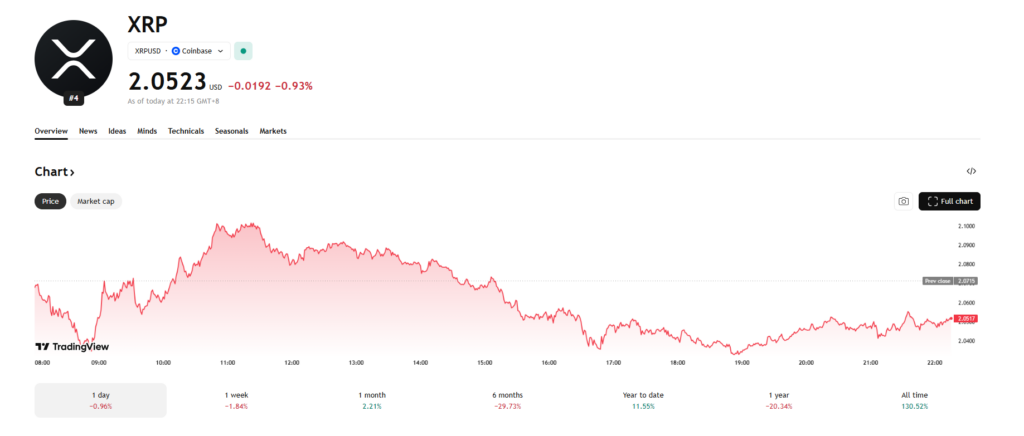
Most crypto tokens live and die by attention cycles. XRP hasn’t needed that crutch in the same way. Its value proposition is tied to payments, liquidity, and institutional rails that already exist. That’s why some long-term investors view the current price near $2 as less about excitement and more about positioning. If utility compounds over time, valuation tends to follow, even if it’s slow and uneven.
ETF Demand Is Adding a New Layer
Another signal showing up is institutional interest. XRP-linked ETFs have already attracted more than $1.3 billion in assets since launch, a notable figure given how selective institutional flows have been. Several large asset managers are still waiting on additional approvals, and expectations remain high that more XRP-focused products will be cleared. For retail investors, that kind of demand offers something rare in crypto: visible, regulated participation.
Regulation Could Be a Catalyst, Not a Threat
The upcoming Senate markup of the Clarity Act adds another dimension. The legislation aims to define how banks can hold and interact with digital assets under custody. If passed, it could formalize parts of the crypto sector that have operated in legal gray zones for years. Ripple sits unusually close to this conversation, given its long-standing relationships with financial institutions and regulators.
That positioning is hard to replicate.
Why Long-Term Holders Are Paying Attention
XRP’s demand story doesn’t hinge on memes or short squeezes. It’s built around adoption, compliance, and infrastructure. That doesn’t guarantee upside, but it does change the risk profile. For investors willing to think in years rather than weeks, XRP represents a bet on integration rather than disruption for disruption’s sake.
Conclusion
Ripple’s XRP isn’t trying to win the hype cycle. It’s trying to become part of the financial system. If that effort continues to gain traction through ETFs, regulation, and real-world use, the long-term payoff may matter more than short-term volatility. That’s the bet many holders are making, quietly.