

- NYSE and ICE are building an on-chain platform for tokenized securities trading
- The system supports continuous trading, instant settlement, and stablecoin funding
- Major banks are providing tokenized deposit infrastructure to support liquidity
The New York Stock Exchange and its parent company Intercontinental Exchange are building a new platform designed to support the trading and on-chain settlement of tokenized securities. According to a Monday press release, the system is being developed pending regulatory approvals and will introduce continuous trading, instant settlement, and stablecoin-based funding. The move signals a major step toward modernizing traditional capital markets without abandoning regulatory guardrails.
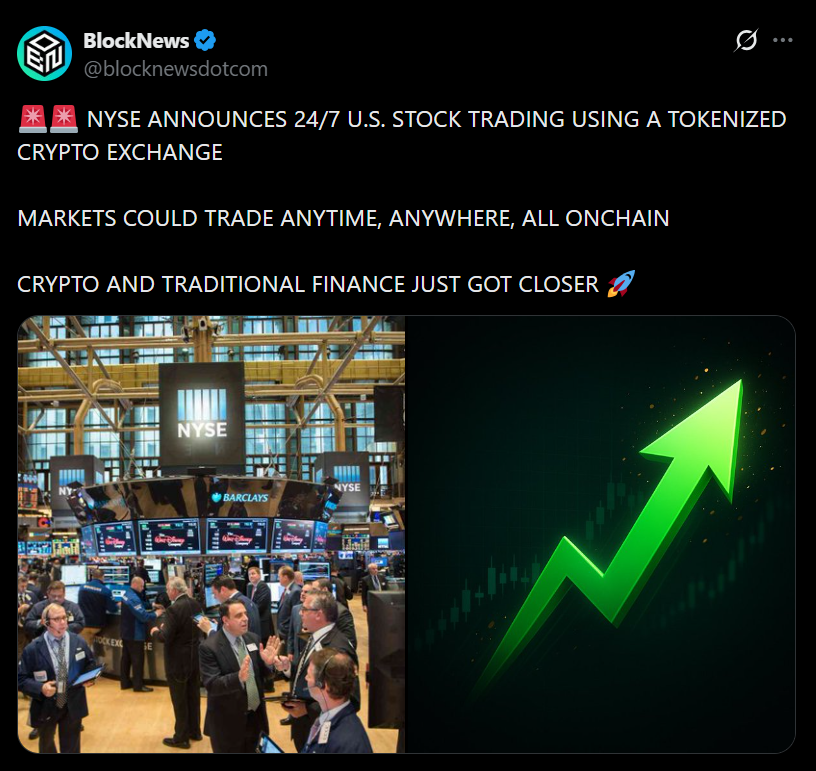
How the On-Chain Platform Will Work
The proposed platform will allow tokenized securities to trade around the clock while settling directly on-chain, eliminating the delays associated with traditional clearing cycles. Investors holding tokenized shares will still receive dividends and governance rights, mirroring the experience of conventional equity ownership. The system is also being designed to support multiple blockchain networks, giving institutions flexibility while maintaining compliance standards.
NYSE Group President Lynn Martin said the goal is to merge trust and regulation with modern infrastructure. In her view, on-chain solutions can modernize markets without compromising investor protections. The platform is meant to uphold the same regulatory standards that define NYSE today, while using blockchain technology to make markets faster and more efficient.
ICE’s Broader Digital Market Strategy
This initiative fits into ICE’s wider push toward digital-first market infrastructure. The company is exploring 24/7 clearing, tokenized deposits, and cross-border fund management as part of a long-term strategy to modernize global finance. Rather than building isolated products, ICE appears to be assembling a full on-chain stack that spans trading, settlement, custody, and capital formation.
Michael Blaugrund, ICE’s Vice President of Strategic Initiatives, described tokenized securities as a pivotal step toward fully on-chain market operations. The objective is to move traditional financial workflows onto blockchain rails while preserving institutional-grade reliability.
Banks Are Already Laying the Liquidity Rails
To support the platform, ICE is working with major financial institutions including BNY and Citi. These banks are expanding tokenized deposit infrastructure that allows value to move across blockchain networks in near real time, while keeping funds inside regulated banking systems. BNY has already activated tokenized deposits that can be used for liquidity management, margin requirements, and cross-border funding.
Industry participants such as ICE, Circle, and Baillie Gifford are involved in the initial rollout, underscoring growing coordination between exchanges, banks, and blockchain-native firms.
Why This Matters for Global Markets
If approved, the platform would mark one of the most significant steps by a legacy exchange toward on-chain capital markets. Instead of disrupting regulation, NYSE and ICE are embedding blockchain into existing frameworks. The result could be a financial system that trades continuously, settles instantly, and operates globally, without sacrificing trust or compliance.