

- Ledger users’ names and contact details were exposed through a breach at third-party payment processor Global-e, not Ledger’s own systems.
- Ledger confirmed no wallets, private keys, recovery phrases, or payment information were compromised.
- Users are urged to stay alert for phishing attempts as investigations and customer outreach continue.
Hardware wallet maker Ledger is dealing with another data exposure incident, this time stemming from its third-party payment processor, Global-e. The issue does not involve Ledger’s core systems, but it has still raised concerns across the crypto community given the company’s past history with data breaches.
What Happened in the Global-e Incident
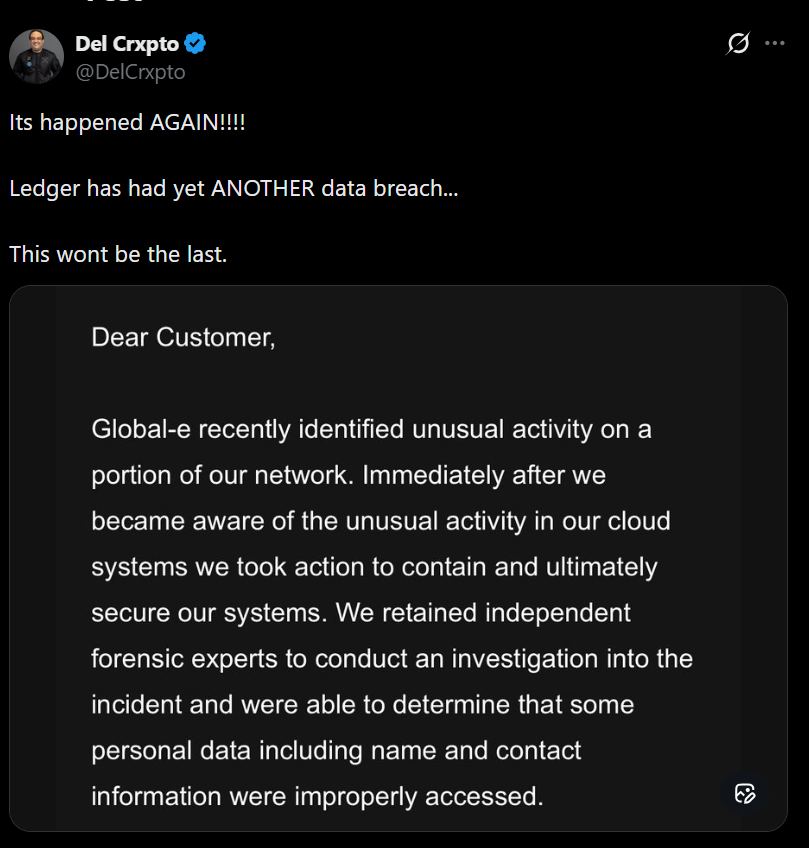
According to an email sent by Global-e to customers and first shared publicly by blockchain investigator ZachXBT, unauthorized access occurred within Global-e’s cloud infrastructure. The exposed information reportedly includes Ledger customers’ names and contact details.
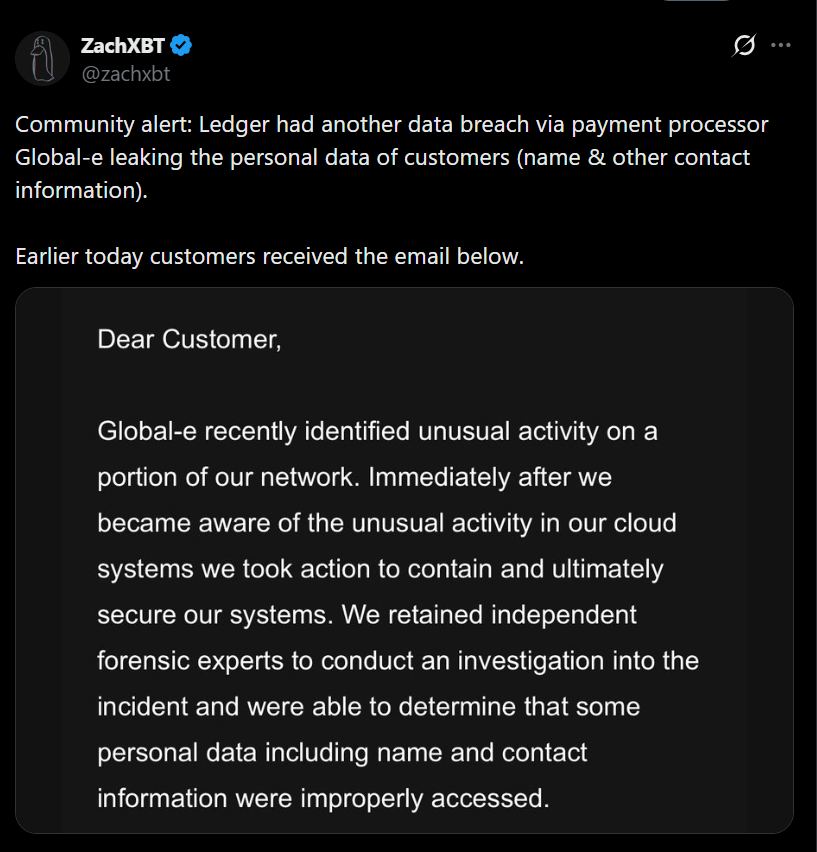
Global-e did not disclose how many users were affected or when the breach took place. The company said it detected unusual activity, implemented security controls, and launched an internal investigation with the help of independent forensic experts. That investigation confirmed improper access to certain personal data.
Ledger Responds to Breach Concerns
Ledger clarified that the incident did not involve its own hardware, software, or internal platforms. In a statement to CoinDesk, the company emphasized that Global-e acts as the data controller and merchant of record for certain purchases made on Ledger.com, which is why Global-e issued the customer notification.
Ledger stressed that no payment information, recovery phrases, private keys, or blockchain-related data were exposed. Because Ledger devices are self-custodial, Global-e has no access to users’ seed phrases, balances, or digital asset credentials.
The company added that it is working alongside Global-e to ensure affected users receive relevant updates and guidance.
Why This Matters for Ledger Users
This incident revives lingering concerns from Ledger’s past security issues. In 2020, a breach involving e-commerce partner Shopify exposed data from roughly 270,000 customers. In 2023, Ledger-related exploits tied to DeFi integrations resulted in losses nearing $500,000.
While this latest case is limited to personal contact information and occurred outside Ledger’s own systems, it reinforces the importance of caution. Users are being advised to remain vigilant against phishing attempts, impersonation scams, and suspicious communications.
The Bigger Picture
Ledger framed the incident as part of a broader industry-wide struggle against cybercrime targeting crypto users and e-commerce platforms. Although the core security of Ledger wallets remains intact, third-party data exposures continue to be a risk factor across the ecosystem.
For now, there is no indication of compromised wallets or funds, but users should stay alert as further details emerge.