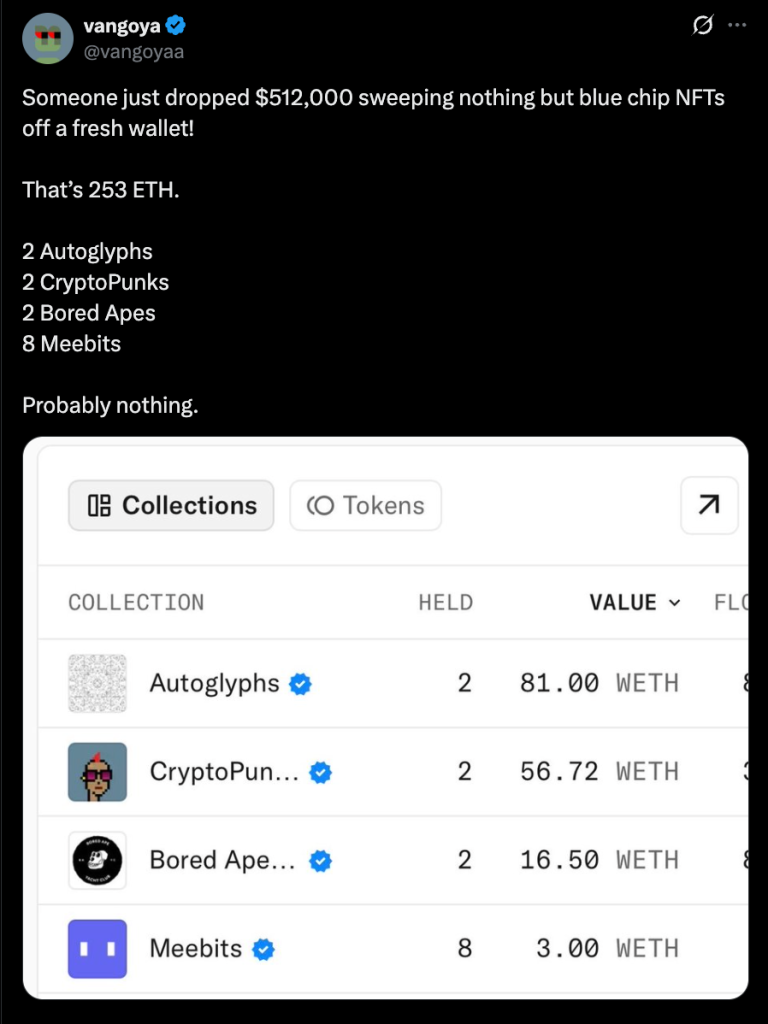
- A newly funded wallet spent approximately 253 ETH, worth about $512,000, acquiring blue-chip NFTs in a single buying spree.
- The purchases included Autoglyphs, CryptoPunks, Bored Apes, and Meebits, some of the most iconic collections in NFT history.
- Large acquisitions of established NFT assets may signal growing confidence as crypto liquidity continues to improve.
The NFT market may be quieter than it was during the frenzy of 2021, but significant moves still catch the attention of experienced collectors. This week, a newly funded wallet sparked discussion across the NFT community after spending roughly 253 ETH, or about $512,000, on a carefully selected basket of blue-chip digital collectibles.
The purchases were completed within a relatively short period and included two Autoglyphs, two CryptoPunks, two Bored Apes, and eight Meebits. While half a million dollars is not enough to single-handedly shift the broader NFT market, it is certainly enough to make traders ask an important question: why these collections, and why now?
A Portfolio Built Around NFT History
What stands out most about the purchases is the quality and historical significance of the assets involved. This was not a wallet chasing newly launched collections or speculative meme projects. Instead, the buyer focused almost entirely on collections that helped shape the NFT industry itself.
CryptoPunks remain one of the most recognizable NFT collections ever created and are widely viewed as digital artifacts from the earliest days of the space. Autoglyphs hold a similarly important place in NFT history as one of the first fully on-chain generative art projects. Meanwhile, Bored Ape Yacht Club and Meebits became some of the defining brands of the last cycle and continue to maintain active communities and strong recognition.
Viewed together, the purchases resemble a traditional blue-chip portfolio, except built entirely around digital collectibles.
Sophisticated Buyers Often Think Differently
Speculative traders tend to focus on momentum, hunting for the next collection that could deliver outsized returns in a short period of time. Larger investors often approach the market differently. They typically prioritize scarcity, cultural significance, brand recognition, and long-term relevance.
That may be exactly what this wallet is doing. Rather than spreading capital across dozens of unproven projects, the buyer concentrated funds into assets that have already survived multiple market cycles. These collections have weathered dramatic bull runs, brutal corrections, and years of changing sentiment while continuing to attract collectors and builders.
The distinction is important because capital often flows differently during market recoveries. Early speculation chases hype. Long-term conviction tends to seek quality.
NFT Markets May Be Entering a New Phase
The NFT landscape today looks very different from what it did during the peak of the last bull market. Trading volumes remain lower, and many collections that once generated enormous attention have largely disappeared. Yet several of the strongest projects have continued building despite difficult market conditions.
That resilience may be starting to matter more as broader crypto liquidity improves. As digital ownership becomes increasingly accepted and blockchain technology expands into gaming, collectibles, and tokenized assets, investors may begin focusing more heavily on projects with proven staying power rather than short-term excitement.
In many ways, the NFT market appears to be maturing. The conversation is gradually shifting away from rapid speculation and toward questions of cultural value, community strength, and historical importance.
Confidence Could Be Returning to Legacy Collections
One wallet does not define an entire market, and it would be premature to draw sweeping conclusions from a single purchase. Still, large acquisitions often provide clues about where sophisticated buyers believe value exists.
This latest accumulation targeted some of the most respected collections in NFT history. There were no obscure projects, no viral experiments, and no lottery-ticket bets. Instead, the focus was squarely on assets that have already established themselves as cornerstones of digital ownership.
If capital is quietly rotating back into proven NFT collections, it may suggest the market is entering a new chapter—one built less on hype and more on conviction. Whether this becomes a broader trend remains to be seen, but it is certainly a move worth watching.