

- Grayscale’s ETHE became the first US spot crypto ETF to distribute Ethereum staking rewards
- Staking transforms Ethereum ETFs from pure price trackers into yield-generating products
- Investors still face ETH price risk and potential tax complexity despite the added income
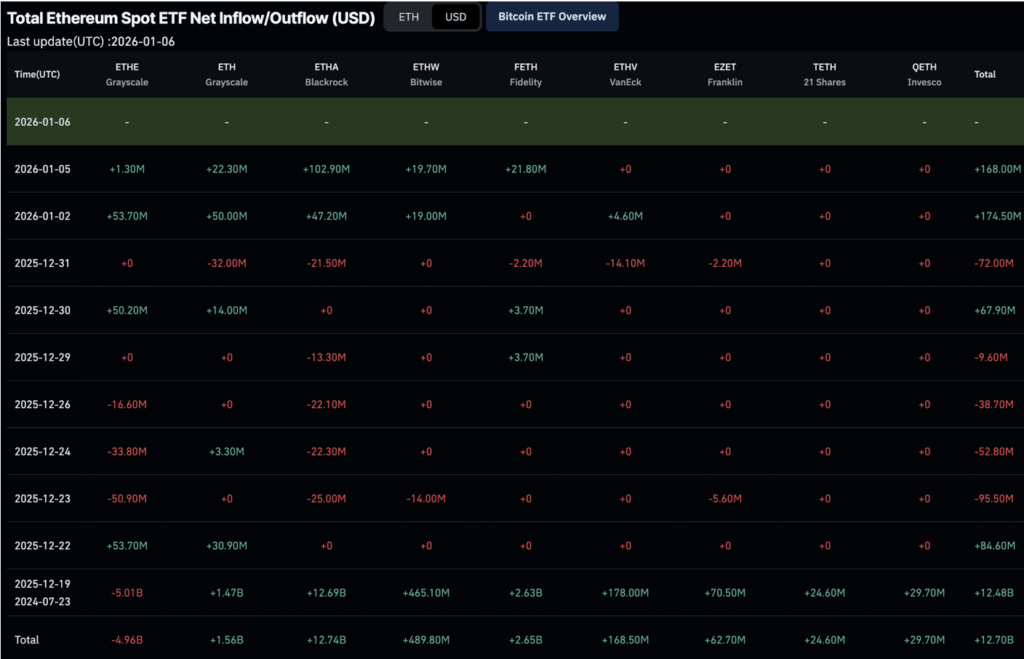
Grayscale’s Ethereum ETF, ETHE, has officially paid out its first round of Ethereum staking rewards to shareholders, marking a first for any US-listed spot crypto product. ETH USD hovered near the $3,250 level following the announcement, up roughly 2.5% over the past 24 hours, as early momentum across the broader crypto market continues into 2026. While price action grabbed the headlines, the more meaningful shift may be happening under the surface.
For the first time, investors are looking at regulated Ethereum products not only as price trackers, but as yield-bearing assets. This payout nudges Ethereum ETFs beyond simple chart exposure and into actual participation in the network itself. That subtle change sets the stage for a competitive scramble among issuers, all aiming to offer not just exposure, but income.
Why Ethereum ETF Staking Payouts Actually Matter
Staking Ethereum means locking up ETH to help secure the network, earning rewards in return, a bit like interest, though with more moving parts and risk. Until now, US spot ETFs completely skipped this layer, even though staking has long been a core part of Ethereum’s economic model. Investors who wanted yield had to go on-chain, manage wallets, or rely on third-party platforms.
Grayscale flipped that script in October 2025 when it enabled staking across its US Ethereum products. The first payout is now live, with ETHE shareholders receiving $0.083178 per share for rewards earned between October 6 and year-end, for holders on record as of January 5. It’s not life-changing income, but it is real on-chain yield.
What makes this notable is the simplicity. If you held ETHE through a normal brokerage account, you earned Ethereum staking rewards without touching DeFi, running validators, or moving assets off an exchange. For many traditional investors, that ease of access feels like a genuine breakthrough, even if it arrives quietly.
From Price Exposure to Yield Competition
Before staking was introduced, Ethereum ETFs served a single purpose: track ETH USD as closely as possible. Anyone chasing yield had to step outside the ETF wrapper entirely, which added friction, technical complexity, and perceived risk. Regulatory pressure from the SEC reinforced that structure for years.
That stance shifted in 2025 after updated guidance and changes to IRS rules opened the door for staking inside regulated products. Suddenly, Ethereum ETFs could do more than just mirror price, they could earn. Yield now becomes a differentiator, right alongside fees and tracking accuracy.
This is where things get interesting. Investors comparing Ethereum ETFs may soon ask new questions. Who stakes consistently, how much yield gets passed through after fees, and how often distributions actually hit accounts. The ETF landscape doesn’t look the same once those variables matter.
How Staking ETFs Could Reshape ETH USD Investing
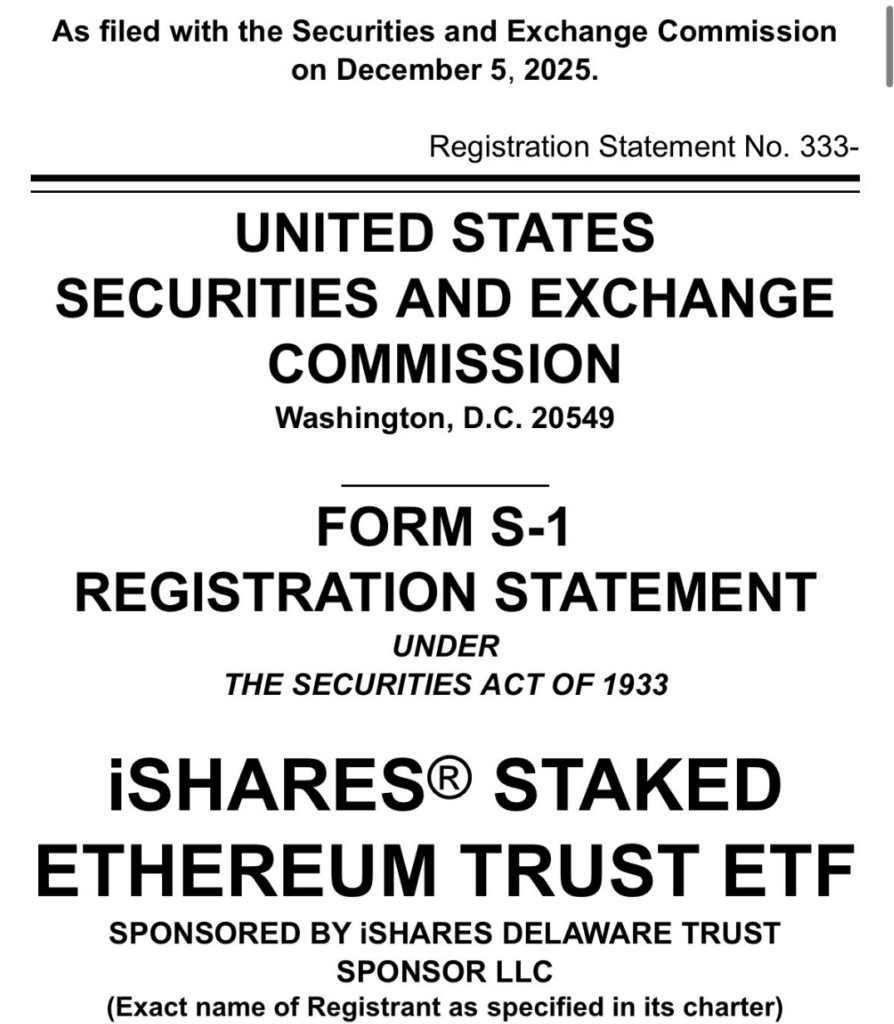
Grayscale isn’t acting in isolation. The firm manages roughly $31 billion across its products and faces growing pressure from rivals like 21Shares and Bitwise, both of which are pushing staking features for Ethereum and Solana ETFs. It feels a bit like banks rediscovering interest payments, once one moves, the rest have to follow or risk falling behind.
Regulation sits at the center of this shift. The Securities Act of 1933 emphasizes transparency, not operational micromanagement, and Grayscale is using that flexibility to its advantage. Recent guidance from the US Treasury and IRS clarified how ETFs can stake proof-of-stake assets and pass rewards to investors, creating what officials described as a clearer path for retail participation.
That clarity is already changing behavior. Yield-enabled crypto ETFs are starting to appear alongside broader institutional trends, and Ethereum sits at the front of that curve. As staking becomes normalized inside ETFs, ETH may start to look more compelling compared to assets that offer no income at all.
The Risks Investors Should Not Ignore
Staking through an ETF does remove many technical headaches, but it doesn’t erase crypto risk. Ethereum price volatility still dominates outcomes, and a sharp drawdown can easily overwhelm the incremental yield staking provides. A few percentage points of rewards won’t soften a 30% price drop, no matter how smoothly they’re distributed.
There’s also the tax angle. Staking rewards are generally treated as income, and even if they’re reinvested automatically, they may still trigger taxable events. The updated IRS framework helps, but it doesn’t eliminate complexity, and many investors are discovering that professional tax advice becomes part of the cost.
For newer participants, staking-enabled ETFs should be viewed as a convenience, not an invitation to overcommit. If you already want Ethereum exposure and prefer the familiarity of a brokerage account, these products may make sense. Just don’t mistake yield for safety, or simplicity for reduced risk.