

- Grayscale files for HYPE ETF tracking Hyperliquid token
- Hyperliquid dominates onchain perpetual futures trading
- ETF approval could expand institutional access to HYPE
Grayscale is pushing deeper into the altcoin ETF race with a new filing tied to Hyperliquid’s native token, HYPE. The proposed Grayscale HYPE ETF, which would trade under the ticker GHYP if approved, aims to give investors direct exposure to one of the fastest-growing projects in the crypto space. It’s another signal that institutional players are starting to look beyond Bitcoin and Ethereum, and maybe a bit faster than expected.
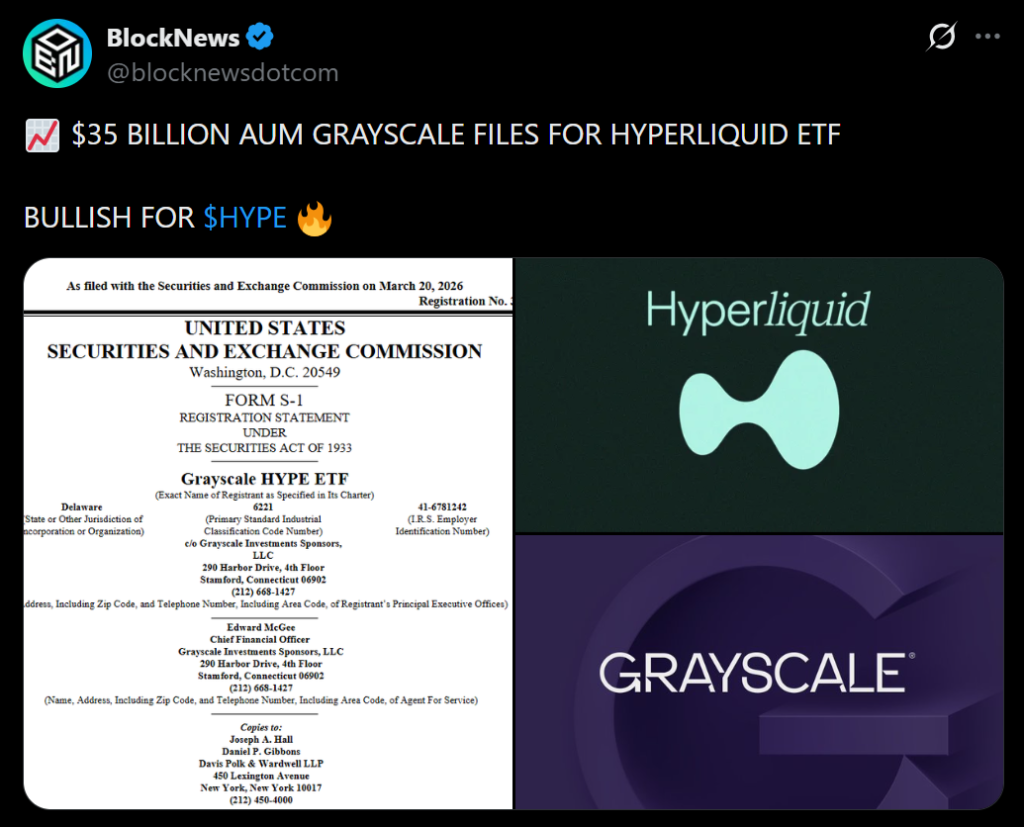
What makes this filing interesting is the timing. Hyperliquid is still relatively new, but it has already positioned itself as the leading venue for onchain perpetual futures trading. That kind of traction doesn’t usually go unnoticed for long, especially when capital is actively searching for the next major growth narrative.
Hyperliquid’s Rise Is Driving ETF Interest
Hyperliquid isn’t just another Layer 1 trying to compete on general-purpose use cases. It’s focused specifically on decentralized perpetuals, and so far, it’s been dominating that niche. In a market where trading volume often defines relevance, that gives it a strong foundation.
The network’s performance and growing user base have made it stand out, even among more established projects. That likely explains why multiple ETF issuers, including Bitwise and 21Shares, have already moved to file similar products. Grayscale entering the mix adds more weight to the idea that HYPE is becoming institutionally relevant.
Structure Mirrors Existing Crypto ETFs
The proposed ETF would follow a familiar structure. Coinbase Custody is set to handle asset storage, while pricing data would come from established benchmarks. This mirrors the setup used in other crypto ETFs, which helps make the product more accessible and understandable for traditional investors.
One notable limitation, though, is staking. The filing confirms that HYPE staking is currently not included, although there’s a possibility it could be added later if regulatory conditions allow. That reflects a broader trend, staking features remain a gray area for regulators, even as spot crypto ETFs gain traction.
Regulatory Momentum Is Building
The SEC’s evolving stance on crypto ETFs is another key factor here. Under its current leadership, there has been a noticeable increase in approvals and filings across the space. While not every product will get the green light, the direction is clearly shifting toward broader acceptance.
Still, Hyperliquid faces an added layer of complexity. The platform is currently restricted for U.S. users, which creates an interesting contrast, strong global adoption paired with limited domestic access. Efforts like the Hyperliquid Policy Center suggest that may change over time, but for now, it remains a factor.
Institutional Interest Is Expanding Beyond BTC and ETH
This filing highlights a broader trend. Institutional crypto exposure is no longer limited to Bitcoin and Ethereum. As new sectors gain traction, especially derivatives-focused platforms like Hyperliquid, capital is starting to follow.
Whether the HYPE ETF gets approved or not, the signal is already clear. Projects that capture real usage and liquidity are moving onto the institutional radar much faster than before. And if that continues, the next phase of crypto ETFs could look very different from the first.