

- Sharplink reported a $734 million loss as Ethereum’s price declined during the year.
- The company currently holds about 867,000 ETH valued near $1.75 billion.
- Staking revenue increased 50% quarter-over-quarter despite the market downturn.
Sharplink revealed a steep loss of roughly $734 million for the year, a result that largely reflected Ethereum’s sharp decline across the same period. The company had posted about $10.1 million in profit the year before, but its strategy changed dramatically once it pivoted away from sports gambling marketing and moved toward becoming a major Ethereum treasury company.
That shift came with significant exposure to ETH’s price swings. The Miami-based firm now holds around 867,000 Ethereum, which was valued close to $1.75 billion on Monday when ETH hovered near the $2,000 mark, based on CoinGecko data. Among corporate holders, Sharplink currently ranks second only to BitMine Immersion Technologies, whose Ethereum treasury sits around $9 billion under the oversight of Fundstrat’s Tom Lee.
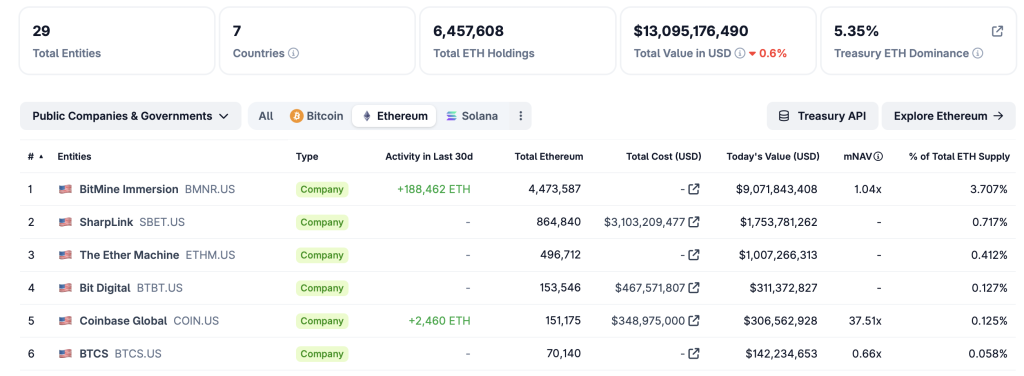
Declining ETH Value Drives Annual Loss
Much of Sharplink’s loss came directly from changes in the value of its Ethereum holdings. The company reported that the value of those assets dropped about $616 million over the year. On top of that, a $140 million impairment charge tied to tokens representing staked ETH added further pressure to the balance sheet.
There was at least some offset. Sharplink recorded about $55 million in gains from conversions between standard ETH holdings and staked tokens. Still, the broader effect of Ethereum’s price decline outweighed those gains, leaving the firm with a sizable yearly loss.
Interestingly though, one area of the business showed stronger growth.
Staking Revenue Continues to Rise
Even as the value of ETH fluctuated, Sharplink’s staking operations generated more income. The company reported that revenue from staking rose roughly 50% quarter-over-quarter, increasing to $15.3 million from $10.3 million previously.
So far, the firm has earned around 14,500 ETH through staking rewards, which equates to roughly $9.4 million at recent prices.
CEO Joseph Chalom described 2025 as a “defining year” for the company in a shareholder letter. The former BlackRock executive pointed out that Sharplink raised around $3.2 billion during its transition toward a crypto-focused treasury model.
According to Chalom, the company was built specifically to withstand the kind of volatility that frequently appears in crypto markets — including Ethereum’s fall from nearly $5,000 last August.
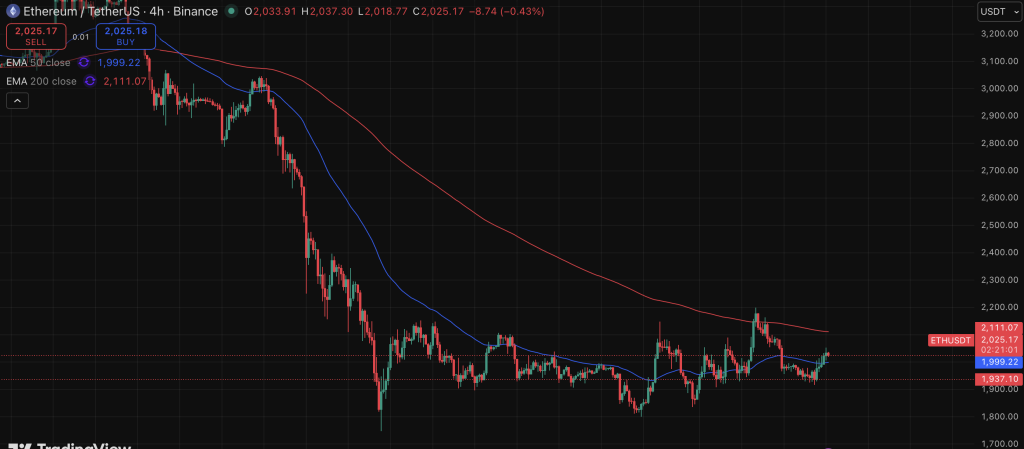
Market Conditions Still Impact Share Performance
Despite the long-term strategy, Sharplink’s stock has still reflected the market turbulence. Shares were trading near $7.41 on Monday, according to Yahoo Finance, with little movement during the day.
Over the past six months, however, the company’s stock has dropped about 55%. That decline slightly exceeds Ethereum’s own price drop of roughly 53% during the same timeframe.
At the end of the year, Sharplink reported holding about $30.4 million in cash and stablecoins, providing a small liquidity buffer while the firm continues building its Ethereum treasury strategy.
Sharplink Expands Role Inside Ethereum Ecosystem
Sharplink’s business model now centers heavily around Ethereum’s network itself. The company earns revenue by participating in transaction validation — a process known as staking — which helps secure the blockchain while generating rewards for validators.
Beyond staking, Sharplink has also deployed capital into decentralized finance protocols in search of higher yield opportunities.
The company currently holds about 4 ETH per share, and increasing that metric remains one of its key strategic goals. Expanding partnerships across Ethereum’s broader ecosystem is also part of the plan.
Joe Lubin, Ethereum co-founder and CEO of Consensys, who also serves as Sharplink’s chairman, emphasized that institutional adoption around Ethereum is continuing to grow.
He pointed to the rapid rise of stablecoins and tokenized assets as evidence that large financial institutions are increasingly exploring blockchain infrastructure. According to Lubin, Sharplink aims to position itself right in the middle of that shift — acting as a bridge between traditional financial markets and the expanding Ethereum ecosystem.