

- Ethereum fell below $2,000 for the first time since March amid broader crypto market weakness.
- Analysts warn that losing the $1,975 support level could push ETH toward $1,750.
- Spot Ethereum ETFs have recorded 12 straight days of outflows, signaling softer institutional demand.
Ethereum suffered another sharp setback during the latest crypto market downturn, slipping more than 4% and falling below the important $2,000 level for the first time in nearly two months. The move comes as traders continue reducing risk exposure across digital assets, while weak on-chain activity and ongoing ETF outflows add further pressure. For many investors, the break below $2,000 wasn’t just another price drop—it was a psychological blow to sentiment that had already been deteriorating for weeks.
Fresh data from blockchain analytics platform CryptoQuant suggests the Ethereum network is showing signs of increasing friction. The firm reported a gradual rise in failed transactions alongside a noticeable increase in ETH flowing onto exchanges. Neither metric is particularly encouraging. According to CryptoQuant, Ethereum remains trapped in a broad sideways trading range, but growing exchange inflows often signal that holders may be preparing to sell. Combined with weaker network performance, the setup points toward a bearish short-term outlook for ETH.
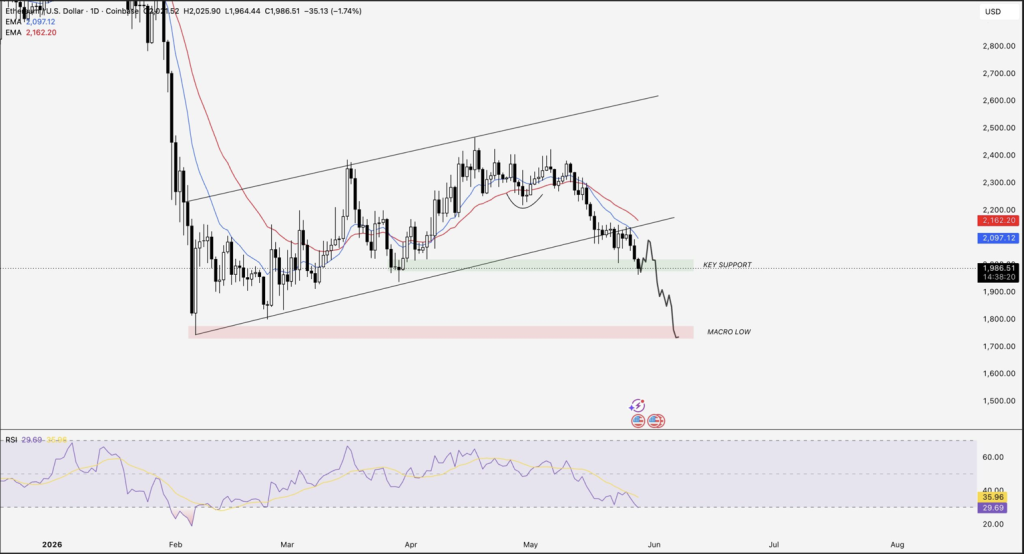
Analysts Warn of Further Downside Risk
Some market observers believe Ethereum may not be finished falling. Crypto analyst Ardi highlighted the $1,975 level as a critical support zone, warning that a failure to hold above it could open the door to deeper losses. If sellers maintain control, Ethereum could eventually revisit the lower end of its current trading range near $1,750, a level that many traders are now watching closely.
The concern isn’t just technical. Momentum has weakened significantly compared to earlier in the year, and buyers have struggled to regain control after several failed recovery attempts. Every bounce seems to be met with fresh selling pressure, creating an environment where confidence remains fragile. It’s not panic just yet, but the market definitely feels uneasy.
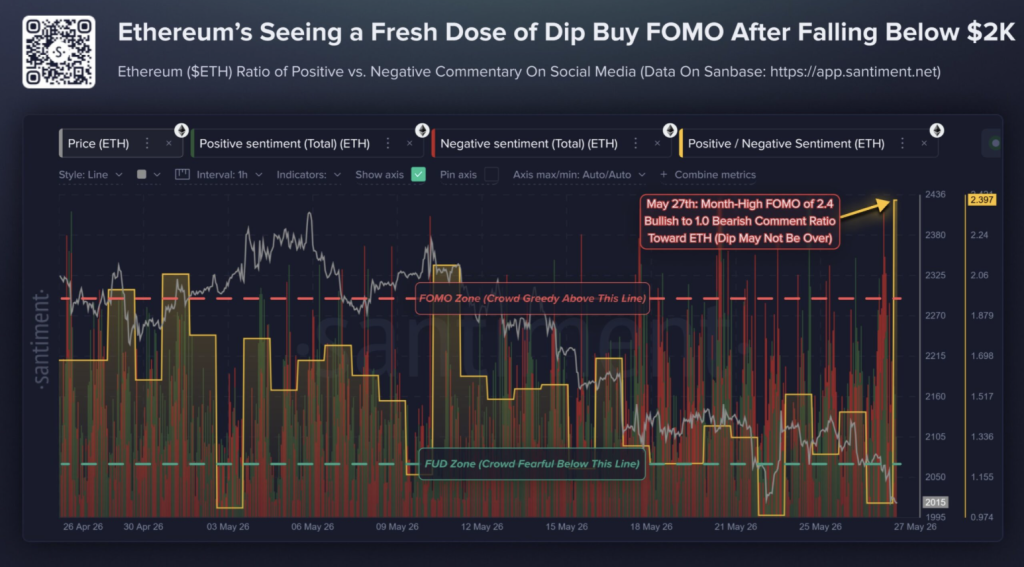
Retail Traders Rush to Buy the Dip
Despite the recent weakness, retail investors aren’t backing away. In fact, many appear increasingly eager to buy Ethereum at lower prices. According to analytics firm Santiment, ETH dropping below $2,000 triggered a surge in “buy the dip” discussions across social media platforms, with traders expressing confidence that the correction represents an opportunity rather than a warning sign.
Historically, however, that kind of enthusiasm hasn’t always been bullish. Santiment noted that strong retail optimism during declining markets has often preceded additional downside. During previous corrections, crowd sentiment frequently turned positive before prices made another leg lower. In other words, when everyone starts calling the bottom, the actual bottom sometimes remains frustratingly out of reach.
The firm added that truly attractive buying opportunities tend to emerge after speculative excitement fades. When traders stop aggressively calling for rebounds and sentiment cools off, that’s often when markets begin establishing stronger foundations for recovery.
Ethereum ETF Outflows Continue to Mount
Institutional demand, which many investors hoped would support prices this year, has also shown signs of weakening. Spot Ethereum ETFs have now recorded outflows for 12 consecutive trading sessions, highlighting a clear shift in investor behavior. On May 27 alone, total net outflows reached approximately $67.15 million, according to data from Farside Investors.
BlackRock’s ETHA fund accounted for the majority of those withdrawals, seeing roughly $65.1 million leave the fund in a single day. While ETF flows can reverse quickly, the recent trend suggests institutions are becoming more cautious toward Ethereum in the current environment.
For now, Ethereum finds itself facing pressure from several directions at once—weak technical momentum, declining network activity, persistent ETF outflows, and cautious investor sentiment. Long-term believers remain optimistic, but until buyers return in force, ETH may continue struggling to regain lost ground. The coming weeks could prove critical in determining whether the recent breakdown becomes a temporary shakeout or the start of a deeper correction.