

- Public Bitcoin miners have sold over 15,000 BTC since the 2025 price peak
- Falling hashprice and post-halving rewards are squeezing mining profitability
- Miner selling remains moderate compared to past capitulation phases
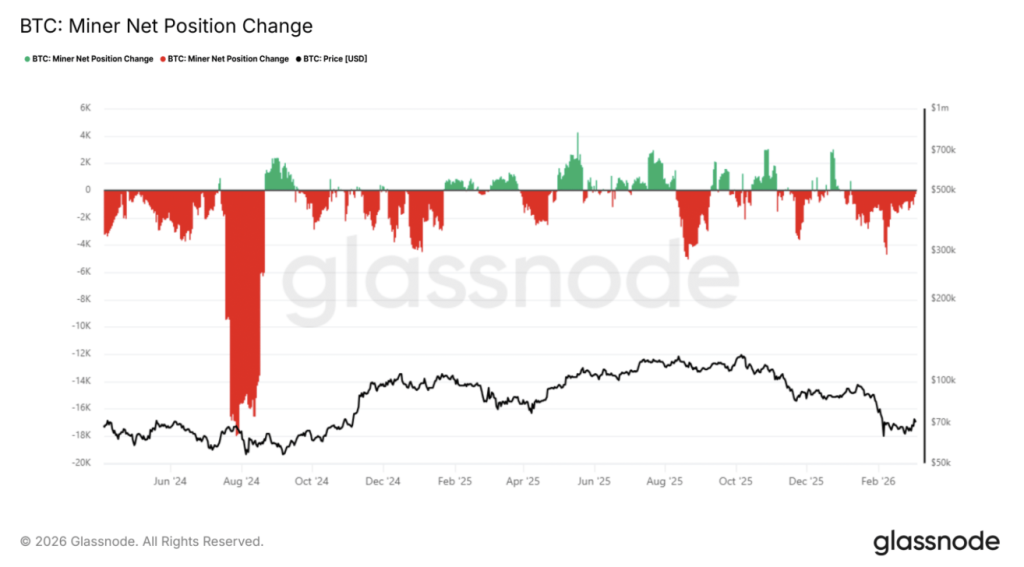
Bitcoin miners have quietly started changing their behavior since the market cooled off from the $126,000 peak back in October 2025. When prices were soaring, many mining companies were happy to hold their BTC reserves. But as the rally faded and profitability tightened, that strategy began to shift.
Now, a noticeable pattern is emerging. Public mining firms are sending more Bitcoin to exchanges, converting part of their production into cash instead of stockpiling it. The reason isn’t complicated — operating costs are rising while mining revenue has been shrinking.
Falling Hashprice Tightens Mining Margins
One of the biggest pressures miners face right now is the drop in hashprice, a key profitability metric in the mining industry. Recently, hashprice slipped below $30 per petahash per second (PH/s), squeezing margins across the sector.
At the same time, the post-halving reward structure remains in place. Miners now earn just 3.125 BTC per block, which results in about 450 new BTC entering circulation each day.
That smaller reward means every coin matters more to mining companies. And when electricity bills, infrastructure costs, and financing expenses keep rising, some firms simply can’t afford to sit on large reserves anymore.
So they sell.
Public Mining Firms Sell Over 15,000 BTC
Since October 2025, publicly listed mining companies have collectively sold more than 15,000 BTC. Several large transactions stand out.
Cango alone disposed of roughly 4,451 BTC, while other sizable sales came from firms like Bitdeer, Riot Platforms, and Core Scientific. Those transactions helped push additional supply into the market during a period when price momentum was already weakening.
Despite these sales, miners still hold a substantial amount of Bitcoin. Total miner balances currently sit around 1,780,305 BTC.
But the trend is what matters here. When miners reduce treasury holdings, more Bitcoin enters the circulating supply — at least temporarily. That increase in available liquidity can create extra selling pressure across the market.
CleanSpark Highlights the Industry Shift
The shift in miner behavior became particularly visible when looking at CleanSpark’s activity earlier this year.
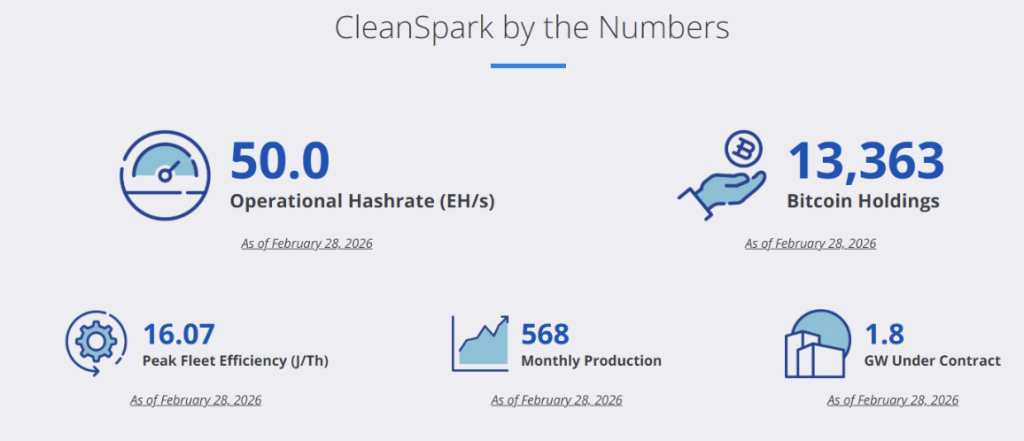
In February, the company mined about 568 BTC. Instead of holding most of that production, however, CleanSpark sold 553 BTC — almost the entire amount. The sales generated roughly $36.6 million in proceeds.
That strategy looked very different from the previous month. In January, CleanSpark mined 573 BTC but sold only 159 BTC, holding onto a much larger portion of its production.
The change suggests miners are becoming more focused on liquidity.
Treasury Holdings Gradually Decline
As a result of these sales, CleanSpark’s total treasury holdings declined slightly. The company’s reserves dropped from 13,513 BTC to around 13,363 BTC.
At the same time, the company expanded its operational capacity. Mining power climbed toward roughly 50 exahashes per second (EH/s), which increases production potential — but also increases costs.
More machines, more infrastructure, more electricity… it all adds up.
Taken together, these developments show that miners are increasingly converting newly mined Bitcoin into cash rather than storing it long term.
Miner Behavior Resembles Past Cycle Patterns
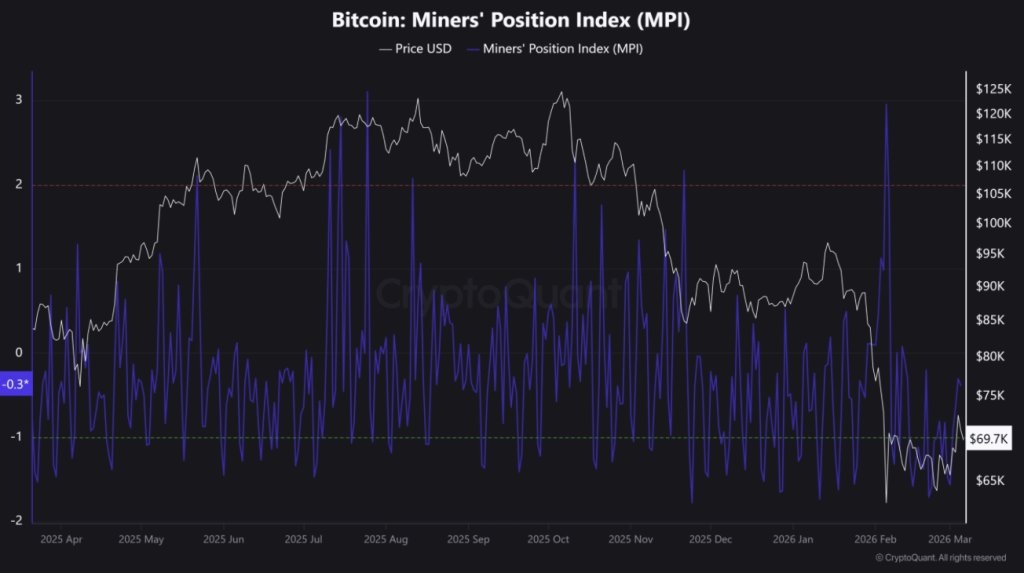
Interestingly, current miner activity is beginning to resemble the later stages of capitulation phases seen in previous market cycles.
The Miner Position Index (MPI), a metric used to measure miner selling relative to historical averages, recently sat near -0.38. That reading suggests outflows are currently below the yearly average.
During previous bear markets, the picture looked much more extreme. In both 2018 and 2022, the MPI spiked above 2 — and even reached around 3.5 at certain points. Those spikes reflected intense miner selling before major market recoveries eventually followed.
So while miners are selling today, the pressure isn’t nearly as aggressive as in those earlier cycles.
Hash Ribbon Signal Suggests Structural Shift
Meanwhile, another technical signal has quietly appeared in the background.
The Hash Ribbon indicator flashed a buy signal in late February when the 30-day hash rate moving average crossed above the 60-day moving average. Historically, this crossover has often appeared after deep market corrections.
Similar signals emerged in both 2019 and 2022, and each time they preceded strong rebounds in Bitcoin’s price.
Still, this cycle may be evolving differently.
Large mining companies now operate more like corporate energy and infrastructure firms. Many rely on hedging strategies, diversified income streams, and more sophisticated financial planning than miners did years ago.
That means the selling pressure we’re seeing today may represent a gradual adjustment rather than the dramatic capitulation events that defined earlier Bitcoin bear markets.
In other words, the market might be shifting — slowly.