
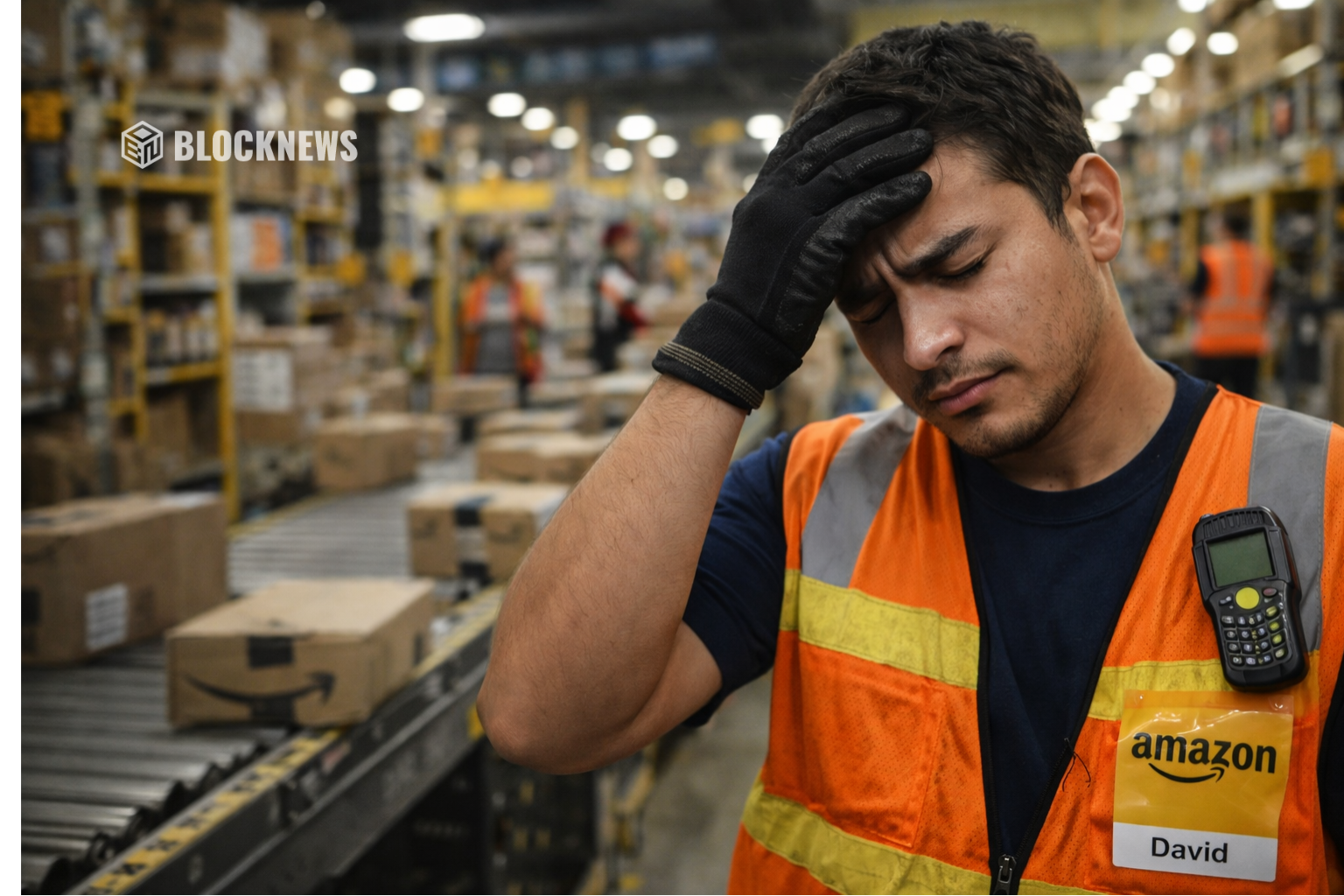
- Amazon is cutting people while openly planning large-scale automation.
- AI competition is the excuse, not the root cause.
- This is less about efficiency and more about removing humans from the loop.
Amazon cut roughly 16,000 corporate employees today, and reports are already warning that as many as 600,000 warehouse roles could disappear over the next decade. The public line points to “competition over AI.” The internal math tells a cleaner story. Amazon plans to automate around 75% of its operations by 2033. That’s not trimming the edges. That’s replacement, full stop.
AI Was Always the Plan
This didn’t come out of nowhere. Warehouses have been inching toward automation for years. Humans adjusted their bodies and schedules to keep up with machines long before machines were ready to take over completely. AI just closes the gap.
Once software can schedule routes, track inventory, monitor performance, and optimize faster than people, the decision becomes boring. Empathy doesn’t show up on the balance sheet.
Calling this an AI arms race makes it sound reactive. It’s not. This is a deliberate choice about what kind of company Amazon wants to be.
The Human Cost Gets Blurry
Sixteen thousand jobs sounds neat and contained. So does six hundred thousand. But those numbers hide real lives, real routines, real bills. People whose usefulness is now framed as temporary, pending a software update.
When companies say “efficiency,” they usually mean fewer conversations. Fewer exceptions. Fewer humans doing human things.
What’s unsettling isn’t just the layoffs. It’s how quickly this all feels… normal.

The Question Nobody Wants to Touch
If this is where work is heading, is this actually progress? Or are we just quietly agreeing that humans are the least efficient component left to remove?
Where This Leaves Us
Amazon isn’t doing anything unusual. It’s doing exactly what the system rewards. Speed. Scale. Cost control.
The problem is what happens when everyone follows the same logic. We’re watching labor get abstracted in real time, turned into a line item to be optimized away. The real question isn’t whether this future is coming. It’s whether we’re willing to admit, out loud, that maybe this isn’t the future we actually want.