
- U.S. Producer Price Index (PPI) unexpectedly fell 0.3%, missing expectations of a flat monthly reading.
- The decline suggests wholesale inflation is cooling, potentially easing price pressures across the economy.
- Investors are now watching upcoming inflation reports for clues about the Federal Reserve’s next policy move.
The latest inflation data from the U.S. Bureau of Labor Statistics surprised markets after the Producer Price Index (PPI) fell 0.3%, marking an unexpected decline in wholesale prices.
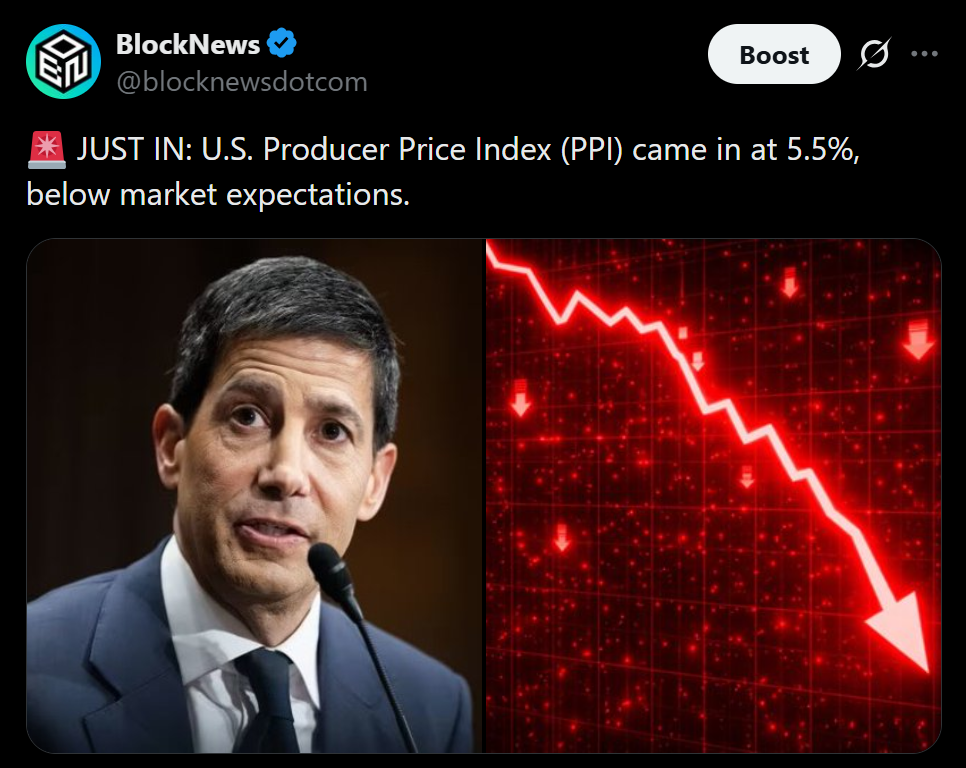
Economists had anticipated the monthly reading would remain unchanged following the previous month’s increase. Instead, the sharp drop signals that producers are receiving lower prices for their goods, raising fresh questions about the strength of inflationary pressures across the U.S. economy.
Because the PPI often acts as a leading indicator for consumer inflation, the report is likely to attract close attention from investors and Federal Reserve officials alike.
Wholesale Inflation Cools More Than Expected
The Producer Price Index measures changes in the prices businesses receive for goods and services before those costs reach consumers.
A weaker-than-expected reading typically suggests inflationary pressures are easing, making it more difficult for manufacturers to pass higher costs through the supply chain. That can occur when consumer demand softens or competition limits companies’ pricing power.
The latest report represents a notable reversal from the previous month’s 0.6% increase, indicating wholesale price growth has slowed considerably.
What It Could Mean for the Federal Reserve
Inflation data plays a central role in the Federal Reserve’s interest rate decisions.
A stronger PPI generally supports a more hawkish monetary policy because persistent wholesale inflation can eventually feed into consumer prices. Conversely, weaker producer prices may reduce inflation concerns and provide policymakers with more flexibility if economic conditions begin to weaken.

Although one report is unlikely to change policy on its own, the latest figures may strengthen expectations that inflation is gradually moving back toward the Fed’s long-term target.
Investors Await More Inflation Data
Market participants will now turn their attention to upcoming inflation releases to determine whether the latest PPI reading reflects a temporary slowdown or the beginning of a broader disinflationary trend.
If future consumer inflation data also shows continued easing, expectations for future Federal Reserve policy could shift accordingly. On the other hand, if consumer prices remain elevated, policymakers may continue taking a cautious approach despite softer wholesale inflation.
For now, the unexpected decline in producer prices adds another layer to the inflation outlook, giving investors fresh data to evaluate as they assess the future direction of interest rates, the U.S. dollar, and financial markets.