

- The Wall Street Journal claimed an Iran-linked network moved $850 million through Binance
- Binance CEO Richard Teng says the reporting is fundamentally inaccurate
- The dispute lands while Binance remains under DOJ scrutiny and compliance monitoring
Binance and The Wall Street Journal are fighting again, but this time the stakes extend far beyond reputation damage. A May 22 WSJ report alleged that an Iran-linked payments network tied to businessman Babak Zanjani processed roughly $850 million through Binance over a two-year period, allegedly helping maintain financial flows connected to Iranian military organizations.
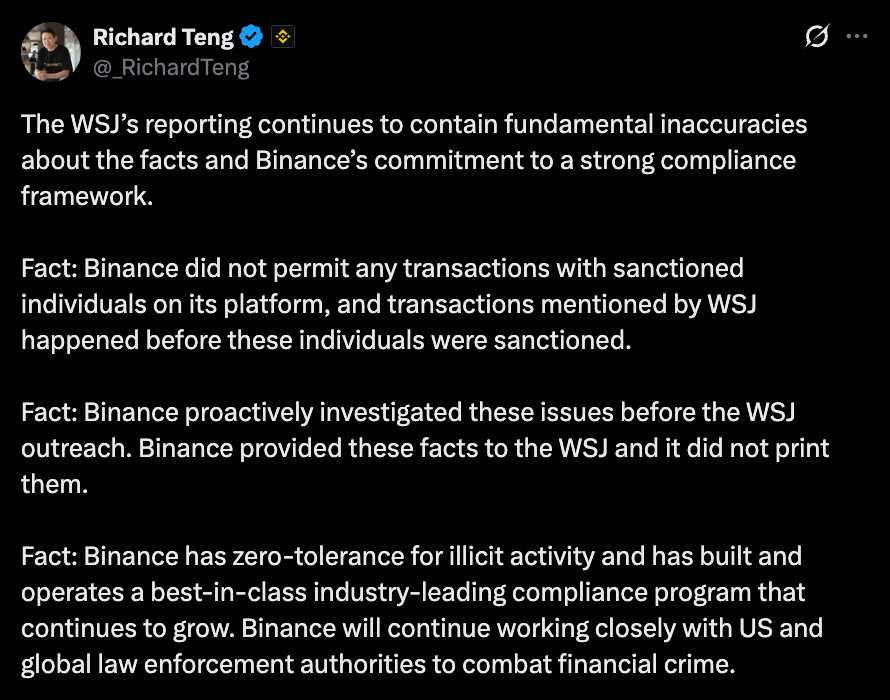
Binance CEO Richard Teng immediately pushed back, calling the reporting inaccurate and defending the exchange’s sanctions compliance practices publicly on X. The company’s core argument centers around timing, and legally, that distinction matters a lot more than most headlines suggest.
Binance Says The Transactions Happened Before Sanctions
According to Teng, the individuals referenced in the report were not formally sanctioned at the time the transactions occurred. Binance insists it did not knowingly allow sanctioned entities to operate on the platform after designation lists were updated.
That’s a critical point because sanctions compliance is generally judged based on official designation status at the time of the transaction, not retroactively after sanctions are imposed later. In other words, the legal exposure changes significantly depending on when the activity actually took place.
Binance also pointed toward internal compliance data showing sanctions-related exposure falling sharply over time. The exchange claims sanctions-linked transaction volume dropped from roughly 0.284% of total exchange activity in early 2024 to just 0.009% by mid-2025.
The Bigger Issue Is Binance’s Existing DOJ Pressure
The problem for Binance is that these allegations land while the company is already operating under a U.S.-appointed compliance monitor following its massive 2023 settlement involving sanctions and anti-money-laundering violations. That settlement cost Binance roughly $4.3 billion in penalties and placed the exchange under intense ongoing regulatory supervision.
Because of that history, even disputed allegations tied to sanctions violations now carry far more weight politically and legally than they otherwise might. The DOJ is reportedly still investigating aspects of Binance’s operations separately as well, meaning this fight almost certainly extends beyond media narratives alone.
And honestly, that’s why the situation matters so much.
Binance and WSJ Are Already Locked in a Larger Battle
This is not the first major clash between Binance and The Wall Street Journal either. Earlier this year, Binance sued Dow Jones, the Journal’s publisher, for defamation following previous reporting tied to sanctions compliance and internal investigations.

The latest report also revisited claims that Binance previously dismissed internal investigators who flagged more than 1,500 Iran-linked accounts allegedly operating through intermediaries. Binance has strongly disputed those portrayals.
At this stage, the relationship between the exchange and the newspaper increasingly resembles an ongoing legal and reputational war rather than isolated reporting disputes.
Compliance Is Becoming Binance’s Entire Business Story
Binance says more than 1,500 employees now work in compliance and risk management roles, representing roughly a quarter of its global workforce. The company clearly wants regulators and institutions to view it as a far more mature and compliant operation than the exchange that existed several years ago.
Whether that transformation is fully convincing remains the larger question hanging over the company. Binance’s legal defense surrounding sanctions timing is not weak, but ongoing investigations mean the final outcome likely depends far more on regulators and courts than public statements on social media.
For now, the Binance-WSJ conflict is becoming one of crypto’s most important battles between media scrutiny, regulatory enforcement, and the future credibility of the industry’s largest exchange.