

- More than 100 amendments were filed ahead of Thursday’s Senate Banking Committee markup of the CLARITY Act
- Senator Elizabeth Warren alone submitted over 40 proposed changes, including limits on Fed access for crypto firms
- Stablecoin yields, crypto ethics rules, and legal tender language have emerged as major political battlegrounds
The CLARITY Act was already shaping up to be the most important crypto legislation in years. Now it’s becoming one of the most contested as well.
Ahead of Thursday’s Senate Banking Committee markup, lawmakers have submitted more than 100 amendments to the bill, turning what was supposed to be a major step toward regulatory clarity into a full-scale political fight over the future of crypto in the United States.
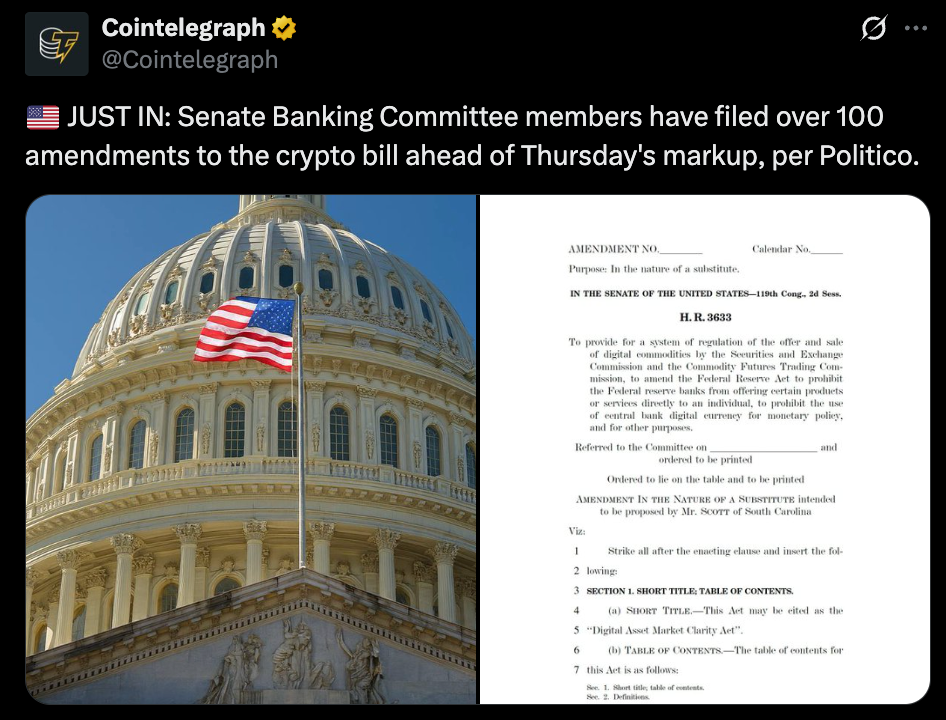
At the center of the debate is the CLARITY Act’s core mission: establishing a formal federal framework for digital assets by dividing oversight responsibilities between the SEC and CFTC after years of regulatory confusion and enforcement battles.
Elizabeth Warren Is Leading The Opposition
Senator Elizabeth Warren has emerged as one of the bill’s most aggressive critics, reportedly filing more than 40 amendments on her own.
Among the proposals is an amendment designed to block crypto firms from obtaining Federal Reserve master accounts — a move that would significantly limit direct access to core US payment infrastructure for digital asset companies.
Other Democratic-backed proposals target elected officials’ crypto ownership and promotion activities, with one amendment seeking to ban the president, vice president, and members of Congress from holding or endorsing cryptocurrencies altogether.
Unsurprisingly, that proposal is already facing major resistance.
Stablecoins And Developer Protections Remain Flashpoints
Stablecoin regulation continues to be one of the most contentious sections of the bill. Senators are still debating how aggressively the legislation should restrict yield-bearing stablecoin products and whether certain rewards structures should remain legal.
Software developer protections have also become a major fight. Some lawmakers want stronger carve-outs protecting open-source developers and decentralized protocol builders from regulatory liability, while others argue the exemptions could create loopholes.

The result is a growing pile of amendments turning the markup process into a much larger battle over how crypto itself should function inside the US financial system.
Thursday Could Shape The Entire Timeline
There are now several possible outcomes once the committee meets Thursday. The bill could pass relatively cleanly, which would significantly boost its momentum toward a full Senate vote later this year.
It could also pass strictly along party lines, which would make reaching the 60-vote threshold needed in the Senate much more difficult later on.
Or the process could stall entirely, potentially delaying any realistic path toward final legislation until late 2026 or beyond.
Crypto Regulation Is Entering Its Most Political Phase Yet
What started as a technical discussion about market structure is increasingly becoming a broader ideological fight involving banking access, political ethics, financial sovereignty, and the role of digital assets inside the American economy.
And honestly, the fact lawmakers are now fighting over more than 100 amendments probably says everything about how important crypto regulation has become politically in Washington.
The industry wanted clarity. Congress is now debating exactly what that clarity should look like — line by line.