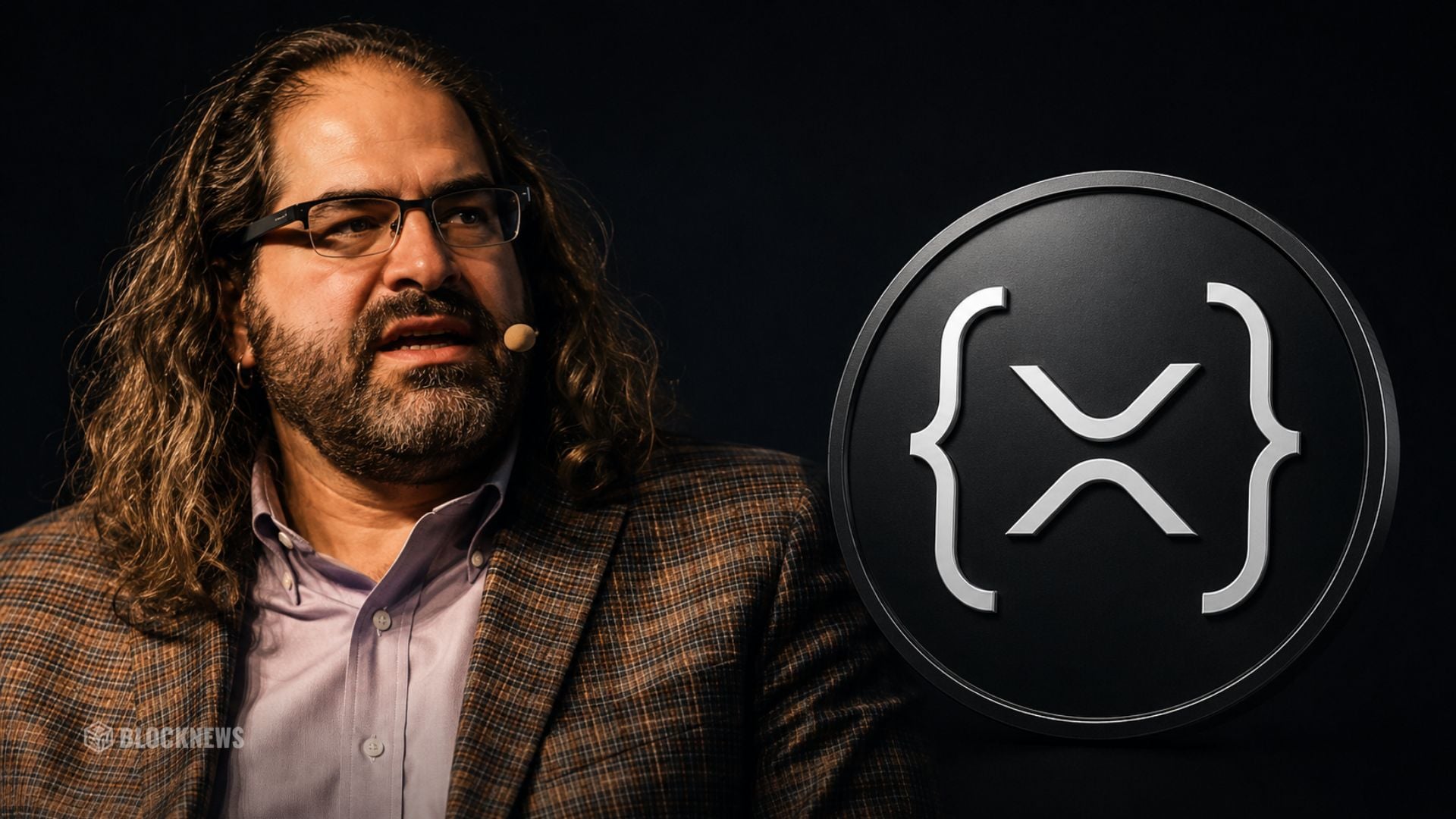
- The XRP Ledger Foundation appointed Ripple CTO David Schwartz as an Honorary Board Member.
- Schwartz helped build the original XRP Ledger architecture alongside Arthur Britto and Jed McCaleb.
- The move strengthens technical governance as XRPL expands into DeFi, AMMs, and smart contract infrastructure.
The XRP Ledger Foundation has officially welcomed Ripple Chief Technology Officer David Schwartz as an Honorary Board Member, a move that’s already generating strong reactions across the XRP community. For many longtime supporters of the XRP Ledger ecosystem, the appointment feels less like a symbolic gesture and more like a major strengthening of the network’s long-term technical direction.
The Foundation announced the addition publicly, describing Schwartz as one of the original architects behind the XRP Ledger and praising the deep technical expertise he brings to the organization. According to the XRPL Foundation, his experience and long-term understanding of the ledger’s architecture will help reinforce the Foundation’s technical stewardship as the ecosystem continues evolving.
That matters because the XRPL Foundation operates independently from Ripple itself. While Ripple remains heavily tied to the XRP ecosystem commercially, the Foundation’s role focuses more on supporting decentralized development, maintaining infrastructure, and helping guide the broader network responsibly over time.
By bringing Schwartz directly into the fold, the organization is essentially connecting itself even more closely to one of the people who helped build the XRP Ledger from the beginning.
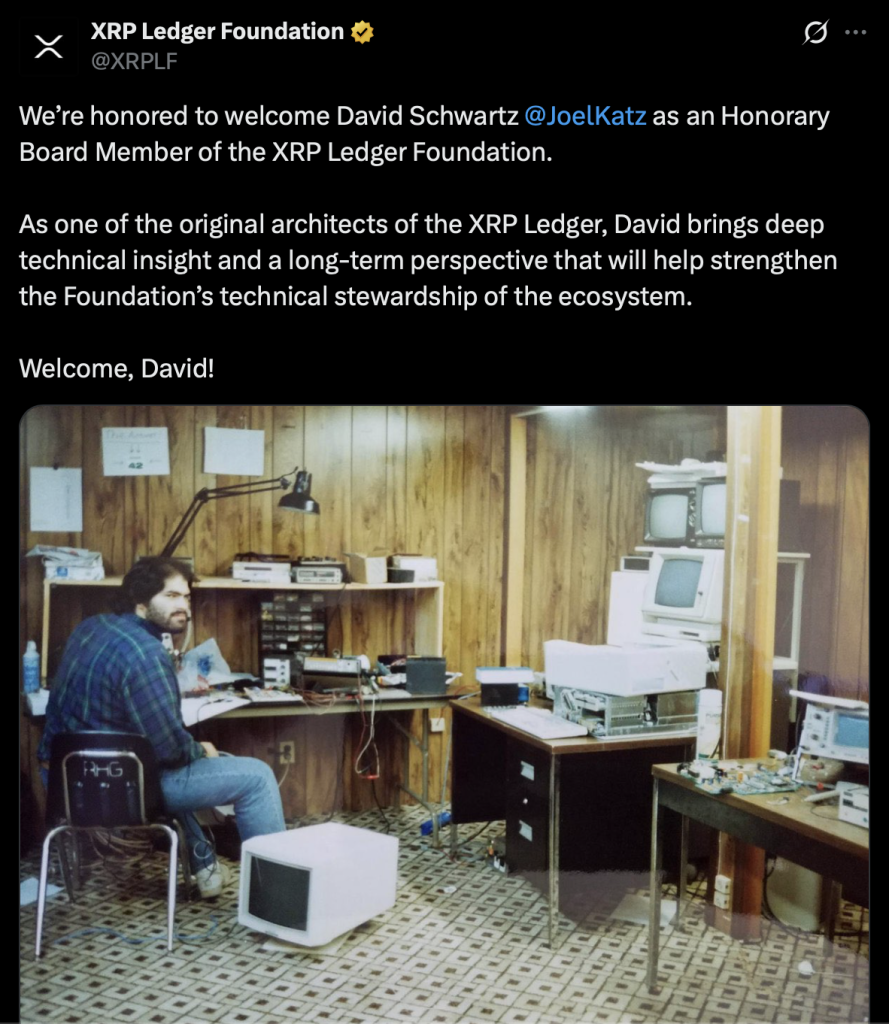
One of XRP’s Original Architects Returns To a Larger Role
Inside the crypto industry, David Schwartz is widely viewed as one of the most influential figures tied to XRP and blockchain development generally. Back in 2011, Schwartz worked alongside Arthur Britto and Jed McCaleb as part of the core team that built the original XRP Ledger codebase.
Their goal at the time was fairly ambitious — create a blockchain system capable of handling transactions faster and more efficiently than Bitcoin while avoiding the heavy energy consumption associated with proof-of-work mining. Over the years, the XRP Ledger developed into one of the most recognized payment-focused blockchain networks in the crypto sector.
Schwartz himself remained one of the ecosystem’s most visible technical voices throughout that journey. Even while serving as Ripple’s CTO, he consistently acted as both an educator and advocate for XRPL technology, often explaining complicated blockchain mechanics in ways that ordinary users could actually understand. Honestly, that’s part of why he became such a respected figure inside the community.
Now, with his appointment as Honorary Board Member, many supporters believe the XRP Ledger Foundation gains direct access to one of the deepest sources of institutional and technical knowledge surrounding the network’s original design.
Technical Governance Becomes More Important As XRPL Evolves
The timing of Schwartz joining the Foundation also feels important because the XRP Ledger ecosystem is entering a much more advanced development phase compared to earlier years. The network is no longer focused only on payments and settlement speed. It’s increasingly expanding into decentralized finance, automated market makers, tokenization, and smart contract-related infrastructure.
As those features grow more complex, technical governance becomes increasingly critical. The XRPL Foundation helps oversee core code repositories, validator infrastructure, and network coordination efforts, all while supporting global developers building on top of the ecosystem.
Adding Schwartz into that environment strengthens the Foundation’s ability to guide technical decisions carefully while maintaining continuity with the original architecture of the ledger itself. His role may technically be “honorary,” but the strategic influence he brings could still become extremely significant behind the scenes.
The Foundation specifically highlighted his decades of experience in cryptography and distributed systems as key reasons why his involvement matters moving forward. Few people understand the XRP Ledger as intimately as Schwartz does, and that kind of perspective becomes increasingly valuable as blockchain ecosystems mature and scale globally.
XRP Community Sees The Appointment As a Major Positive Signal
Across the broader XRP community, the reaction has been overwhelmingly positive so far. Many users view the move as a strong signal that the XRP Ledger Foundation wants to remain technically aligned with the original principles and long-term vision behind XRPL development.
There’s also growing optimism surrounding the future capabilities of the ledger itself. Features tied to decentralized finance, AMMs, tokenized assets, and broader institutional blockchain integration are all becoming larger priorities within the ecosystem. Having Schwartz involved more directly in governance conversations gives many supporters confidence that those upgrades can evolve without compromising the network’s foundational efficiency and reliability.
At the same time, the appointment reinforces how influential the XRP Ledger still remains within the broader crypto infrastructure landscape. While attention in crypto often shifts rapidly between trends, XRPL continues positioning itself as a long-term blockchain network focused on scalable financial applications rather than purely speculative hype cycles.
For many in the XRP ecosystem, bringing David Schwartz into the Foundation’s leadership structure feels like a natural next step — one that ties the project’s future more closely to the technical vision that helped create it in the first place.