- Foundation closes after failed acquisition despite $230M in lifetime sales
- Artists get one-year window to migrate NFTs as infrastructure remains active
- Market downturn hits platforms, but demand for digital art continues
Foundation, one of the more respected NFT marketplaces from the early Ethereum boom, is officially shutting down, and yeah, it feels like the end of a certain era. The platform, which facilitated around $230 million in sales since 2021, couldn’t secure a final acquisition after Blackdove walked away post-due diligence.
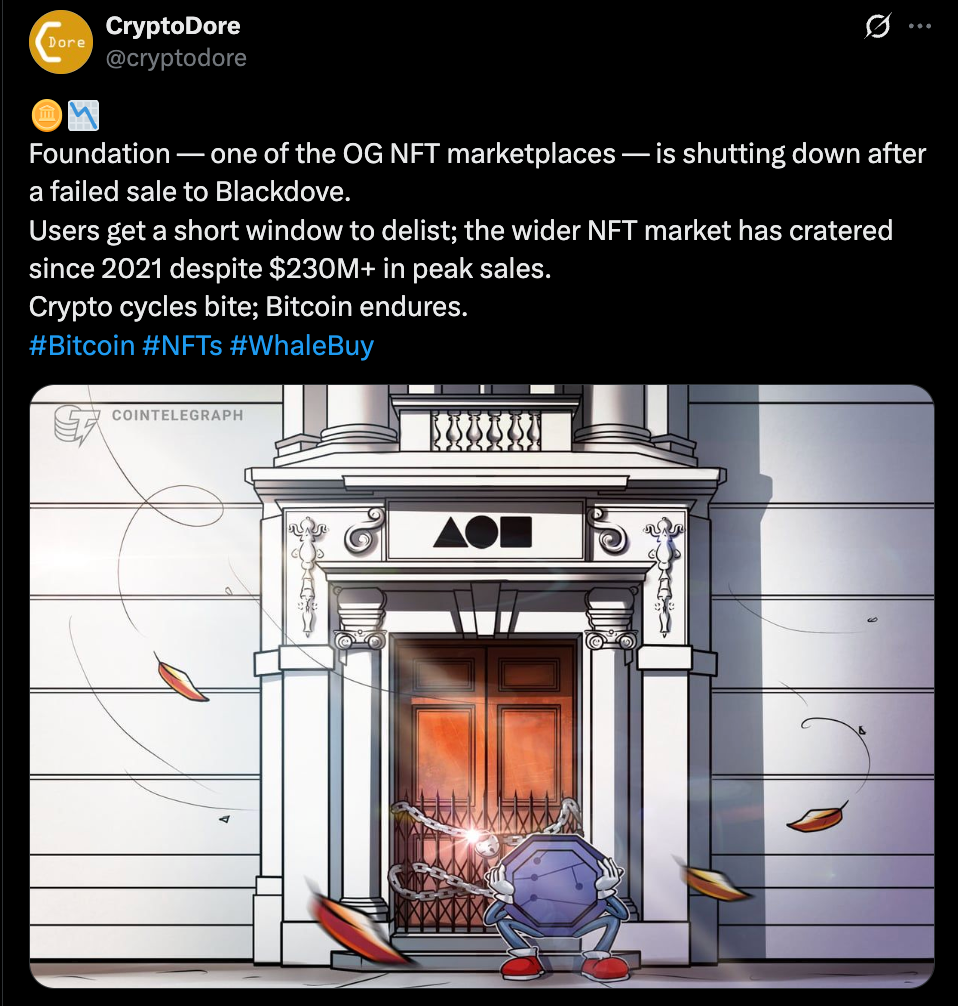
It’s not exactly a dramatic collapse, more like a slow realization that the current market just isn’t supporting platforms the way it used to. Still, for a space that once revolved around places like Foundation, this one lands a bit heavier than most.
The Honest Context
The reality is, the NFT market has changed, a lot. Monthly trading volumes have dropped from nearly $2.9 billion at the peak in 2021 to just $23.8 million by early 2025, which puts things into perspective pretty quickly.
Foundation didn’t fail because the idea was wrong, if anything, its curated, invite-only approach was ahead of its time. The problem is, the market cooled off before that model could fully mature, leaving even well-positioned platforms exposed.
What Happens to the Artists
One thing Foundation is doing right in its exit is giving creators time, which isn’t always the case in these situations. The platform will keep its infrastructure running for another year, allowing artists to migrate their work and collections without immediate pressure.
And importantly, the NFTs themselves don’t disappear, they live on-chain, independent of the platform that helped launch them. That distinction matters more now than it did during the hype phase, because it shows the underlying permanence actually works.
The Silver Lining for Digital Art
Despite the shutdown, there are still signs that digital art isn’t going anywhere. Blackdove, the company that initially planned to acquire Foundation, reported a 40% increase in demand for physical digital art displays, which suggests interest is shifting rather than disappearing.
It’s less about flipping NFTs now and more about how digital art fits into real-world environments, homes, galleries, installations. That evolution might be slower, but arguably more sustainable in the long run.
More Than Just a Marketplace
Foundation played a key role in shaping how digital artists approached NFTs, giving them a curated space that prioritized quality over noise. It hosted iconic works like Nyan Cat and Edward Snowden’s Stay Free, helping define what the space could be at its peak.
The platform may be closing, but the artists, the work, and the audience it helped build are still here. And in a way, that’s the part that matters most, the marketplace fades, but the movement doesn’t.