

- Bitcoin climbed above $72K, but underlying demand remains weak
- On-chain data shows short-term investors selling below long-term holder cost basis
- The current phase suggests a possible final shakeout before a true cycle bottom
Bitcoin managed to climb back above $72,000 this week, which on the surface looks like a bit of relief. After the recent drop, any green feels welcome. But if you look a little closer, the recovery doesn’t feel… strong. More like a pause than a real shift.
There are still signs that demand isn’t fully there. And when demand stays weak, even small recoveries can fade quicker than expected.
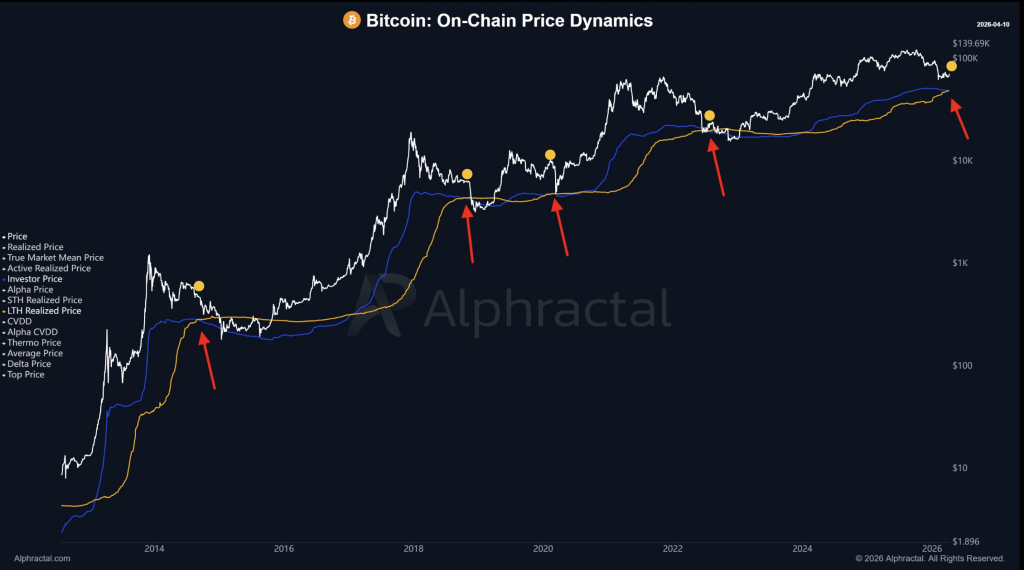
A Key On-Chain Signal Is Flashing Caution
According to Joao Wedson from Alphractal, there’s an on-chain signal suggesting Bitcoin might not be done dropping just yet. His analysis focuses on something called the Investor Price versus the Long-Term Holder (LTH) Realized Price.
Sounds technical, yeah—but the idea is simple. When the average price of active investors drops below the average cost of long-term holders, it signals a shift in control. And not in a bullish way.
It means newer participants are willing to sell at lower prices than long-term holders originally bought in at. That’s usually not a sign of strength.
Weak Hands Step Out, Strong Hands Step In
This kind of crossover tends to show up after a distribution phase, when buyers start disappearing and momentum fades. Short-term traders lose confidence, take losses, and exit.
Meanwhile, long-term holders start to take over. These are the ones less likely to sell, even when price dips near their cost basis. So the market doesn’t collapse—but it doesn’t surge either.
Instead, it kind of… drifts.
Not Panic, Just a Slow Reset
What’s interesting is that this phase isn’t usually driven by panic. It’s not a crash or a sudden capitulation. It’s more like a slow reshuffling of positions.
Weaker hands leave, stronger ones absorb. Supply gets redistributed over time, not all at once. That process can drag on longer than people expect, often leading to sideways movement or even a slow grind lower.
And that’s where Bitcoin might be right now.
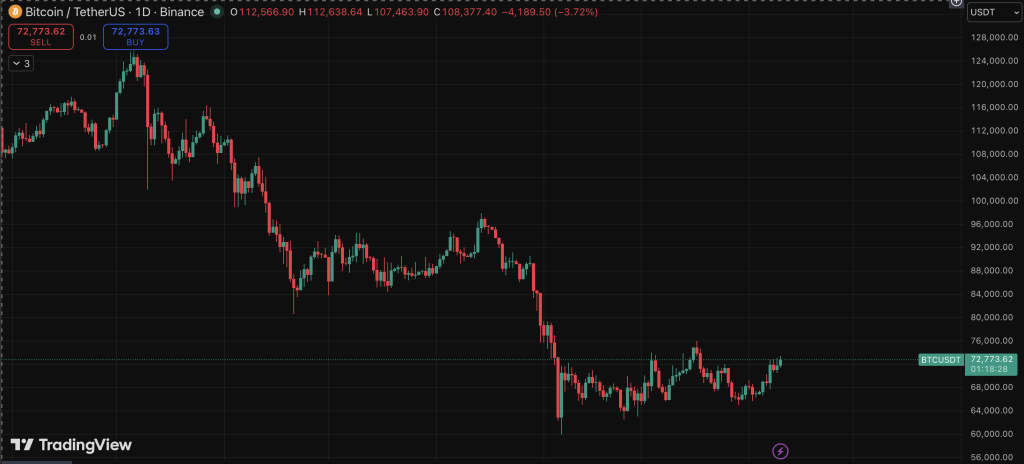
Upside Gets Capped in This Phase
There’s another effect that comes with this structure. Even when price tries to move up, it often runs into selling pressure. Why? Because many traders are just trying to exit at breakeven.
So rallies get capped. Not crushed—but limited. That’s what Wedson calls a compression of upside potential.
Until that dynamic changes, big breakouts tend to struggle.
Still Not the Final Bottom… Yet
Looking at past cycles, this setup usually appears during mid-cycle corrections, not at the final bottom. It’s part of the process—cleaning up excess, resetting expectations, and building a stronger base.
A real shift typically happens when the Investor Price moves back above the Long-Term Holder price. That’s when risk appetite returns, and momentum starts to build again.
Until then, the market remains… in transition.
A Market That’s Still Finding Its Footing
So yes, Bitcoin is back above $72K. That’s something. But the underlying structure suggests the market might still need one more shakeout before things truly stabilize.
Not guaranteed, of course. But the signal is there.
And in crypto, those quiet signals often matter more than the loud ones.