- Yuga Labs settles long-running NFT trademark dispute with RR/BAYC creators
- Case never reached jury despite $9M ruling and appeals reversal
- Outcome strengthens NFT IP rights without fully resolving satire debate
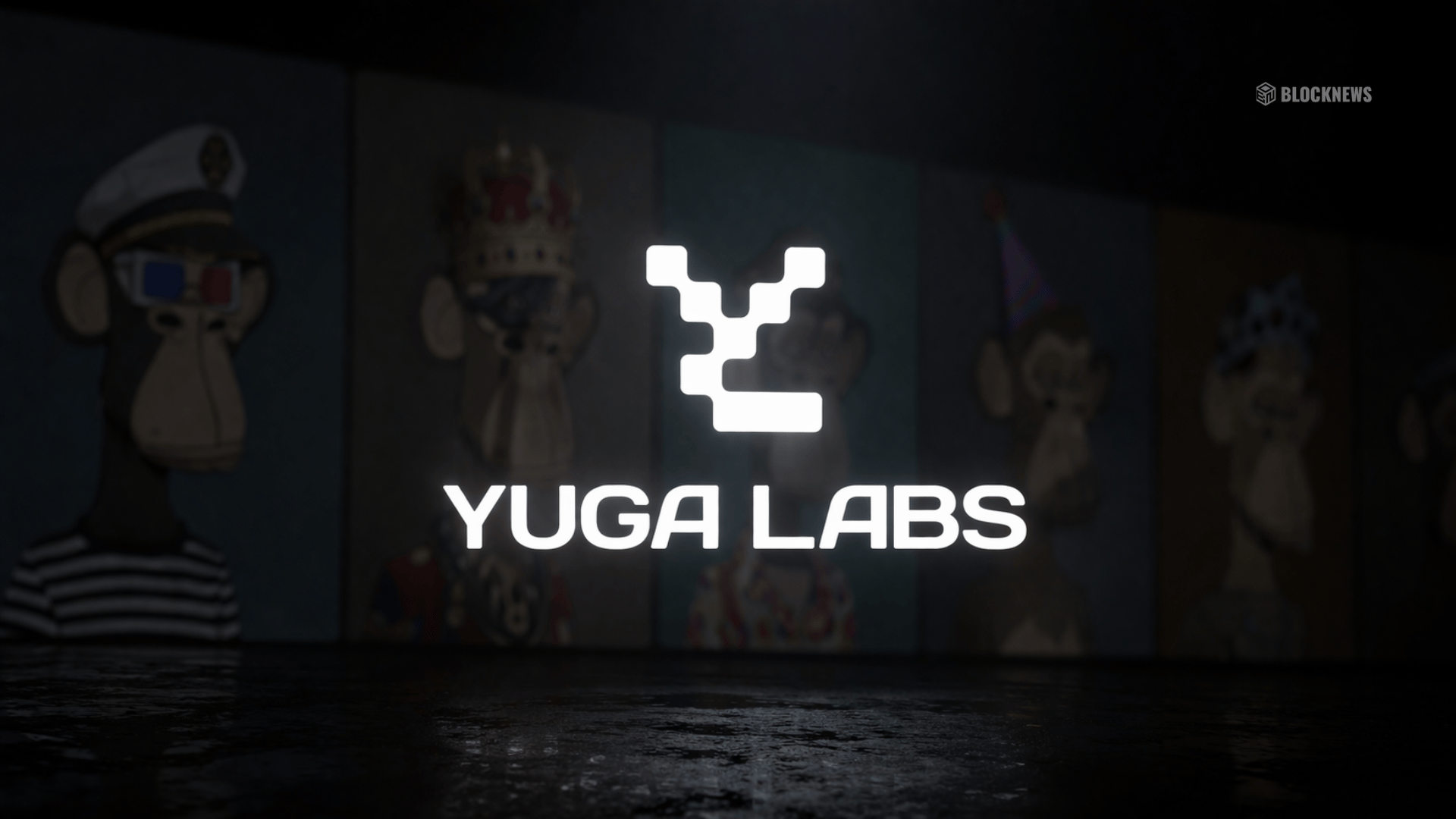
Yuga Labs just closed one of the NFT space’s longest-running legal battles, and oddly… almost nobody is talking about it. After years of back-and-forth, court rulings, and a near jury trial, the company settled its dispute with Ryder Ripps and Jeremy Cahen over the RR/BAYC collection.
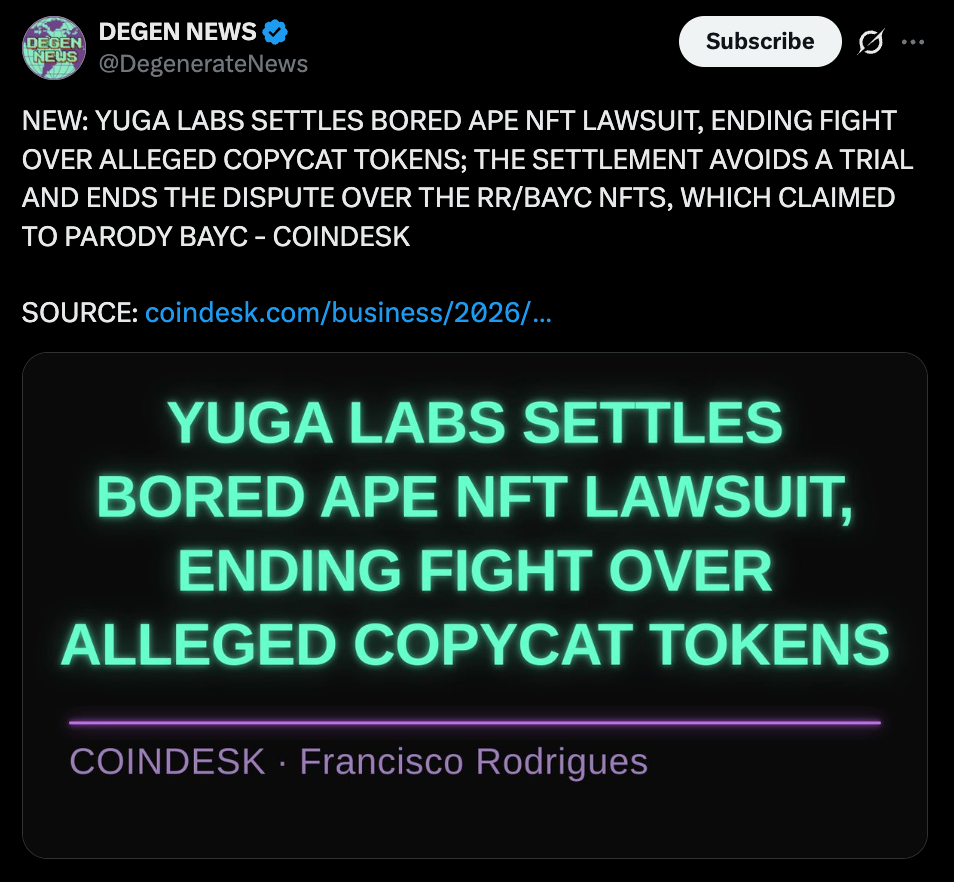
The result is simple on paper. Ripps and Cahen are permanently barred from using Bored Ape imagery or trademarks. But the path to get there was anything but simple.
A Case That Kept Changing Direction
This started back in 2022, when Ripps launched a collection that reused Bored Ape visuals while framing it as satire and protest art. Buyers were even prompted to acknowledge what they were purchasing, which added another layer to the argument.
Yuga Labs saw it differently. From their perspective, this wasn’t commentary, it was confusion. A project leveraging their brand recognition while selling lookalike assets.
The courts didn’t exactly settle things cleanly either. A district court initially awarded Yuga nearly $9 million. Then an appeals court overturned that, saying a jury should decide if buyers were actually misled. And just as it was heading there… settlement.
The Settlement Closes the Fight, Not the Question
What we get in the end is resolution without clarity. The legal terms stop the use of Yuga’s IP, but they don’t fully answer the bigger question, where satire ends and infringement begins in NFTs.
That part remains open. And maybe that’s intentional. A jury verdict could’ve created a clearer precedent, but also more risk for both sides.
NFTs Are Quietly Becoming Legally Recognized Assets
Even without a final ruling, the case still moved things forward. Courts increasingly treat NFTs as commercial products tied to intellectual property, not just experimental digital items.
That matters. It means names, imagery, and branding attached to NFT collections can be protected in ways that look a lot like traditional IP law. It’s not flashy, but it’s foundational.
Timing Says a Lot About the Market
There’s also something about when this ended. Bored Apes aren’t dominating headlines anymore like they did in 2021. The hype cooled, attention shifted, and the space moved on to other narratives.
Closing this case now feels… practical. Less about winning a cultural argument, more about clearing the board and focusing on what comes next.
A Legal Chapter Ends, Quietly
Four years of litigation, multiple rulings, and a near trial, all wrapped up in a settlement with undisclosed terms. No dramatic conclusion, no definitive answer.
But maybe that fits the moment. NFTs aren’t in their loud phase anymore. They’re in the part where infrastructure, rules, and boundaries get built, quietly, case by case.
And this was one of those cases.