
- Solana’s high-speed network has driven strong growth in transactions and stablecoin adoption
- Quantum-safe testing reveals a major trade-off, with up to 90% slowdown in performance
- The network now faces a critical balance between maintaining speed and ensuring long-term security
There’s always been this underlying question in crypto… can a blockchain really have it all? Speed, scalability, security—sounds great on paper, but in practice, something usually gives. Solana, for a while, looked like it had cracked the code, or at least gotten pretty close.
Its high-speed design pushed serious growth, especially in stablecoins and transaction volume. The network handled huge loads without choking, which isn’t something every chain can claim. And because of that, liquidity stayed strong, activity kept flowing… it worked.
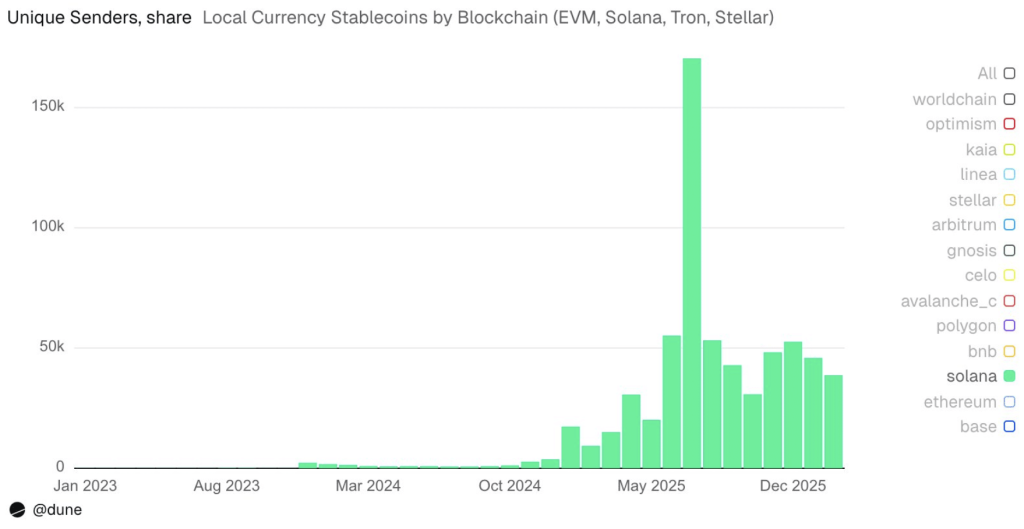
Stablecoin Growth Shows a Bigger Strategy
If you zoom in a bit, the numbers tell a more interesting story. Solana isn’t just growing—it’s shifting. Dune data shows that non-USD stablecoin usage on the network has nearly tripled year-over-year. EURC, BRZ… they’re gaining traction, and that’s not random.
It points to something more deliberate. Solana seems to be diversifying its stablecoin base, quietly building toward a broader DeFi ecosystem. Not just dollar-pegged assets, but a more global mix, which could matter long term, especially as adoption spreads across regions.
Strong Fundamentals… But a New Problem Emerges
Technically, Solana still looks solid. High throughput, fast confirmations, deep on-chain liquidity—it’s all there. That combination is exactly why it’s been able to support complex financial activity at scale, while others, well… struggle a bit more.
But then comes the twist. Recent quantum-related testing has started to expose a trade-off, one that isn’t easy to ignore. Solana has been working with Project Eleven on quantum-safe signatures, basically future-proofing the network against potential quantum attacks.
Sounds smart. But it comes with a cost.
Quantum Resistance Comes With a Heavy Trade-Off
The early results are… not exactly ideal. Quantum-safe signatures are up to 40 times larger, and in testing, the network slowed down by around 90%. That’s not a small hit—it’s massive.
So now the dilemma becomes real. If Solana leans into security, it risks losing the speed that made it stand out. But if it prioritizes speed, it leaves the door slightly open to future vulnerabilities. It’s not an easy balance, and there’s no clean solution.
Solana’s Edge Over Ethereum Faces Pressure
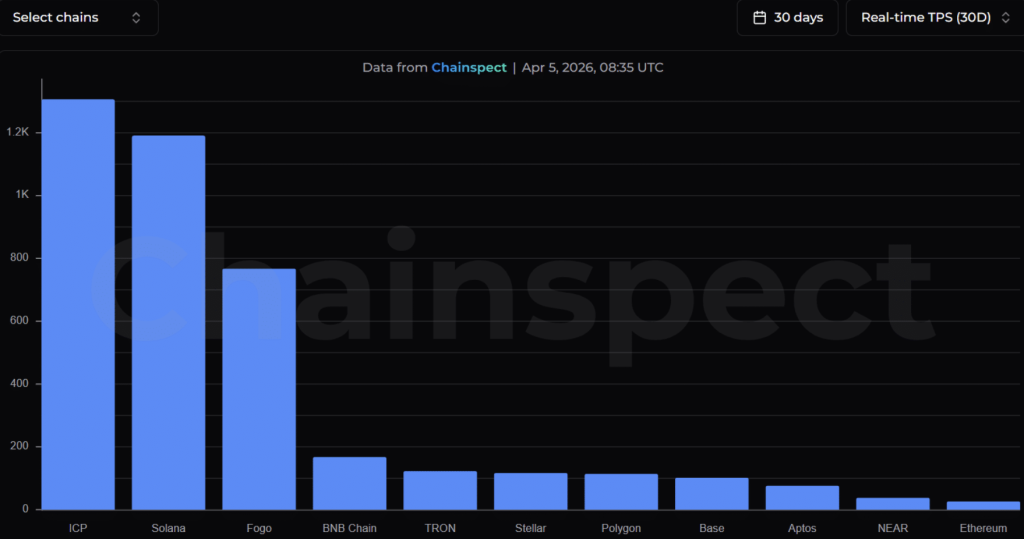
This matters even more when you compare Solana to Ethereum. Speed has always been Solana’s edge, the thing that set it apart. And the numbers back it up—over 106 billion transactions processed, roughly 31 times more than Ethereum.
Then there’s throughput. Solana handles around 1,191 transactions per second, while Ethereum sits closer to 26. That gap is huge, and it’s exactly why Solana has been able to dominate in certain DeFi areas.
But if that speed drops… even partially, it changes the equation.
A Defining Moment for the Network
That’s why this moment feels important, maybe more than it seems at first glance. A 90% slowdown isn’t just a technical detail—it challenges Solana’s core identity. And with Ethereum continuing to evolve, competition isn’t exactly slowing down either.
So now Solana has to prove something. That it can adapt, stay secure, and still remain fast enough to compete. Because if it can’t… the advantage it once had might start to fade, slowly at first, then all at once.