

- Retail activity and Bitcoin shrimp inflows have dropped to record lows, signaling caution
- Memecoin engagement has declined sharply, reinforcing a risk-off environment
- Institutional volume is rising, suggesting a potential “buy the fear” setup for Bitcoin
Retail activity has always been one of the clearest ways to read the market’s mood. When smaller investors are active, buying dips and chasing moves, it usually signals a risk-on environment — confidence is high, and people are willing to take chances.
But right now… that energy just isn’t there.
On-chain data shows that Bitcoin “shrimp” inflows — wallets holding less than 1 BTC — have dropped to record lows. That’s not just a small dip, it’s a clear sign that retail participation has pulled back significantly. And when retail disappears, it usually means caution has taken over.
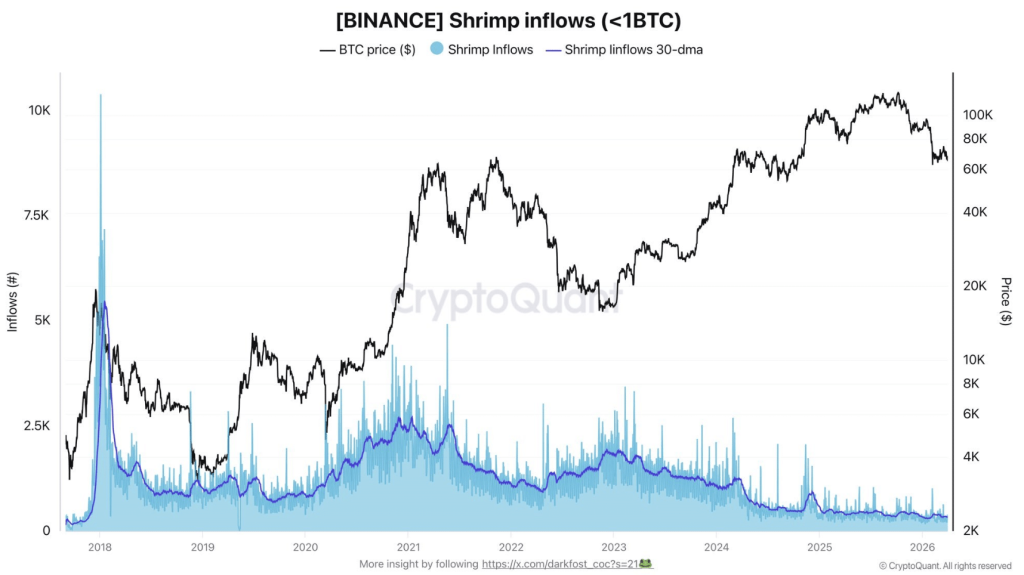
Low Inflows Reflect Weak Conviction
From a technical angle, this lack of inflow suggests something pretty simple — there’s not much dip-buying happening. The smaller players, who often jump in during corrections, are sitting on the sidelines instead.
Psychologically, it says even more. When retail isn’t participating, it often points to fear, or at least hesitation. The appetite for risk just isn’t there right now, and that makes it harder to confidently call any level a strong bottom.
That’s why the idea of $65K being a solid floor for Bitcoin still feels… a bit uncertain. Not impossible, just not fully convincing yet.
Memecoin Silence Adds to the Caution
It’s not just Bitcoin showing this behavior either. The memecoin space — usually one of the most active and speculative corners of crypto — has gone unusually quiet.
There’s a noticeable gap between new token launches and actual user activity. Taking Solana as an example, active wallets once peaked above 30 million in mid-2025. Now, that number has dropped below 5 million.
That’s a huge decline. And historically, memecoins tend to thrive when risk appetite is high. So when that sector slows down this much, it reinforces the idea that the market isn’t ready to take big risks yet.
Fear Dominates, But That Creates Opportunity
All of this points to one thing — sentiment is leaning toward fear. Retail traders aren’t chasing hype, memecoin rotations are weak, and overall engagement feels… muted.
But interestingly, this kind of environment can create opportunities elsewhere.
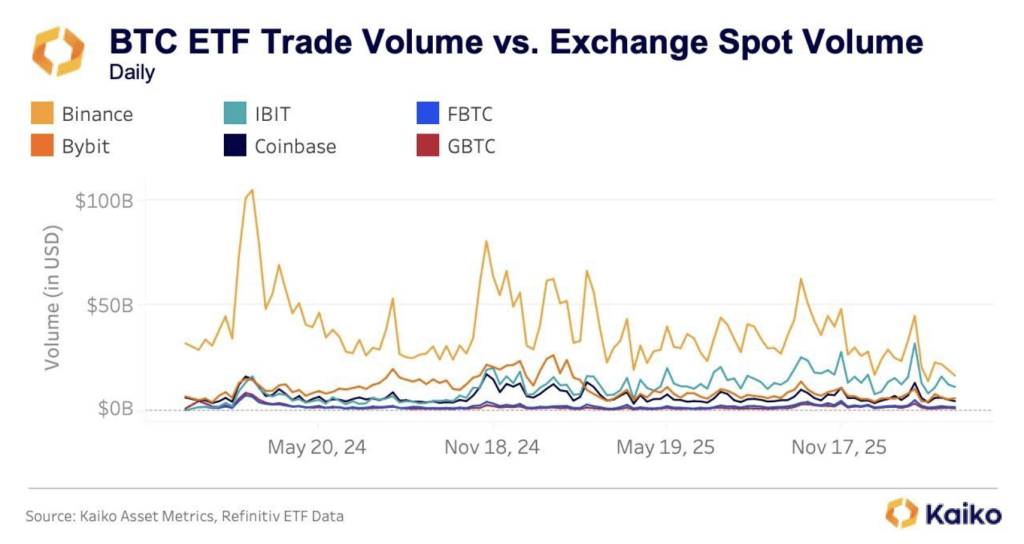
While retail steps back, institutions seem to be stepping in. BlackRock’s IBIT Bitcoin ETF is now seeing daily trading volumes between $16 and $18 billion, which is nearly on par with Binance and far above Coinbase’s $6 to $8 billion range.
That shift is hard to ignore. It suggests that while retail is cautious, larger players are still very much active.
A Classic “Buy the Fear” Setup Emerges
From a broader perspective, this looks like a classic “buy the fear” scenario. When high-risk participants pull back, sentiment drops — and that’s often when institutions start accumulating quietly.
Without retail-driven volatility, the market can stabilize, allowing bigger players to build positions without as much noise. And once sentiment flips back to risk-on, those positions can fuel the next major move.
So while things feel slow right now, maybe even a bit uncertain, this phase could be laying the groundwork for something bigger.
Is a Bitcoin Supercycle Forming?
If Bitcoin manages to hold around the $65K level, the current setup starts to look more interesting. Low retail participation, weak memecoin activity, and rising institutional volume… it’s an unusual combination.
Not the kind of environment that screams immediate breakout, but possibly one that builds quietly toward it.
If this pattern continues, there’s a real chance Bitcoin could be entering the early stages of an institutional-driven cycle. Not overnight, not instantly… but gradually.
And when sentiment eventually shifts back, the move could be sharper than most expect.