
- Treasury yields jump as markets price in higher inflation risk
- Traders now see 50% chance of Fed rate hike by October
- Crypto faces pressure as rate cuts expectations disappear
U.S. Treasury markets took a sharp hit as bond yields surged, signaling a sudden shift in how investors are viewing inflation and interest rates. A broad selloff across the $31 trillion bond market pushed yields higher by 12 to 15 basis points, a pretty aggressive move for Treasuries, especially in such a short window. The catalyst, at least in part, was escalating geopolitical tension, with reports that the U.S. is increasing its military presence in the Middle East.
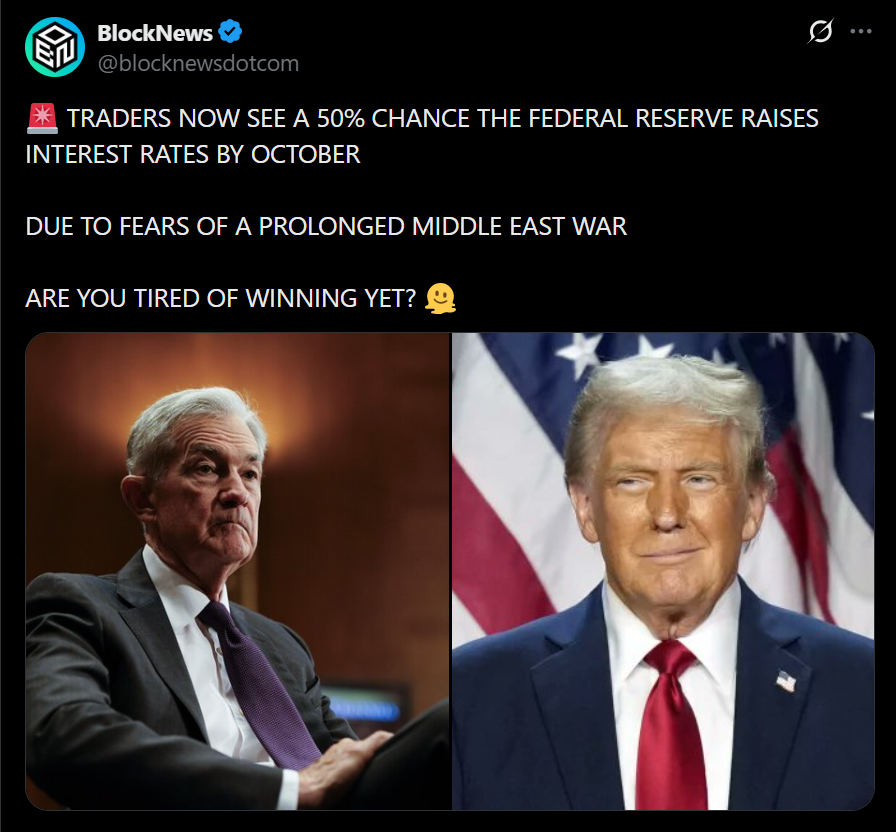
That escalation has changed expectations fast. Traders are now pricing in a 50% chance of a Federal Reserve rate hike by October, a major reversal from just weeks ago when markets were expecting rate cuts instead. It’s not just a tweak in outlook, it’s a full shift in direction, and markets are still adjusting to it.
Rate Cut Expectations Have Completely Flipped
Before the recent conflict escalation, markets were fully pricing in two rate cuts this year. That view has now been erased. Money markets no longer expect any cuts at all in the near term, which signals just how much inflation concerns have resurfaced.
The reasoning is fairly straightforward. A prolonged conflict in the Middle East could push energy prices higher, feeding directly into inflation. And when inflation risks rise, central banks tend to hold or even tighten policy, rather than ease it.
Higher Yields Create Pressure Across Markets
Rising Treasury yields don’t just affect bonds, they ripple across every major asset class. Higher yields strengthen the U.S. dollar and tighten financial conditions, making borrowing more expensive and reducing liquidity. That environment tends to weigh on both equities and crypto.
For crypto specifically, this shift removes one of the key bullish narratives, the expectation of easier monetary policy. Without rate cuts, the kind of liquidity-driven rallies seen in previous cycles become harder to sustain.
Geopolitics Is Driving the Shift
What makes this move more complex is that it’s not purely economic. Geopolitical risk is now feeding directly into market expectations. The potential for prolonged conflict, disruptions in energy supply, and rising global costs are all being priced in simultaneously.
That creates a difficult backdrop for the Fed. It’s not just managing inflation anymore, it’s dealing with external shocks that it can’t directly control. And markets are reacting accordingly, pushing yields higher as they adjust to that uncertainty.
Crypto Faces a Tighter Macro Environment
For crypto, the takeaway is fairly clear. The macro environment has tightened again, and expectations for rate relief have faded. That doesn’t mean long-term trends are broken, but it does mean short-term conditions are less supportive.
With yields rising and inflation risks climbing, crypto may continue to face headwinds. The market isn’t just reacting to price anymore, it’s reacting to a broader shift in global conditions, and that shift is still unfolding.