- Over 100 new companies sue after Supreme Court tariff ruling
- More than $170 billion in collected tariffs now under dispute
- Refund timeline remains unclear as trade court reopens cases
In the days following the US Supreme Court’s decision declaring most of President Donald Trump’s global tariffs illegal, a wave of litigation hit almost immediately. More than 100 companies have now filed new lawsuits, pushing the total number of tariff-related cases above 2,000. The central concern is simple, and costly: will the government actually refund the billions already collected?
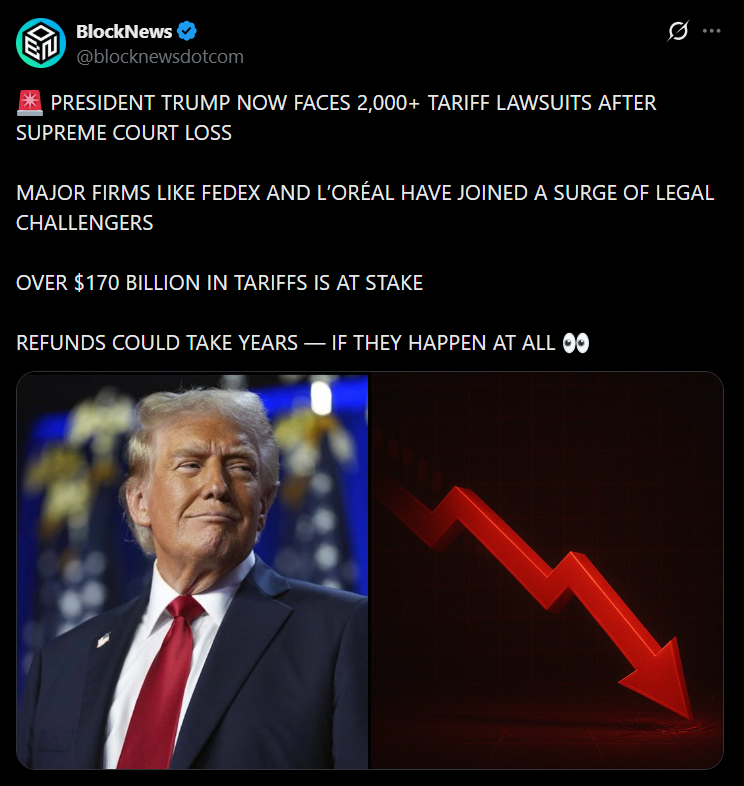
Major public companies are no longer sitting on the sidelines. FedEx filed suit, followed by names like Dyson, Dollar General, Bausch & Lomb, Brooks Brothers, and Sol de Janeiro. Units of L’Oreal, along with footwear companies such as Skechers and On Holding, have also stepped in, seeking to recover import duties they argue were unlawfully imposed.
$170 Billion in Tariffs Now in Legal Limbo
The Supreme Court’s ruling addressed the legality of the tariffs themselves, but it stayed silent on the mechanics of refunds. That question now shifts to the US Court of International Trade in New York. Meanwhile, the Justice Department is expected to weigh in on next procedural steps, which could signal how quickly — or slowly — the administration intends to move.
President Trump has publicly suggested that refunds may not come easily, indicating the issue could take years to litigate. With more than $170 billion in tariffs collected over the past ten months alone, the stakes are enormous. For many importers, this is not theoretical money. It’s capital already absorbed into supply chains, pricing, and balance sheets.
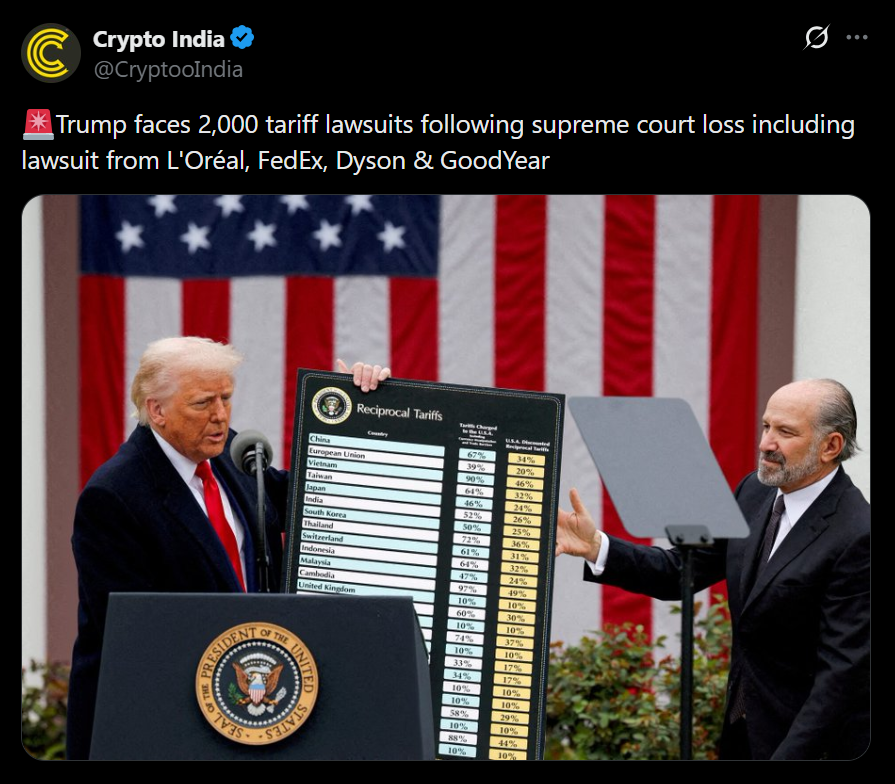
Big Names Shift the Legal Momentum
Until recently, many of the lawsuits were filed by smaller businesses that lacked the flexibility to shift suppliers or absorb tariff costs. Larger firms often managed the impact through pricing adjustments or vendor negotiations. But the entrance of companies like FedEx changes the dynamic, both legally and politically.
Trade attorneys note that when high-profile corporations with in-house legal teams and deep Washington connections file suit, it creates momentum. Smaller businesses may interpret the move as a signal that the legal path is viable. There’s also safety in numbers. When major firms join the fight, the perceived risk of political retaliation diminishes.
Refunds Won’t Be Quick, Even If They Come
The trade court has experience handling large-scale refund processes, including a post-1998 Supreme Court decision that invalidated a harbor maintenance tax. But this situation is far larger in scale, potentially involving thousands of claims and billions in repayments. Even under ideal conditions, resolution could stretch out for months, if not years.
In the meantime, ripple effects are already emerging. Consumers cannot directly claim refunds from customs authorities, even if companies passed tariff costs through higher prices. Some lawmakers have suggested direct payments to households, while private lawsuits are beginning to target companies accused of tariff-related price hikes. What started as a trade policy fight may now evolve into a prolonged legal and economic reckoning.