

- XRP open interest dropped sharply across Binance, Bybit, and Kraken, wiping out billions in leveraged positions.
- The synchronized deleveraging suggests forced liquidations and a broad derivatives market reset.
- Reduced leverage creates a cleaner structure, potentially setting the stage for a healthier next price move.
Ripple’s XRP just went through what traders call a cleanup — the kind that quietly changes structure without making loud headlines. Over the last 90 days, open interest across major exchanges has been bleeding out, steadily at first, then all at once. And oddly enough, most retail traders didn’t even flinch.
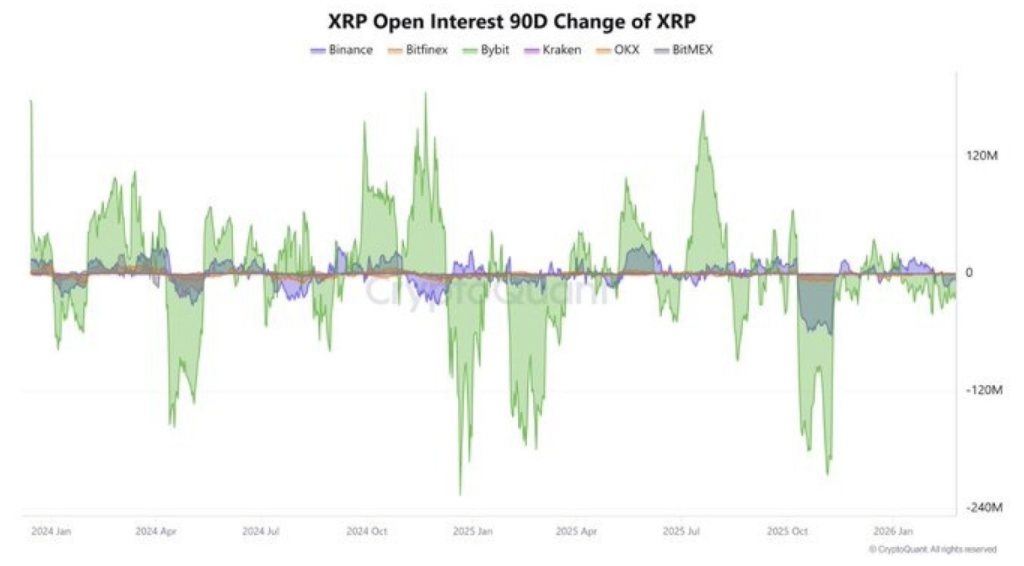
According to analyst Xaif Crypto, Binance alone saw open interest drop by roughly 7.7 million XRP. Bybit lost around 12 million. Kraken shed another 8.3 million. Stack that together and you’re looking at billions of dollars in leveraged exposure evaporating from the system. Not one exchange. Not one isolated glitch. It happened across platforms, almost in sync.
That’s what makes it interesting.
The Open Interest Chart Tells the Story
If you zoom out to the 90-day change chart, the pattern isn’t subtle. Deep red contractions appear repeatedly, especially on Binance and Bybit. These aren’t minor pullbacks or traders trimming exposure. They’re aggressive deleveraging waves.
The most recent contraction stands out even more. Open interest plunged sharply into some of the deepest negative territory seen in months. When declines hit that level across multiple venues simultaneously, it usually signals one of two things: forced liquidations, or large players deliberately closing size. Sometimes both.
In practical terms, the market flushed out overleveraged participants. That kind of reset tends to normalize funding rates and reduce fragility in the derivatives layer. When leverage compresses this hard, the structure becomes less prone to violent whipsaws. The system exhales.
Why Leverage Flushes Matter
Excessive leverage is like dry tinder. When positioning gets crowded, even small price moves can spark cascading liquidations. That’s when charts print dramatic spikes, fake breakouts, and rapid reversals that leave traders confused.
But when leverage drains from the system, the environment shifts. There are fewer forced buyers chasing green candles and fewer forced sellers dumping into red ones. Volatility doesn’t disappear, but it behaves differently. More organic, less mechanical.
Xaif’s thesis is straightforward: this isn’t the end of XRP’s broader cycle — it’s a reset phase. Weak hands, particularly those trading on heavy leverage, have largely been cleared out. What’s left is a cleaner derivatives base. Historically, similar wipeouts have preceded meaningful price expansions once positioning rebuilt on healthier footing.
Reset Doesn’t Mean Immediate Rally
Of course, a leverage flush doesn’t guarantee an instant pump. Markets don’t reward patience that quickly. What it does create, though, is potential energy. With open interest significantly reduced, the next expansion cycle won’t be stacked on top of extreme speculative positioning.
Smart capital rarely piles in during euphoric spikes. It tends to position during quieter stretches, when funding stabilizes and sentiment cools off. Right now, XRP’s derivatives data suggests we’re closer to silence than hype. That’s not a signal by itself, but it’s context.
The bigger question is timing. If open interest begins rebuilding gradually while price grinds higher instead of spiking, this deleveraging phase could later look like the foundation of a stronger move. For now, one thing is clear: XRP’s derivatives market has been flushed. What happens next depends on who steps back in — and how disciplined they are when they do.