

- Daily 10 a.m. Bitcoin drops have fueled manipulation theories online
- Terraform’s lawsuit revives scrutiny over Jane Street’s 2022 UST trades
- On-chain timing is clear, but intent remains legally unproven
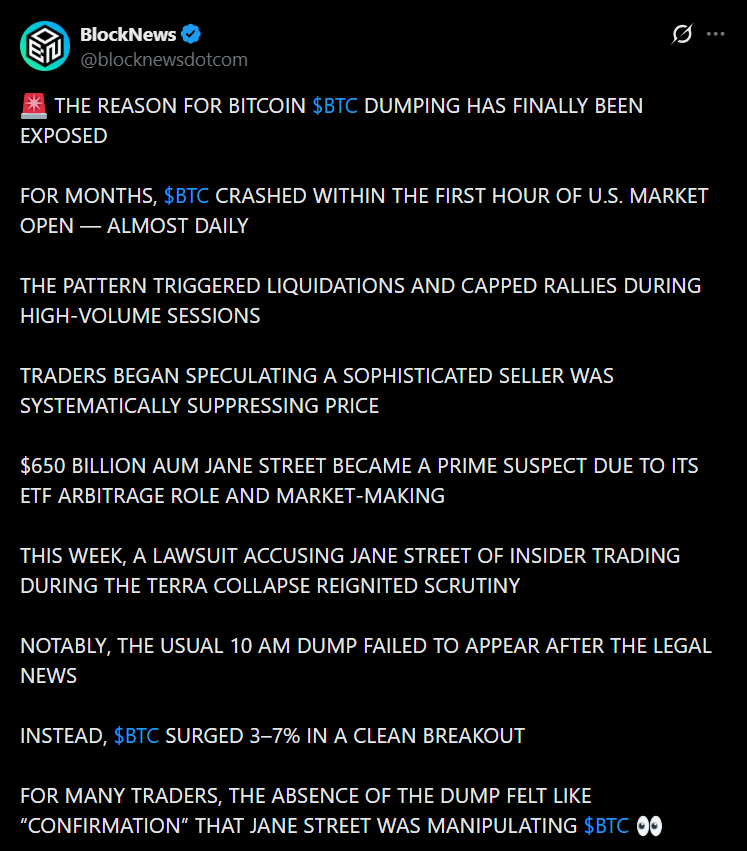
For months, traders have pointed to a pattern: Bitcoin frequently sells off around 10 a.m. Eastern, just after U.S. equities open. The repetition has been enough to spark a growing theory ecosystem online, with some claiming a large quantitative firm is systematically pressing the market lower.
Jane Street’s name keeps surfacing in those discussions. The firm, known for its high-frequency and quantitative trading operations, has become the focal point of speculation about a supposed “10 a.m. dump algorithm.” These claims remain unverified, but they persist because the timing aligns with heavy liquidity windows tied to ETF flows and institutional positioning.
Why the Terra Lawsuit Reignited Suspicion
The renewed attention stems in part from Terraform Labs’ 2026 lawsuit against Jane Street. Court filings allege that during the May 7, 2022 Terra collapse, Jane Street front-ran liquidity changes by withdrawing and selling approximately $85 million UST shortly after Terraform removed $150 million UST from Curve’s 3pool.
The blockchain timestamps show the sequence clearly. Terraform thinned liquidity. A large swap followed minutes later. The peg destabilized. What the data cannot prove on its own is whether Jane Street acted with insider knowledge or simply reacted faster than others in a fragile system.
That distinction matters. But in the public imagination, the Terra timing feeds into the broader belief that sophisticated trading firms may exploit predictable crypto liquidity windows.
Market Structure Versus Manipulation
Bitcoin’s 10 a.m. volatility may have more mundane explanations. The U.S. equity open overlaps with ETF hedging flows, options repositioning, and derivatives rebalancing. Large funds adjust exposure when both stock and crypto markets are active simultaneously.
Algorithmic firms thrive in these moments because liquidity peaks. That doesn’t automatically imply coordination or manipulation. It does mean price swings can look mechanical.
Jane Street has denied all Terra-related allegations, calling the lawsuit baseless and attributing Terra’s collapse to structural flaws and management failures. No public evidence confirms a coordinated Bitcoin suppression strategy.

Terra’s Collapse Still Matters
The Terra episode remains relevant because it demonstrated how thin liquidity combined with reflexive design can trigger rapid failure. Terraform’s own withdrawal from Curve materially weakened the peg before large swaps hit the pool.
Even if courts ultimately reject insider-trading claims, Terra’s structural fragility created conditions where speed and scale determined outcomes. That same liquidity sensitivity continues to characterize parts of the crypto market today.
Conspiracy or Coincidence?
Daily Bitcoin sell-offs around 10 a.m. Eastern may reflect predictable liquidity clustering rather than secret algorithms. However, the Terra lawsuit keeps questions about high-frequency influence alive.
Until legal proceedings clarify the 2022 events, speculation will continue to blend with observable price patterns. The real question is less about a hidden switch being flipped each morning and more about how concentrated liquidity and institutional participation shape Bitcoin’s intraday behavior.