

- Strategy’s unrealized Bitcoin losses now exceed $9 billion
- BTC has fallen about 30% this year and trades near $63,000
- Michael Saylor signals no intention to sell despite volatility
Strategy, the largest corporate holder of Bitcoin, is sitting on more than $9 billion in unrealized losses as BTC trades near $63,100. The firm holds 717,722 BTC purchased for roughly $54.5 billion at an average cost of about $76,000 per coin. At current prices, that stack is valued closer to $45 billion.

The drawdown follows a broader crypto selloff, with Bitcoin down roughly 30% year to date and nearly 19% in February alone. If the monthly slide holds, it would mark Bitcoin’s steepest monthly drop since 2022 and its fifth consecutive month of losses — a streak not seen since 2018.
Macro Pressure Is Driving the Selloff
The downturn accelerated after President Trump announced plans to raise global tariffs to 15%, triggering renewed risk-off sentiment across financial markets. The total crypto market cap dropped about 4% in the last 24 hours to roughly $2.2 trillion.
Bitcoin’s price action remains tightly linked to macro conditions. Liquidity tightening, geopolitical stress, and tariff uncertainty are weighing on speculative assets. Strategy’s exposure magnifies those swings because its balance sheet is directly tied to BTC’s market value.
Saylor Isn’t Flinching
Despite the $9 billion paper loss, Executive Chairman Michael Saylor has shown no sign of retreat. Just last week, the company completed its 100th Bitcoin purchase, adding 592 BTC for approximately $40 million using proceeds from stock sales.
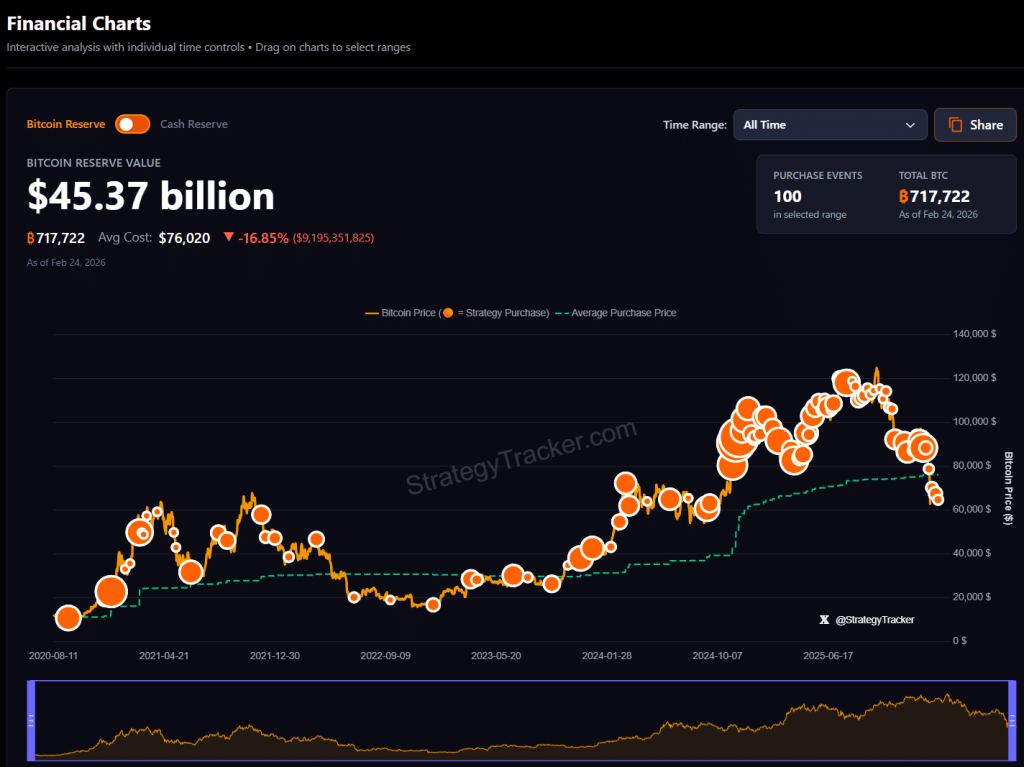
Since adopting Bitcoin as its primary reserve asset in August 2020, Strategy has accumulated roughly 3.4% of total BTC supply through a combination of equity and debt issuance. The strategy remains consistent: accumulate regardless of short-term volatility.
Public Markets Feel the Heat
Strategy’s stock has reflected the pressure. Shares fell more than 5% Monday to close at $124 and continued sliding in after-hours trading. Year to date, the stock is down nearly 20%, mirroring Bitcoin’s weakness.
For equity investors, Strategy functions as a leveraged proxy for Bitcoin. When BTC rallies, the stock often outperforms. When BTC falls, losses amplify.
The Bigger Question
The current drawdown tests the durability of Strategy’s conviction model. Unrealized losses only become realized if assets are sold, and Saylor’s public stance suggests that is not on the table.
The market may debate timing and leverage, but Strategy’s thesis has not changed. It is not trading Bitcoin. It is holding it as a long-duration treasury asset — volatility included.