
- Ripple is expanding beyond XRP with RLUSD and a broader ecosystem push
- Stablecoin adoption trends may strengthen Ripple’s positioning in payments
- XRP ETF narratives are heating up, with reports citing $1.37B in inflows
Ripple (XRP) is no longer being framed as just another cryptocurrency riding market cycles. It’s increasingly being treated as an ecosystem play, especially as Ripple pushes deeper into stablecoins, cross-border payments, and institutional narratives. That shift is exactly why some investors are now talking about structured allocations, like putting $2,000 to $3,000 into XRP with the hope of doubling returns.
Now, to be clear, nothing in crypto is guaranteed, and doubling money is never “easy.” But there are two major reasons why the XRP bull case is getting louder again, even while the market remains choppy.
RLUSD and the Stablecoin Pivot Could Strengthen XRP’s Long-Term Narrative
One of the biggest changes around Ripple is RLUSD, Ripple’s stablecoin, which is increasingly being positioned as part of a broader payments strategy rather than a side product. Stablecoins are becoming the most practical part of crypto, especially for real-world usage. They move fast, they settle globally, and they don’t force users to stomach volatility.
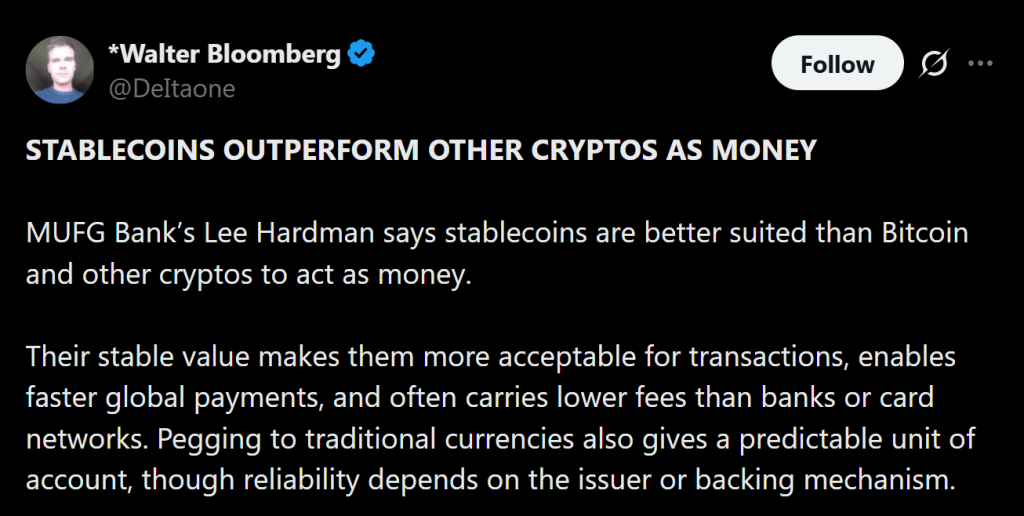
That’s why Walter Bloomberg’s report resonates. MUFG Bank’s Lee Hardman argued that stablecoins are better suited than Bitcoin and other volatile assets to act as money because they hold stable value, work for transactions, and can enable faster global payments with lower fees. That’s not a fringe crypto opinion. That’s a major banking lens.
If stablecoins continue absorbing market attention, Ripple benefits because it already has the compliance-first reputation and payments branding to plug into that trend. And if RLUSD gains traction, XRP becomes more credible by association, even if it isn’t the stablecoin itself.
XRP ETFs Are Becoming the Second Major Tailwind
The other reason XRP bulls are excited is the ETF narrative. Reports circulating claim XRP ETFs pulled in more than $1.37 billion in inflows in January 2026 alone, framing them as one of the fastest-growing crypto ETF stories in the market.
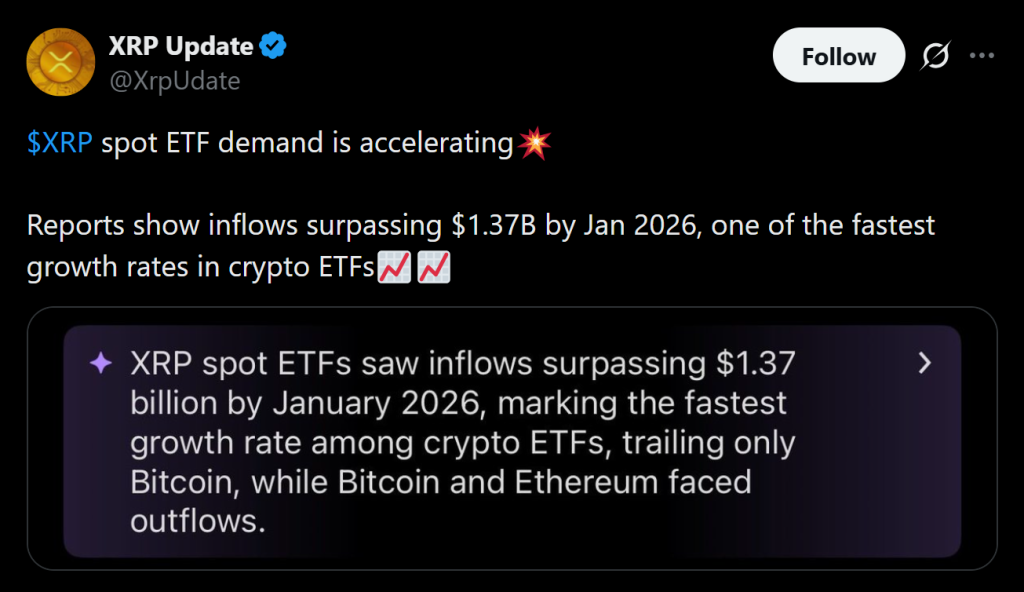
If that trend holds, it matters for two reasons. First, ETFs create steadier inflows, which can reduce the boom-bust feeling XRP has historically had. Second, they attract a different class of buyer. ETF demand isn’t always emotional. It’s often allocation-driven, meaning it can stick around longer than retail hype.
For XRP specifically, ETFs also reinforce legitimacy. After years of regulatory drama, being ETF-adjacent is a psychological shift. It changes how institutions talk about the asset.
So Can $2K in XRP Actually Double?
It’s possible, but it’s not automatic. XRP has doubled before, and it can do it again, especially in a real risk-on environment. But the key variable isn’t just Ripple’s roadmap. It’s the broader crypto market, Bitcoin direction, and whether liquidity returns.
The more realistic framing is this: XRP is building multiple narratives at once. Payments, stablecoins, and ETFs. If even two of those stay strong at the same time, XRP becomes harder to ignore. And in crypto, being hard to ignore is often the first step before price starts moving.