
- NFT market cap has dropped below $1.5B as speculation continues to fade
- Supply is rising while buyers, prices, and conviction keep shrinking
- Corporate exits and platform shutdowns confirm the easy-money era is over
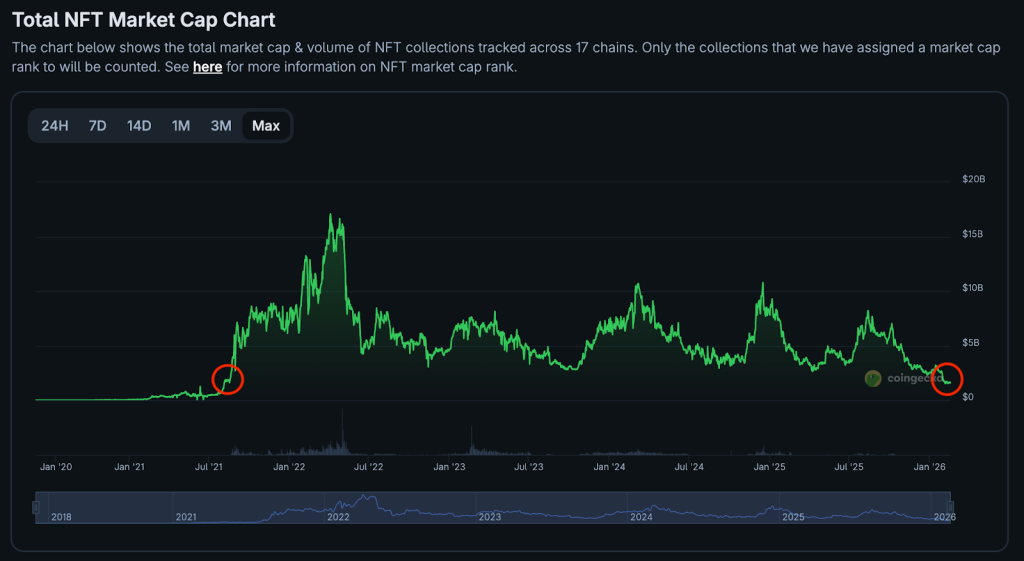
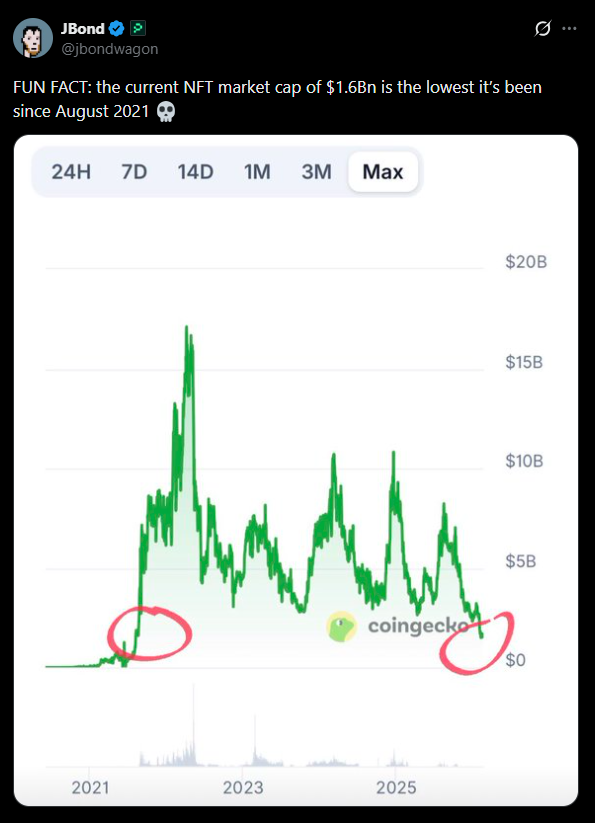
The NFT market has slipped back to where it stood before the 2021 mania, and the numbers are finally catching up to what most traders already feel. A total NFT market cap falling below $1.5 billion isn’t just a rough week. It’s a structural reset. The easy-money phase is gone, and what’s left is a smaller market that no longer rewards noise.
This move also came alongside a broader pullback in crypto. Total crypto market cap dropped from roughly $3.1 trillion to $2.2 trillion in just weeks. When liquidity drains from crypto, NFTs tend to get hit first, because NFTs are discretionary. They’re the “extra” spend, and when people get cautious, the extra spend disappears fast.
When Bitcoin and Ethereum Drop, NFT Demand Usually Collapses
NFTs don’t exist in a vacuum. Bitcoin falling from around $89,000 to near $65,000 and Ethereum sliding from roughly $3,000 to $1,800 changes the entire mood. Those are the base-layer assets that still dominate NFT settlement and trading volume, and when they weaken, confidence weakens with them.
The result is predictable. Traders stop chasing collectibles, whales stop sweeping floors, and casual buyers vanish. In a risk-off environment, most people don’t want digital art, they want liquidity. That’s why NFT markets tend to crash harder than the rest of crypto when sentiment flips.
The NFT Market Has a Supply Problem, Not Just a Demand Problem
The deeper issue is internal. NFT supply kept expanding even as demand collapsed. Circulation reportedly climbed to nearly 1.3 billion items in 2025, up 25% year over year, while total sales fell 37% to around $5.6 billion. Average sale prices dropped below $100.
That’s not healthy growth. It’s dilution. Minting became cheap, frictionless, and endless, but buyers didn’t scale with it. The market is now bloated with inventory that nobody wants to price honestly, which creates a slow grind lower instead of a clean reset.
Corporate Exits and Shutdowns Confirm the Cycle Has Ended
If the data feels too abstract, the corporate exits make it real. Nike’s quiet divestment of RTFKT says more than a thousand charts. It was acquired at peak optimism, then later shut down amid declining interest and legal pressure. That’s what late-cycle NFT strategy looks like when the hype stops working.

Platform shutdowns have followed. Nifty Gateway, owned by Gemini, is set to close after years of shrinking activity. Social NFT platform Rodeo has also announced its own shutdown after failing to scale. This is the part of the cycle where infrastructure disappears because the volume is no longer there to justify it.
What’s Left After the Hype Clears Is Smaller but More Real
This isn’t the death of NFTs. It’s the death of pretending that JPEG speculation alone justified billion-dollar valuations. The market is stripping itself down to use cases that still matter: ownership, provenance, gaming assets, and digital identity. Those areas may still grow, but they’ll grow slowly, and they’ll be judged more harshly.
NFTs didn’t disappear. The fantasy did. What remains is quieter, less forgiving, and far less profitable for people who relied on hype. But if anything durable is going to come out of NFTs long term, this cleanup phase is unavoidable.