
- XRP is in a quiet accumulation phase where opportunities are not immediately obvious
- Market narratives suggest early positioning could matter, but no guaranteed catalyst exists
- Long-term value depends on adoption, liquidity, and real-world usage, not speculation alone
Opportunities in markets don’t usually show up with flashing signals, they tend to feel uncertain, sometimes even boring. It’s that strange phase where nothing seems urgent, and yet, later on, it’s the period people look back on and say, “that was the time.” Crypto has followed this pattern more than once, where accumulation happens quietly before momentum kicks in.
Right now, XRP seems to be sitting in a similar spot. Not explosive, not collapsing either, just… steady, maybe a bit overlooked. And that’s exactly why the conversation around accumulation is starting to pick up again.
The Accumulation Narrative Starts Circulating Again
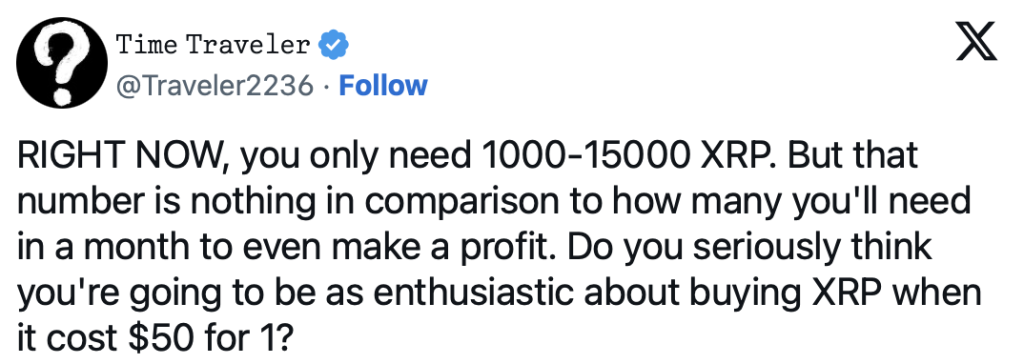
A recent post on X by Time Traveler brought this idea back into focus, suggesting that holding between 1,000 and 15,000 XRP could become much harder if price conditions shift. It’s a simple framing, but it taps into a deeper belief, that XRP might still be undervalued compared to where it could go long term.
This kind of thinking isn’t new though. It’s rooted in the idea that getting in early, when prices are relatively low, allows investors to build larger positions with less capital. Once price starts climbing, that same capital stretches less, and the window, slowly, starts to close.
But Can XRP Actually Move That Fast?
That’s where things get a bit more complicated. For XRP to reprice meaningfully, it needs more than just optimism, it needs real demand, sustained buying pressure, and liquidity across markets. Prices don’t jump in isolation, they move because something underneath them is pushing consistently.
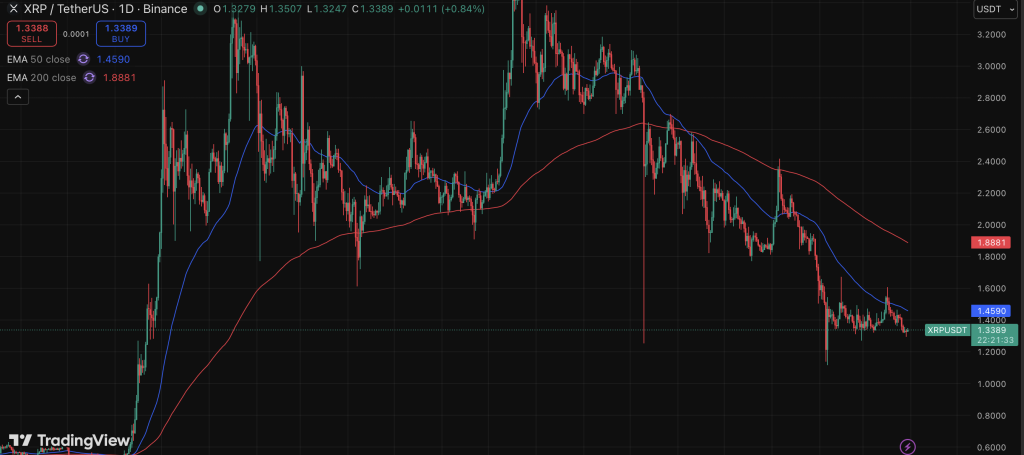
At the moment, XRP is still trading within a range shaped by sentiment and broader market conditions. There’s growing optimism around its role in cross-border payments, sure, but there isn’t a single, confirmed catalyst that guarantees a sudden breakout. Markets usually move in steps, not overnight surges, even if it sometimes feels like they do.
Utility Matters, But It’s Not Everything
One of XRP’s strongest narratives is its utility. It’s designed as a bridge asset for international transfers, something Ripple has been building toward for years. Faster settlements, lower costs, more efficient systems, all of that gives XRP a solid foundation, at least on paper.
But here’s the catch, utility alone doesn’t automatically translate into price. Adoption needs to scale, transaction volume needs to increase, and liquidity has to deepen before valuation really shifts. Speculation can speed things up, sure, but it can’t replace actual usage in the long run.
A More Grounded Way to Look at It
The idea that holding a certain amount of XRP guarantees future returns sounds appealing, but it oversimplifies things quite a bit. Markets don’t reward fixed numbers, they respond to timing, positioning, and, honestly, a bit of patience. Accumulation can help, but it also comes with risk, especially in a space as volatile as crypto.
A more measured approach probably makes more sense. Understanding market structure, managing exposure, and staying flexible matters far more than chasing arbitrary targets. XRP might have long-term potential, but whether that potential plays out depends on real progress, not just narratives that feel urgent in the moment.