

- YoungHoon Kim (IQ 276) predicts Bitcoin will hit $220K in 45 days
- He converted his entire net worth into BTC, calling it the future “global reserve asset”
- Institutional buying + bullish technical posture may fuel a major rally ahead
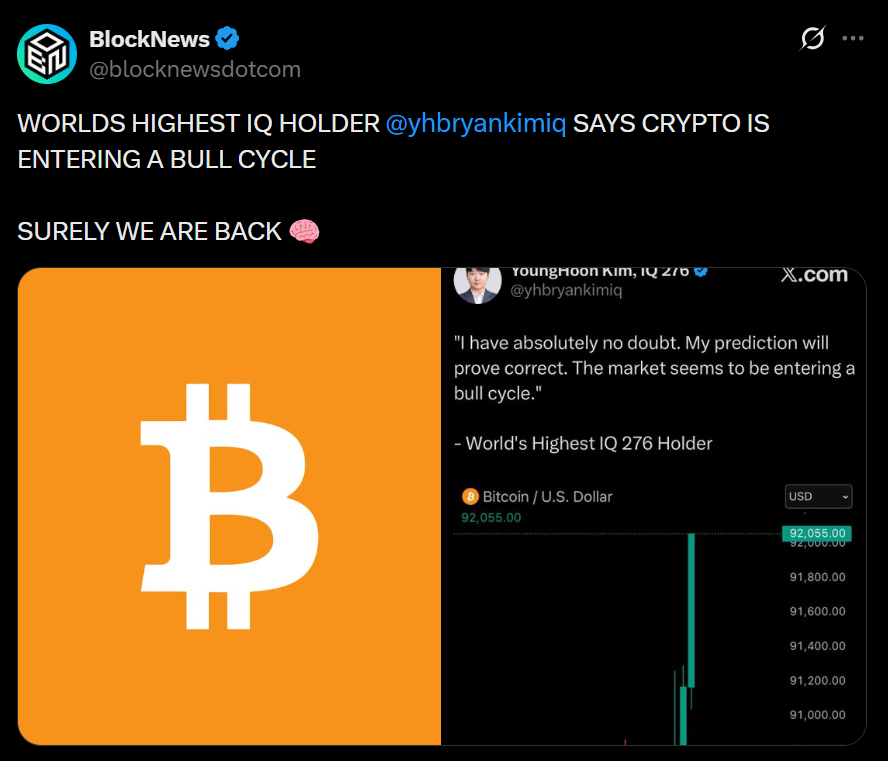
YoungHoon Kim — who claims an IQ of 276, the highest recorded globally — is making one of the boldest Bitcoin predictions of the year. Kim says BTC will hit $220,000 within the next 45 days, and he’s so confident that he has reportedly moved all of his personal wealth into Bitcoin. He argues that BTC is on track to become the global reserve asset, replacing outdated monetary systems as institutions continue shifting into digital stores of value.
Why Kim Thinks Bitcoin Is Ready to Rip
According to Kim, the ingredients for a violent upside move are lining up fast. Institutional accumulation is rising again, ETF inflows are stabilizing, and long-term holders continue moving coins off exchanges. Technically, he argues BTC is sitting in the same posture it held before previous explosive rallies — compressed, under pressure, and ready to expand sharply. Bitcoin has a well-documented history of recovering from deep pullbacks with massive vertical bursts, and Kim believes we’re on the edge of another.
Why the Doubters Might Be Early
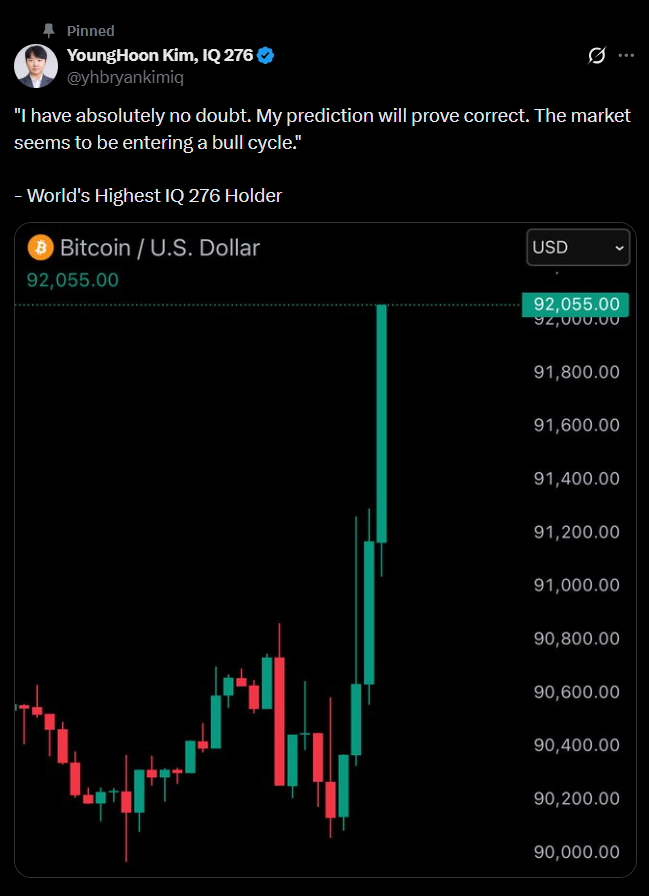
Plenty of analysts are calling for caution right now, but Kim thinks they’re missing the bigger macro shift. Sentiment can flip almost instantly in crypto, especially when liquidity returns. Even mainstream indicators — when stacked together — suggest current weakness could be a springboard rather than a ceiling. With institutions steadily buying and volatility cooling, the setup looks a lot like prior inflection zones that produced 50%–100% runs in short windows.
What Happens If Kim Is Right
If you take his view seriously, this period could represent one of the most favorable entry zones relative to potential reward. Even if Bitcoin doesn’t hit $220,000 in 45 days, a move back toward $150,000–$180,000 would still deliver massive upside from current levels. Kim frames it simply: the risk is finite, but the reward — in this specific window — may be unusually asymmetric.