
- New rule may allow crypto exposure inside 401(k) retirement plans
- Even small allocations could create long-term Bitcoin demand
- Fiduciary rules remain, shaping how institutions adopt crypto
Washington may have just made one of the most important crypto moves in a while, and it didn’t come with much noise. A new Labor Department rule, now cleared for review, could allow retirement plans governed by ERISA to include crypto and even private equity. That means trillions in long-term capital might finally have a compliant path into digital assets… not instantly, but directionally, it’s a big shift.
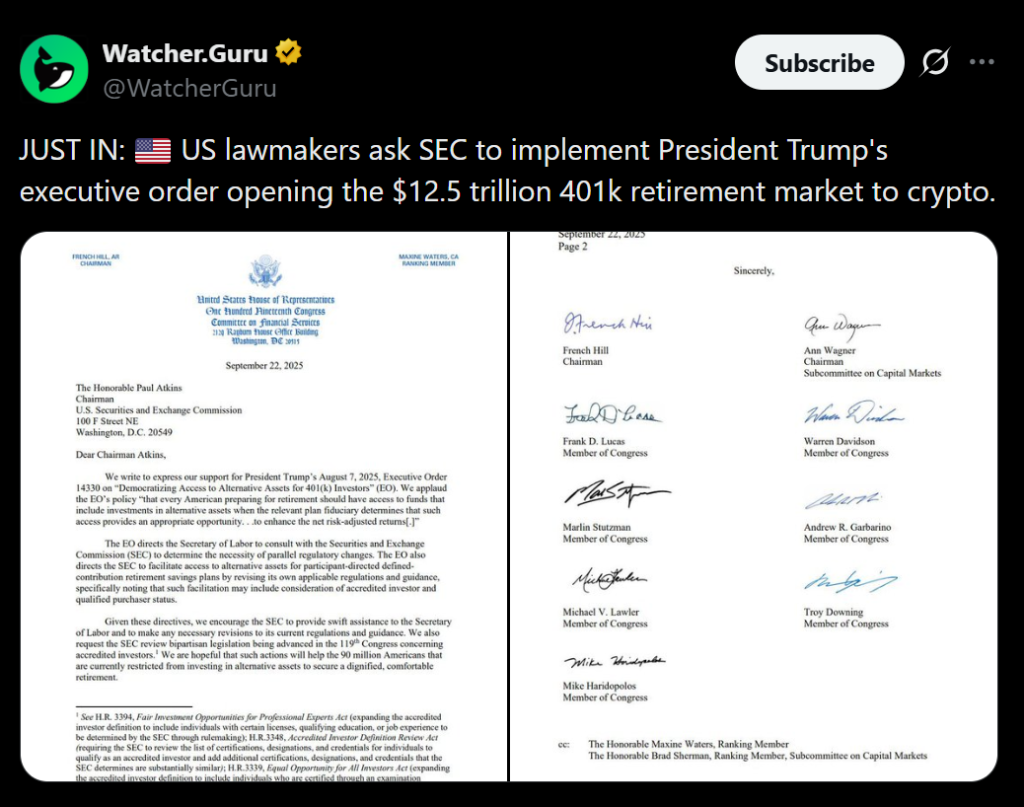
This isn’t about hype cycles or short-term inflows. It’s about structure. Retirement systems don’t move fast, but when they do, they tend to stick. And that kind of capital behaves very differently from typical crypto money.
Slow Capital Could Become the Strongest Demand
Retail traders chase narratives, jump in and out, and react quickly to market swings. Retirement accounts don’t work like that. They allocate slowly, carefully, and once capital is placed, it tends to stay there for years, sometimes decades.
If even a small portion of the roughly $10 trillion 401(k) market begins to touch crypto, the impact could be significant. Not explosive, but persistent. That kind of steady demand has a different effect, it tightens supply over time instead of creating short bursts of volatility.
Fiduciary Rules Still Set the Boundaries
That said, this isn’t a green light for retirement funds to go all-in on crypto overnight. Fiduciary responsibility still plays a central role in how these plans operate. Decision-makers are required to act in the best interest of participants, which naturally limits exposure to highly volatile assets.
So adoption, if it happens, will likely be gradual and structured. Expect initial exposure through regulated products, most likely Bitcoin first, possibly Ethereum later. The rule doesn’t force participation, it simply removes a barrier that made it harder before.
Crypto Moves Closer to Institutional Normalization
This development fits into a broader trend that’s been building over time. Instead of resisting crypto outright, policymakers appear to be shifting toward integration. The tone is changing, less about blocking access, more about creating frameworks institutions can work within.
That shift matters more than it might seem at first glance. Once crypto becomes compatible with existing financial systems, its role begins to evolve from speculative asset to something closer to a standard allocation option.
This Is Infrastructure, Not Hype
There’s nothing flashy about retirement flows, and that’s exactly the point. The biggest shifts in markets often happen quietly, through structural changes rather than headlines. This rule, if implemented and adopted, could reshape how capital enters crypto over the long term.
It’s not immediate, and it’s not guaranteed. But it’s foundational. And in markets, the plumbing usually matters more than the noise.