

- USD1 briefly dipped to $0.994 before quickly restoring its peg
- Redemption access functioned smoothly during the stress moment
- The episode highlights plumbing strength over political narratives
USD1 briefly trading down to $0.994 sparked outsized reactions across crypto social feeds. In reality, a sub-one percent move is not structural failure. It is market friction. Stablecoins that operate in open markets will occasionally wobble under pressure, especially during heightened volatility or coordinated trading activity.

The key difference between noise and collapse lies in duration and redemption integrity. USD1’s price deviation was short-lived, and the peg stabilized without spiraling liquidity problems. That distinction matters.
Redemption Mechanisms Did the Heavy Lifting
What truly defines stablecoin durability is not branding or political backing. It is redemption functionality. Holders retained the ability to convert USD1 into dollars, and that exit pathway remained operational during the price dip.
When redemptions work, panic typically fades quickly. The peg restored itself because the conversion mechanism provided a real arbitrage incentive. Markets stabilize when there is a functioning floor.
Infrastructure Over Optics
USD1’s association with World Liberty Financial and indirect political ties drew attention, but branding does not defend a peg. Infrastructure does. Partnerships, custody frameworks, reserve management, and operational liquidity matter more than headlines.
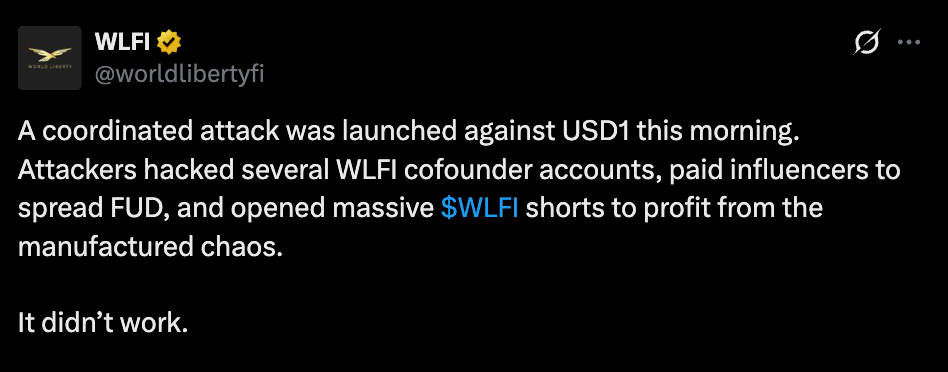
History shows stablecoins fail when redemptions pause or reserves prove inaccessible. Coins collapse when exits close. In this case, convertibility remained intact. That is why the market corrected itself.
Stress Tests Are Inevitable
Every major stablecoin eventually faces volatility events. Whether triggered by rumors, macro stress, or trading imbalances, pressure moments are part of operating in live markets.
USD1’s brief slip functioned as a real-time stress test rather than a systemic break. The peg did not require emergency measures, extended suspensions, or extraordinary interventions. That outcome reinforces baseline structural integrity.
The Broader Crypto Lesson
Stablecoins are not judged by whether they ever fluctuate by fractions of a cent. They are judged by whether holders can exit smoothly when confidence is tested.
USD1’s episode suggests the mechanism held under pressure. In crypto markets, durability is measured by plumbing, not optics.