
- President Trump will deliver his first public comments after the 6–3 tariff ruling
- The Supreme Court said IEEPA does not authorize presidents to impose tariffs
- The administration may explore alternative legal paths to reimpose duties
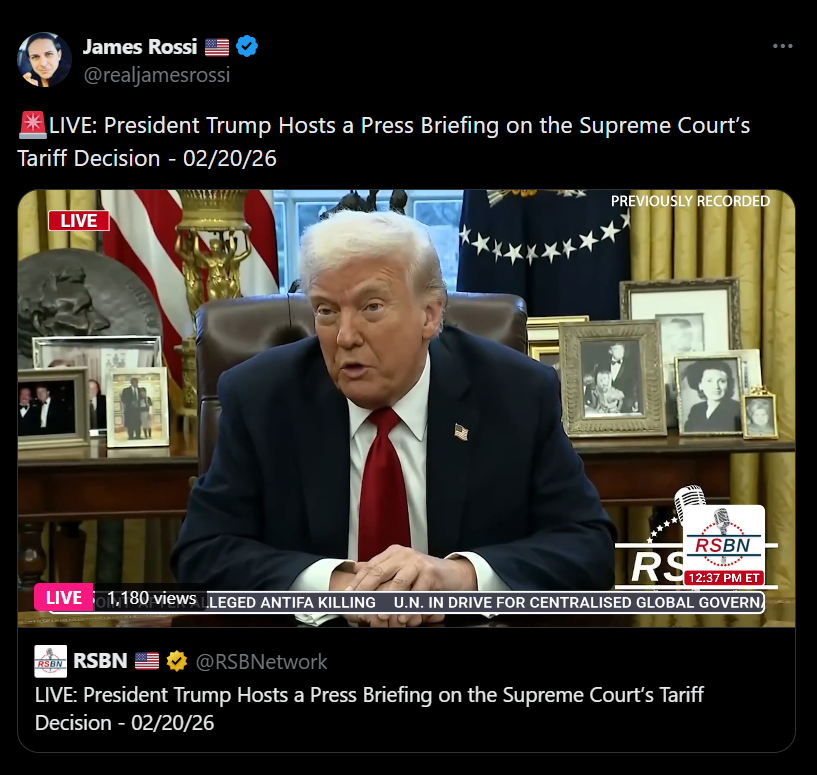
President Trump is scheduled to hold a White House briefing following the Supreme Court’s 6–3 ruling that struck down his authority to impose sweeping tariffs under the International Emergency Economic Powers Act (IEEPA). The decision marked one of the most significant legal defeats of his current term and directly challenges a cornerstone of his economic policy.
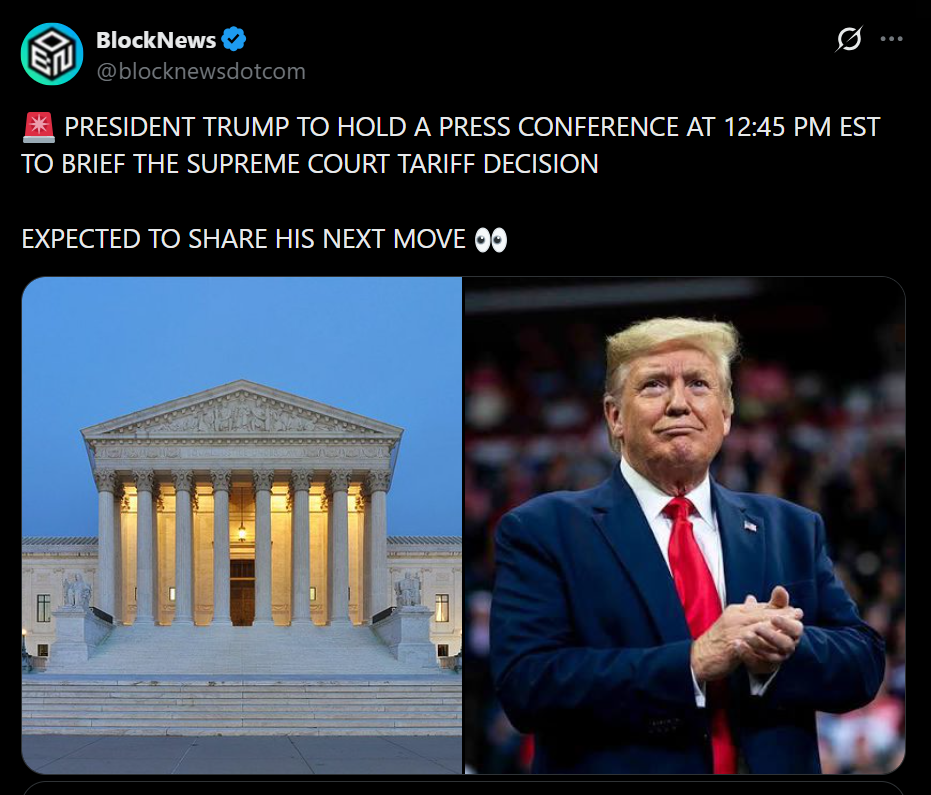
The press conference, set for 12:45 p.m. ET in the White House briefing room, will be his first public response to the ruling. Markets, policymakers, and foreign governments are all watching closely.
What the Court Decided
The Supreme Court concluded that IEEPA does not grant presidents the power to impose tariffs. The majority opinion, which included both conservative and liberal justices, determined that while the 1977 law allows regulation of imports during national emergencies, it does not extend to setting duties, authority traditionally reserved for Congress under the Constitution’s commerce clause.
This interpretation effectively limits executive trade power under emergency declarations and reasserts congressional control over tariff policy.
Why the Economic Impact Is Still Unclear
Although the ruling invalidates key tariff measures, the administration has suggested it may seek alternative statutory authority to reimpose certain duties. Other trade laws provide more limited tools, which could allow parts of the tariff framework to return in modified form.
That uncertainty leaves markets in a holding pattern. Businesses that had anticipated potential refunds or relief may still face policy whiplash if new tariff mechanisms are introduced.
Markets and Global Partners Are Watching the Tone
The substance of the ruling is significant, but the tone of Trump’s response may matter just as much. If he signals aggressive efforts to reassert tariffs through other legal channels, trade tensions could reignite. If the administration pivots toward legislative engagement, markets may interpret that as a stabilizing move.
Global trading partners are also monitoring developments. Trade policy influences supply chains, pricing, and currency markets, so clarity — or renewed escalation — will likely move financial assets quickly.
A Defining Moment for Trade Authority
Beyond the immediate policy fallout, this moment reinforces the broader debate over executive power in economic policymaking. The Supreme Court’s ruling redraws boundaries around emergency authority, but how aggressively the administration pushes back will shape the next chapter.
For now, all attention shifts to the White House briefing room. What happens next may determine whether the tariff saga cools down — or intensifies again.