- Trump claims the ruling clarified and expanded his trade authority
- New 10% global tariff will be issued under Section 122
- Broader tariff tools like 232 and 301 remain fully intact
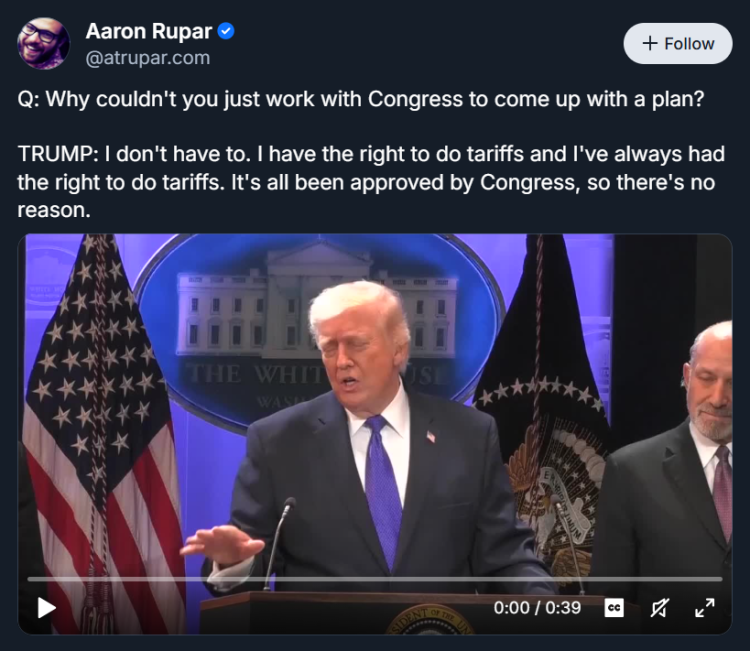
President Donald Trump is arguing that the Supreme Court’s 6-3 ruling did not weaken his trade authority — it strengthened it. While the Court blocked his use of IEEPA to impose sweeping tariffs, Trump insists the decision clarified that multiple other statutes give him even broader tools to regulate trade.
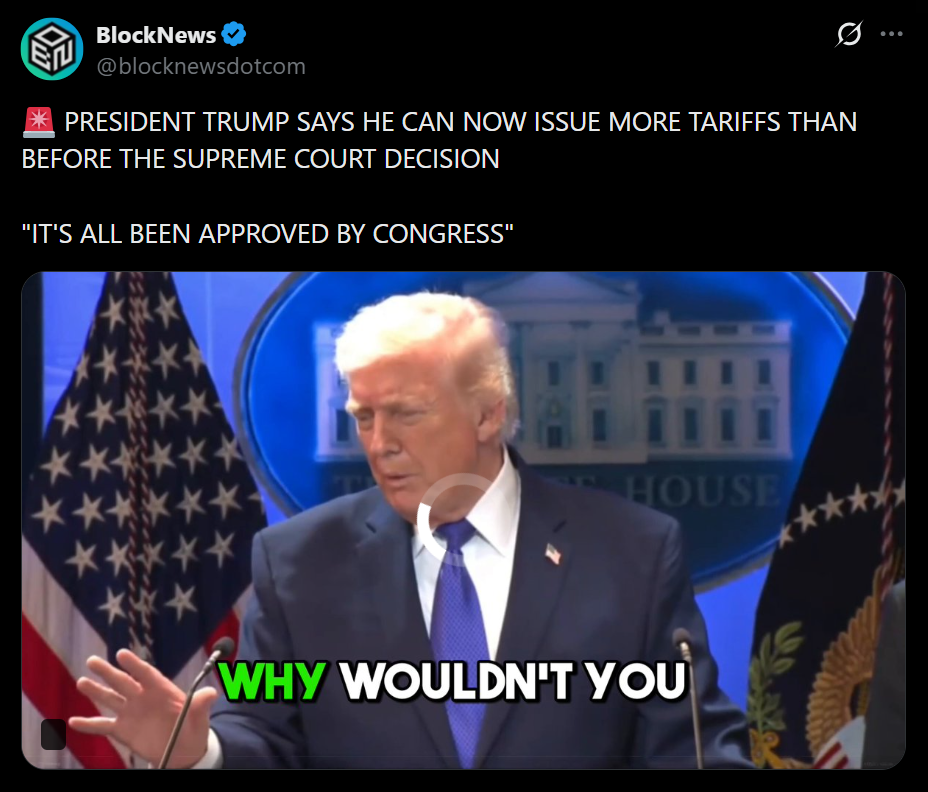
In his Truth Social response, he pointed directly to Justice Brett Kavanaugh’s dissent, which listed alternative tariff authorities such as Section 232 of the Trade Expansion Act of 1962, Sections 122, 201, and 301 of the Trade Act of 1974, and Section 338 of the Tariff Act of 1930. Trump thanked Kavanaugh publicly, arguing that the ruling removed ambiguity and confirmed the president’s ability to impose tariffs under those frameworks.
A 10% Global Tariff Is Just the Start
Trump announced he will immediately impose a 10% global tariff under Section 122, on top of existing duties. Section 122 allows temporary import restrictions for balance-of-payments reasons, and Trump appears ready to use it as a rapid-response mechanism.
At the same time, he confirmed that national security tariffs under Section 232 and existing Section 301 tariffs remain in full force. He also signaled new investigations under 301 authority, which historically has been used to target unfair trade practices.
The message is clear: if one legal pathway closes, others remain wide open.
Why This Could Mean More Aggressive Trade Policy
The Supreme Court ruling narrowed the use of emergency powers under IEEPA, but it did not eliminate presidential tariff authority. In fact, by drawing a clear boundary around IEEPA, the Court may have encouraged the administration to lean harder into trade laws explicitly designed for tariff imposition.
Trump framed the outcome as making his authority “more powerful and crystal clear.” Instead of relying on emergency declarations, he now appears positioned to use statutes that were purpose-built for tariffs — arguably reducing legal risk while expanding strategic flexibility.
Why Crypto Markets Should Pay Attention
More aggressive tariff policy can reshape global liquidity conditions. Trade tensions influence currency flows, inflation expectations, equity markets, and risk appetite — all of which spill into crypto.
If broader tariffs slow global growth or spark retaliation, risk assets could see volatility. Bitcoin and altcoins increasingly trade alongside macro developments rather than in isolation. When policy uncertainty rises, liquidity often tightens.
At the same time, prolonged trade friction can fuel narratives around currency debasement and geopolitical fragmentation — themes that historically support Bitcoin’s long-term thesis.
The Bigger Picture
Trump’s response signals escalation, not retreat. The Supreme Court limited one tool but left others intact, and the administration appears ready to deploy them quickly.
For markets, the key question is not whether tariffs are legal — it is how expansive they become. If this evolves into a broader trade campaign, macro volatility could rise sharply. And when volatility rises, crypto does not sit quietly on the sidelines.