
- Section 301 could classify DeFi developers as financial intermediaries
- Broad definition of “control” may capture most existing protocols
- Risk of pushing DeFi innovation outside the United States
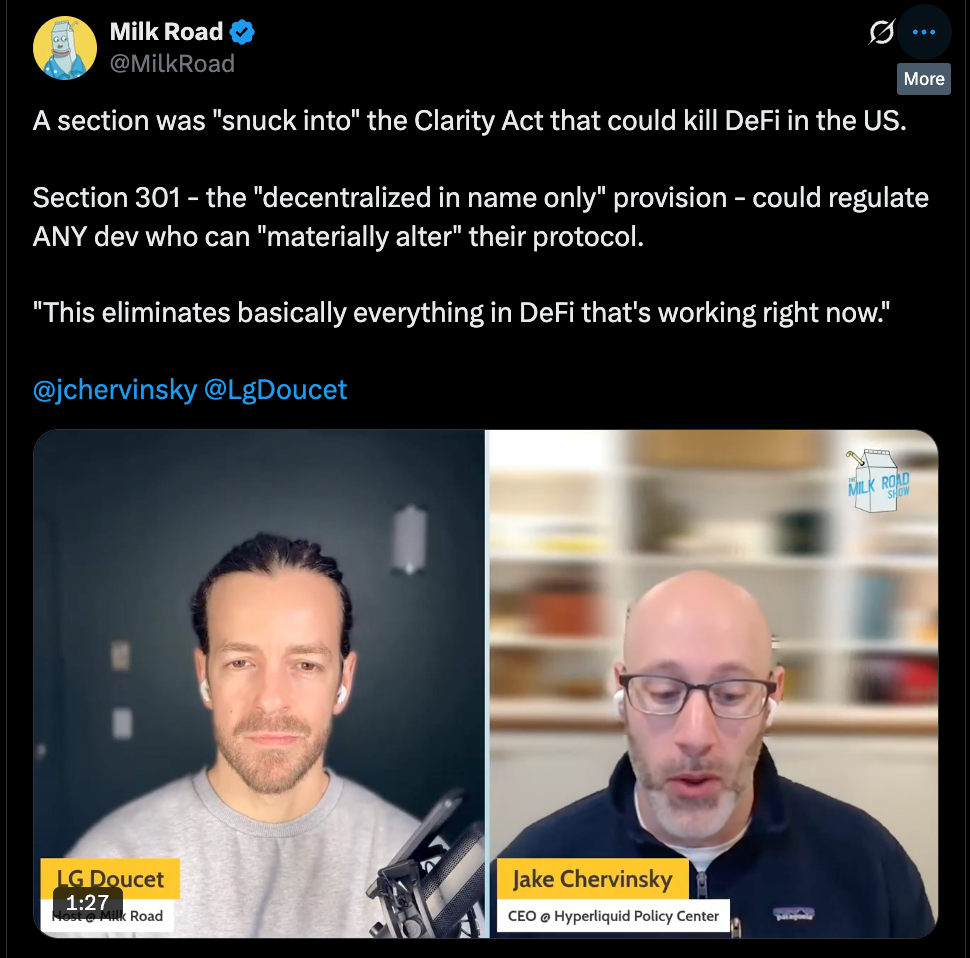
The Clarity Act is being framed as a step toward regulatory certainty for crypto, but buried inside it is a clause that’s starting to worry developers. Section 301, specifically, introduces language that could quietly reshape how DeFi operates in the U.S.
On the surface, it reads like a reasonable safeguard. In practice, though, it raises a bigger question: who exactly counts as “in control” of a decentralized system?
The Definition of Control Changes Everything
The core issue comes down to one phrase, “materially alter.” If a developer has the ability to upgrade, modify, or influence how a protocol functions, they could fall under the definition of a regulated financial intermediary.
That’s a significant shift. It means you don’t need custody of funds or direct control over user assets to be treated like a traditional financial entity. Influence alone may be enough.
And in DeFi, influence is everywhere.
Why Most DeFi Protocols Could Be Affected
Let’s be honest, most DeFi systems today aren’t fully immutable. They evolve. Governance proposals get voted on. Smart contracts get upgraded. Interfaces change to improve usability.
Even front ends, wallets, or dashboards play a role in how users interact with protocols. Under a broad interpretation of this clause, all of that could fall within regulatory scope.
That’s where the tension starts to build. The same flexibility that allows DeFi to improve over time could now be seen as a point of control.
A Design Model Under Pressure
DeFi has always relied on iteration. Protocols launch, improve, and adapt based on user behavior and market conditions. That process is part of what makes the space innovative.
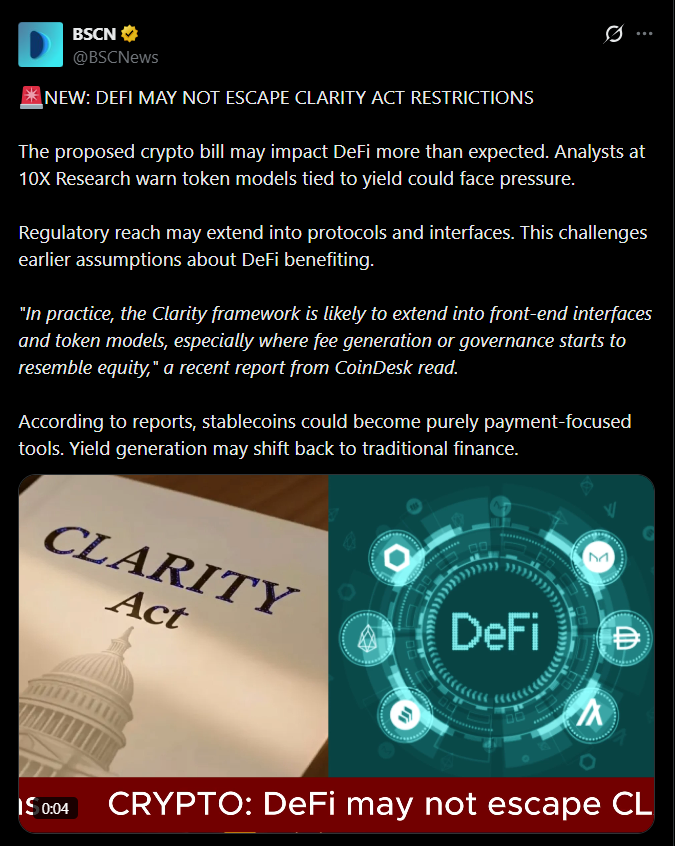
But if every upgrade or adjustment creates potential regulatory exposure, that model becomes harder to sustain. Developers may be forced to choose between improving their systems and avoiding legal risk.
And that’s not a small tradeoff.
The Risk of Innovation Moving Offshore
If the current language holds, the incentive structure changes quickly. Building in the U.S. becomes more complicated, especially for teams that want to actively maintain and evolve their protocols.
Some may choose to move operations offshore. Others might lock their code permanently to avoid being seen as “in control.” In some cases, teams could simply stop building altogether.
None of those outcomes are ideal, especially for a space that depends on continuous development.
A Broader Shift in How DeFi Is Viewed
This clause reflects a deeper shift in how regulators are approaching DeFi. Instead of focusing only on custody or direct financial activity, the lens is expanding to include influence and participation.
That widens the scope significantly. It also blurs the line between developers and operators, something that hasn’t been clearly defined before.
A Critical Moment for the Industry
This isn’t just a technical detail in a long bill. It’s a structural question about how DeFi fits into the regulatory system.
If Section 301 remains unchanged, it may not shut down DeFi entirely. But it could reshape where and how it’s built, potentially pushing innovation away from the U.S.
And in a space that moves as quickly as crypto, where developers choose to build often determines where the next wave of growth happens.