

- Tether freezes over $344 million in USDT tied to illicit activity
- Action coordinated with US authorities targeting sanctioned wallets
- Total frozen assets now exceed $4.4 billion globally
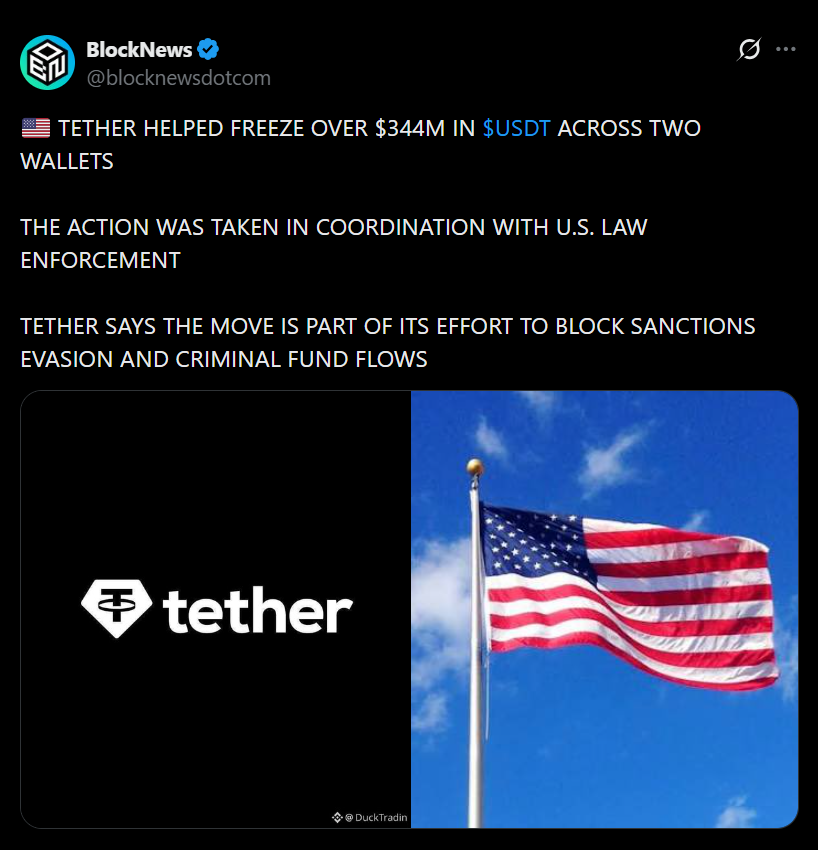
Tether has frozen more than $344 million worth of USDT, and this wasn’t a random move, it came directly from coordination with US regulators and law enforcement. The action targeted two wallet addresses linked to suspected criminal activity, locking the funds before they could be moved, which, in cases like this, is kind of the whole point.
Once the intelligence came through, the response was immediate, showing how quickly centralized stablecoin issuers can act when pressure builds.
A Coordinated Crackdown With US Authorities
The freeze followed multiple US agencies sharing data that tied these wallets to sanctions evasion and broader criminal networks. After identifying the addresses, Tether restricted access, effectively cutting off the funds from being transferred or used anywhere else.
CEO Paolo Ardoino made the stance clear, saying USDT is not a safe haven for illicit activity, and that the company acts quickly when credible links to wrongdoing appear. It’s a message that feels increasingly important as regulators continue tightening oversight across crypto.
Enforcement Efforts Keep Expanding
Tether isn’t operating alone here, it now works with more than 340 law enforcement agencies across 65 countries, which is… a pretty wide net. These collaborations have supported over 2,300 investigations globally, with around 1,200 involving US authorities specifically.
Altogether, the firm has frozen more than $4.4 billion in assets, with over $2.1 billion tied to US-led cases. That scale shows how central stablecoins have become in enforcement efforts, whether people like that or not.
The Bigger Picture for Crypto
Past cases highlight how these actions play out in real situations, including operations that led to the seizure of tens and even hundreds of millions linked to so-called pig butchering scams. These schemes often involve long-term manipulation, where victims are slowly convinced to invest in fake platforms before funds disappear.
Tether’s growing role in stopping these flows shows a shift in how crypto interacts with regulation, it’s no longer just about decentralization, but also about compliance and control. For better or worse, stablecoins are now sitting right in the middle of that balance.