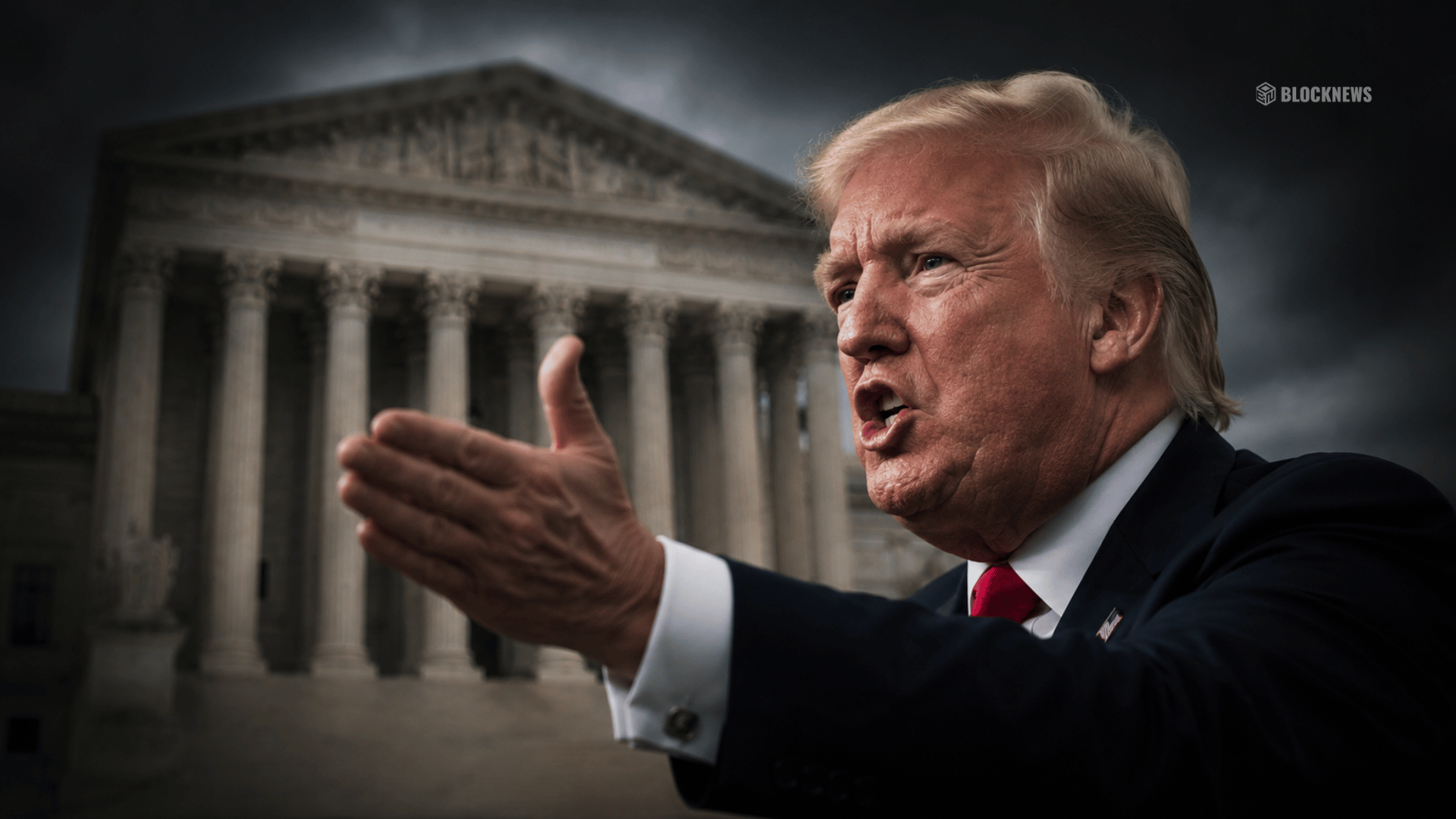
- The U.S. Supreme Court ruled that President Donald Trump’s executive order ending birthright citizenship is unconstitutional.
- The majority said children born in the United States to parents who are in the country unlawfully or temporarily are still citizens under the 14th Amendment.
- The decision ends one of the most closely watched constitutional battles over immigration and presidential authority.
The U.S. Supreme Court has struck down President Donald Trump‘s executive order seeking to end birthright citizenship, delivering a landmark constitutional ruling that preserves automatic U.S. citizenship for nearly everyone born on American soil.
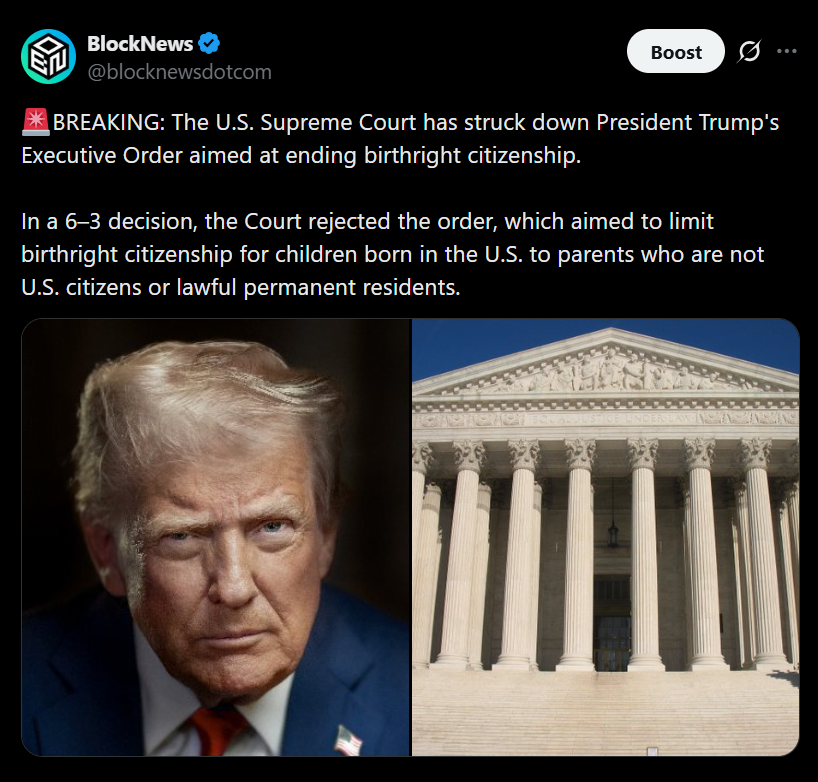
In a majority opinion written by Chief Justice John Roberts, the Court concluded that Trump’s executive order cannot be reconciled with the Citizenship Clause of the 14th Amendment, which guarantees citizenship to anyone born in the United States and subject to its jurisdiction.
The ruling marks the end of a legal battle that began shortly after Trump returned to office and attempted to redefine who qualifies for citizenship at birth.
Supreme Court Says the Constitution Is Clear
Writing for the majority, Chief Justice Roberts stated that children born in the United States to parents who are either unlawfully present or temporarily in the country satisfy the constitutional requirements for citizenship.
Roberts concluded that the Constitution guarantees citizenship at birth to those children, rejecting the administration’s argument that parental immigration status should determine eligibility.
The decision aligns with every lower federal court that reviewed the executive order, all of which found it likely violated the 14th Amendment.
Strong Dissent From Justice Alito
Justice Samuel Alito strongly disagreed with the majority, calling the decision one of the most significant in Supreme Court history while also describing it as a serious mistake.
Alito argued that the original meaning of the 14th Amendment was narrower than the majority’s interpretation. In his view, birthright citizenship should apply only to children whose sole allegiance at birth is to the United States.
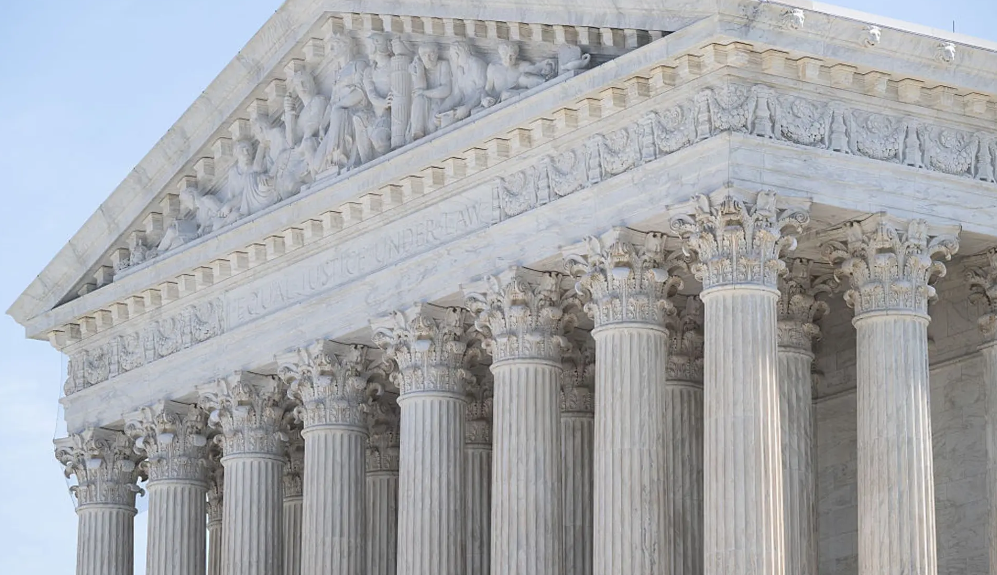
The dissent reflects the continuing constitutional debate over the scope of the Citizenship Clause, although the majority opinion now establishes the Court’s controlling interpretation.
How the Legal Battle Reached the Supreme Court
Trump signed the executive order on Jan. 20, 2025, shortly after beginning his second term. The order sought to deny automatic U.S. citizenship to children born in the United States if their parents were either in the country illegally or present only temporarily.
Although the policy was scheduled to take effect 30 days later, multiple federal judges quickly blocked its enforcement while legal challenges moved through the courts.
Earlier in the litigation, the Supreme Court separately ruled that lower courts generally cannot issue nationwide injunctions blocking federal policies. However, the legal challenge to the birthright citizenship order itself continued through class-action litigation before eventually returning to the Supreme Court for a decision on its constitutionality.
A Major Constitutional Precedent
The Court’s ruling preserves the long-standing interpretation of the 14th Amendment that has governed birthright citizenship in the United States for more than a century.
The decision also limits the ability of future administrations to alter constitutional citizenship protections through executive action alone. Any fundamental change to birthright citizenship would likely require either a constitutional amendment or a different interpretation from a future Supreme Court.
With the Court’s decision now issued, one of the most consequential immigration and constitutional disputes of recent years has been resolved, reaffirming that citizenship by birth remains protected under the U.S. Constitution.