- South Korean authorities arrested five suspects tied to the Solana memecoin CATFI rug pull
- Prosecutors used the country’s new Virtual Asset User Protection Act for the first DEX-based rug pull case
- The crackdown could signal tougher enforcement against fake influencers, wash trading, and memecoin scams
South Korea just sent one of the strongest warnings yet to crypto scammers pretending decentralized exchanges make them untouchable.
Authorities arrested five individuals connected to the Solana-based memecoin CATFI this week, marking the first rug pull prosecution under the country’s new Virtual Asset User Protection Act. According to investigators, the group launched the token through Pump.fun, artificially hyped it through fake social media promotion, then allegedly dumped on investors after the price exploded upward.
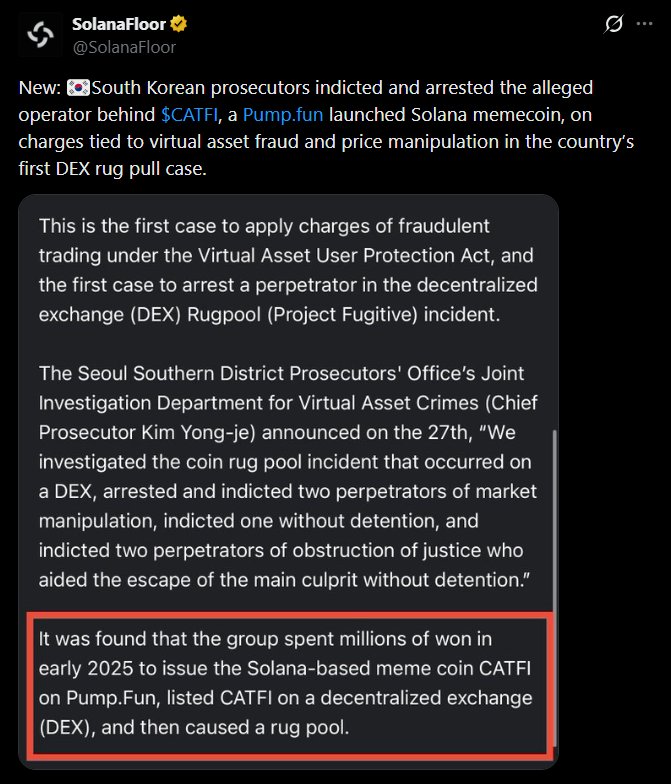
And exploded it did. Prosecutors say CATFI surged more than 1,000x within roughly 26 hours before collapsing afterward.
Apparently financial red flags now come packaged with rocket emojis and anime profile pictures.
Fake Influencers And Wash Trading Fueled The Scheme
According to investigators, the operation relied heavily on manufactured hype designed to create the illusion of legitimacy and massive momentum quickly.
One suspect allegedly posed as a respected crypto influencer while others operated fake promotional channels, inflated follower counts, and published bogus token lockup announcements intended to create artificial scarcity and investor confidence.
Prosecutors also claim the group used multiple wallets alongside wash trading activity to manipulate trading volume and disguise token concentration levels across the market.
Around 6,000 investors reportedly bought into the frenzy, with at least 256 confirmed victims suffering combined losses approaching 900 million won, roughly $600,000. Authorities believe the suspects themselves pocketed approximately 400 million won in profits before the collapse unfolded.
Honestly, the mechanics sound painfully familiar to anyone who spent more than five minutes inside crypto’s memecoin trenches recently.
South Korea Is Expanding Enforcement Into DeFi
What makes this case especially important is not necessarily the size of the rug pull itself. It’s the legal precedent attached to it.
For years, many scammers operated under the assumption decentralized exchanges existed largely outside practical enforcement reach because there were no centralized intermediaries directly controlling the transactions. South Korea is now showing regulators can still pursue fraud cases occurring entirely through decentralized infrastructure.
That changes the landscape significantly for memecoin operators relying on anonymity and fragmented onchain activity as legal shields.
And honestly, crypto markets probably were heading toward this outcome eventually. Once enough retail money gets vaporized repeatedly through identical scams, regulators stop viewing it as internet chaos and start treating it like financial fraud again.
The Memecoin Casino Is Facing More Adult Supervision
The broader Solana memecoin ecosystem exploded over the past year thanks largely to platforms like Pump.fun dramatically lowering the barrier for token launches. That accessibility fueled enormous speculative activity, but it also created an environment where scams, fake influencer campaigns, and liquidity traps became almost routine.
In many cases, attention itself became the entire product. Fundamentals barely mattered. Narrative speed, social momentum, and viral engagement often determined whether tokens survived more than a few hours.
South Korea’s crackdown suggests regulators are becoming increasingly willing to intervene once those systems begin looking less like speculative entertainment and more like organized market manipulation.
Ironically, Enforcement Could Be Bullish Long Term
Ironically, tougher enforcement around memecoin fraud may actually help crypto markets mature over time. Institutional capital does not want exposure to ecosystems where anonymous cartoon tokens disappear with investor funds every Tuesday afternoon.
Cleaner market structures, stronger fraud enforcement, and clearer legal consequences could eventually help separate legitimate onchain innovation from outright manipulation.
The casino is not closing anytime soon, obviously. Crypto probably will always maintain a speculative side. But South Korea’s actions suggest regulators are no longer comfortable letting memecoin scams operate entirely unchecked simply because they happen on decentralized rails.
And frankly, parts of the market probably needed at least a few adults entering the room eventually.