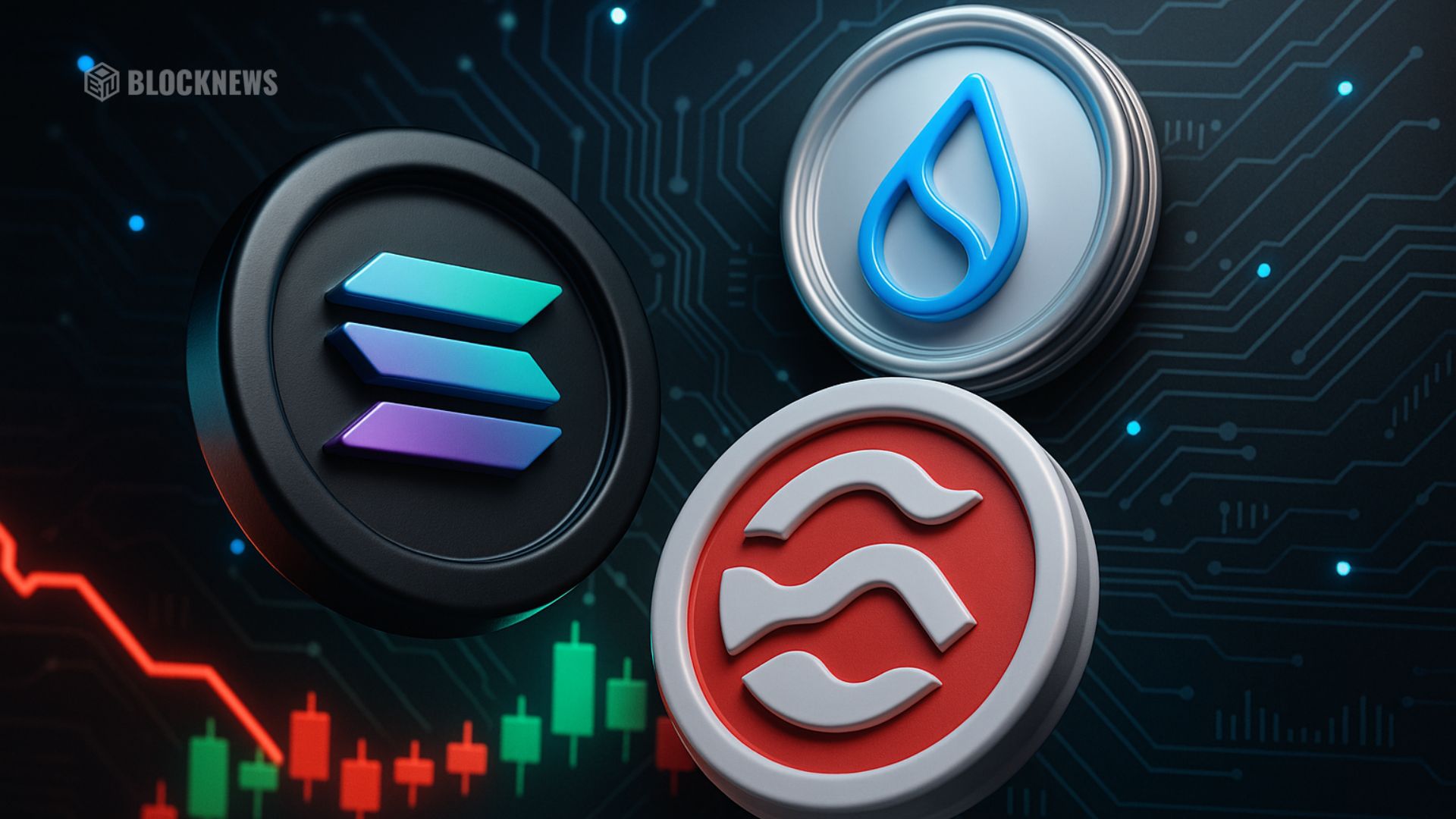
- Sui, Sei, and Solana are emerging as key players in Web3 despite the broader market decline.
- Sui leads in developer growth, Sei dominates in speed and institutional interest, while Solana balances both with large-scale adoption.
- Analysts expect a multichain Web3 future, where collaboration — not competition — drives innovation.
The crypto market’s been rough lately — a real slide across the board. Most altcoins have bled value, some more than others. Still, a few strong blockchain projects are standing tall through the storm. In a recent breakdown, Altcoin Buzz host Maddie put three of them under the microscope: Sui, Sei, and Solana — each trying to stake their claim in what’s next for Web3.
Sui: Developers Keep Building, Even in a Bear
Even with weak market sentiment, Sui refuses to slow down. According to new data from Electric Capital, it ranks in the top five blockchains for developer growth in 2025. That’s not nothing. Its daily active users have even tripled Ethereum’s — a wild stat that hints at real traction beneath the noise.
Sui’s also been busy forming some heavyweight partnerships:
- Teamed up with Figure Markets to launch YLDS, an SEC-registered yield-bearing stablecoin.
- Integrated Athena’s USDₑ and BlackRock’s USDI, bridging the gap between DeFi and TradFi.
Its DeFi scene’s holding strong, too. Over $2 billion in total value locked (TVL), record volumes last October — though, to be fair, a handful of validators still control most of that activity. That’s raising some decentralization eyebrows.
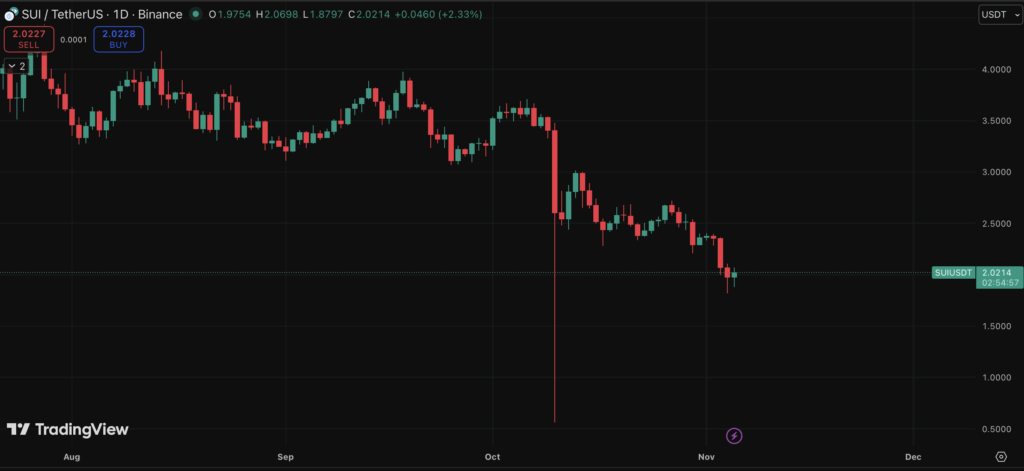
Price-wise, SUI sits around $2.00, barely up 0.4% on the day but down nearly 19% weekly and 44% monthly. Ouch. Still, the fundamentals look steady — it’s just a matter of whether the market remembers that.
Sei Network: Built for Speed (and Suits)
Sei is all about speed — and it’s not just talk. Its so-called “twin-turbo” consensus finalizes transactions in around 400 milliseconds, sometimes even beating Solana at its own game. The network’s pulled in 13 million monthly active addresses and seen roughly $10 billion in DEX trading over the past year.
And here’s the kicker — big institutions are circling. Names like Nomura’s Laser Digital, Apollo Global Management, and even BlackRock are showing interest, especially in RWA (real-world asset) tokenization.
Sei’s next big leap, the Giga Upgrade, aims to hit a ridiculous 200,000 transactions per second — still under development, but ambitious as hell. Its ecosystem isn’t as large as Solana’s yet, but it’s growing fast. A fresh Robinhood listing might give retail traders another reason to notice.
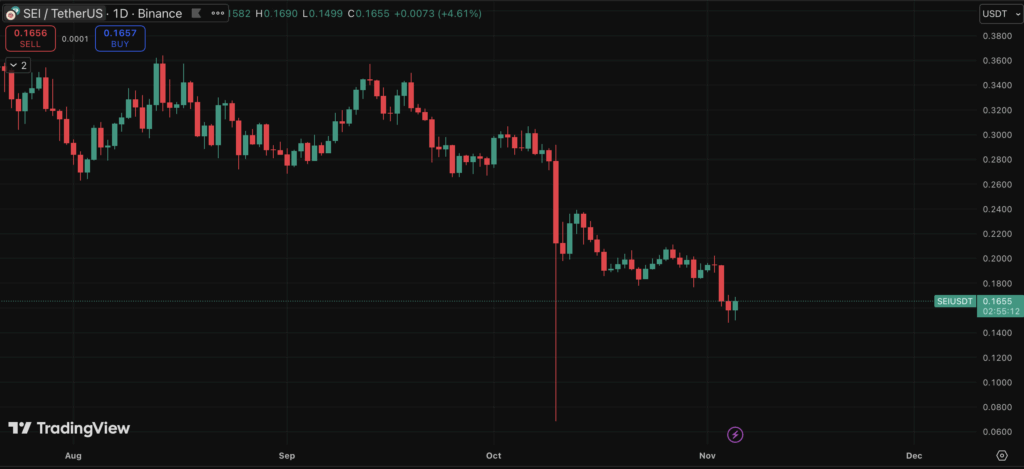
Right now, SEI trades near $0.161, up 3.5% in 24 hours, trimming its weekly drop to 17%. Still down about 44% for the month, though. So, fundamentals are good… sentiment, not so much.
Solana: From Collapse to Comeback
After the whole FTX implosion nearly took it down, Solana has clawed its way back. Big institutions have returned — Bitwise and Grayscale launched Solana ETFs, and Western Union is now using Solana to power cross-border payments through its USDPT stablecoin, now live in 150+ countries.
The network’s raw performance remains one of the best in crypto: 65,000+ TPS with fees that barely register. Retail traders keep piling in through DeFi platforms like Jupiter and MarginFi, keeping liquidity flowing.
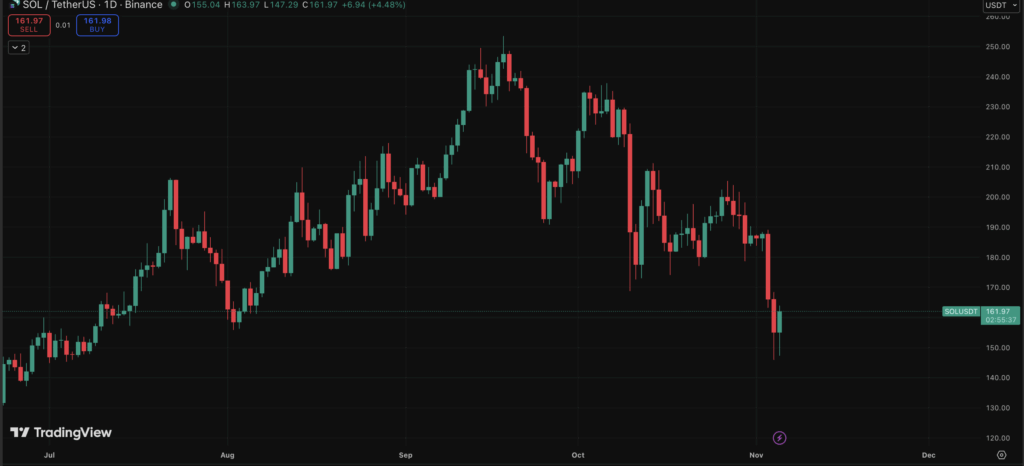
But it’s not all sunshine. Solana’s been hit by downtime issues and ongoing centralization debates, which just won’t die. After a 33% monthly downtime stretch, price action’s taken a hit — down 20.7% this week, sitting near $155. Still, it’s arguably one of the few chains that feels alive, both for retail and institutions.
The Bigger Picture: A Multichain Future
So which one wins? Maddie from Altcoin Buzz says — none of them. The future of Web3 doesn’t belong to a single chain. Instead, we’re heading into a multichain era, where each network plays its role:
- Sui focuses on developer expansion and linking DeFi with the traditional financial world.
- Sei is gunning for speed and institutional adoption, leaning into its RWA tokenization play.
- Solana combines mass adoption, speed, and scale with one of the strongest retail ecosystems around.
In short: the race isn’t over — it’s barely started.