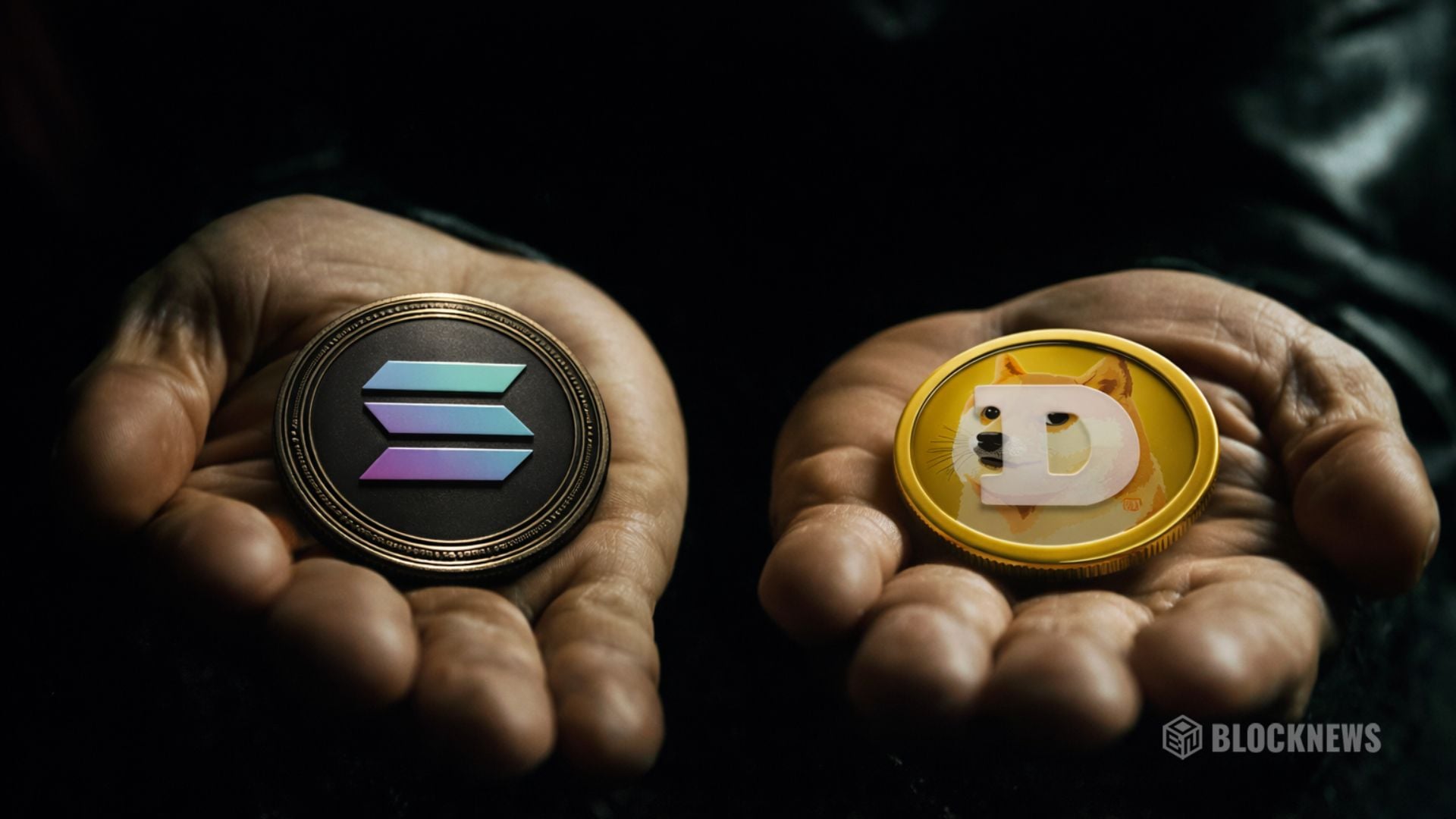
- Dogecoin relies heavily on sentiment-driven price spikes and faces ongoing dilution with 5 billion new coins minted annually.
- Solana generates consistent on-chain demand through smart contracts, high transaction volume, and growing app revenue.
- For a $4,000 allocation, Solana offers stronger structural drivers, while Dogecoin remains largely speculative.
If you’re putting $4,000 to work today, the choice between Dogecoin and Solana isn’t about nostalgia. It’s about demand. Both coins had their moment during the now almost mythologized 2021 bull market. Both soared. And both, since then, have struggled to reclaim that glory.
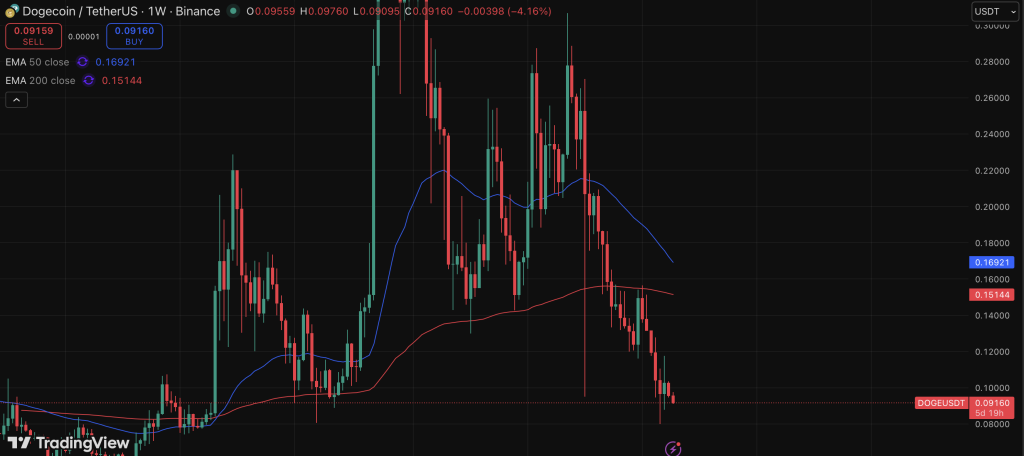
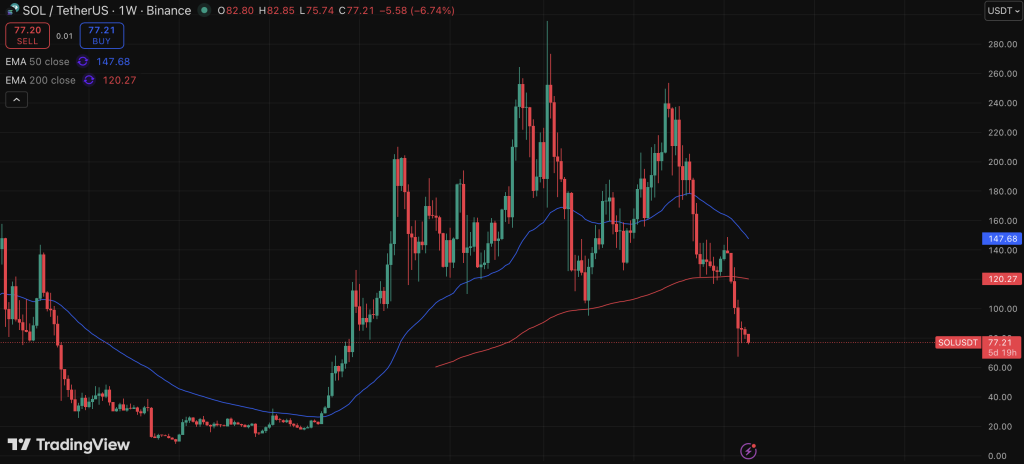
Over the past 12 months, performance has been rough. Dogecoin is down roughly 61%. Solana isn’t much better, down about 52%. On the surface, they look equally bruised. But scratch beneath that surface and the story changes quickly.
Why Dogecoin’s Model Works Against You
Dogecoin has brand recognition. No one can deny that. It’s one of the most recognizable meme coins in crypto history, and from time to time, it explodes higher on pure sentiment. The problem? Those spikes are unpredictable. They’re driven by hype, not by consistent structural demand.
There’s a deeper issue too.
Dogecoin has no maximum supply cap. Around 5 billion new DOGE are minted every year. That means steady dilution. If you hold it long enough, your slice of the pie keeps shrinking. For some coins, inflation isn’t fatal because there are mechanisms that drive growth faster than dilution. Dogecoin doesn’t really have that.
Yes, there’s an active developer group. But recent updates have mostly been maintenance and bug fixes, not transformative upgrades. There’s no clear roadmap that signals a shift toward sustained economic demand. Buying DOGE and waiting for a viral moment to exit is more speculation than strategy. That may work sometimes. It’s just not predictable.
Solana’s Demand Is Utility-Driven
Solana, on the other hand, has something Dogecoin doesn’t: structural utility.
It’s a high-throughput smart contract platform built for speed and low fees. That matters in an ecosystem where applications need consistent on-chain activity to thrive. Solana regularly posts large daily transaction counts and sees over 2.1 million active wallet addresses per day. That’s not theoretical usage. That’s real.
On February 19 alone, Solana-based applications generated more than $3.4 million in app revenue. That means developers are building. Users are interacting. Capital is circulating inside the ecosystem. People buy SOL because they need it to transact, deploy contracts, or interact with decentralized applications.
That’s demand rooted in function.
Of course, nothing is guaranteed. Competition exists. Network reliability has been questioned in past cycles. But assuming Solana maintains its edge in cost and speed, more apps and more users logically translate into sustained token demand.
The $4,000 Decision
When comparing a $4,000 allocation, the difference becomes clearer.
Dogecoin’s upside relies on sentiment spikes. Solana’s upside relies on network activity, application growth, and ongoing utility. One is narrative-driven. The other is infrastructure-driven.
Markets can reward both, temporarily. But long-term capital tends to favor assets with multiple demand drivers rather than a single speculative catalyst.
So if the goal is positioning rather than hoping, Solana stands out. Not because it’s perfect. Not because it can’t fall further. But because it has a real, ongoing reason for people to buy and use it.
And in crypto, sustained demand usually wins.