- MOEX and St. Petersburg Exchange plan crypto trading once regulations are finalized
- Retail investors face strict limits, while professional investors get broader access
- New Russian crypto laws are expected to be finalized by mid-2026
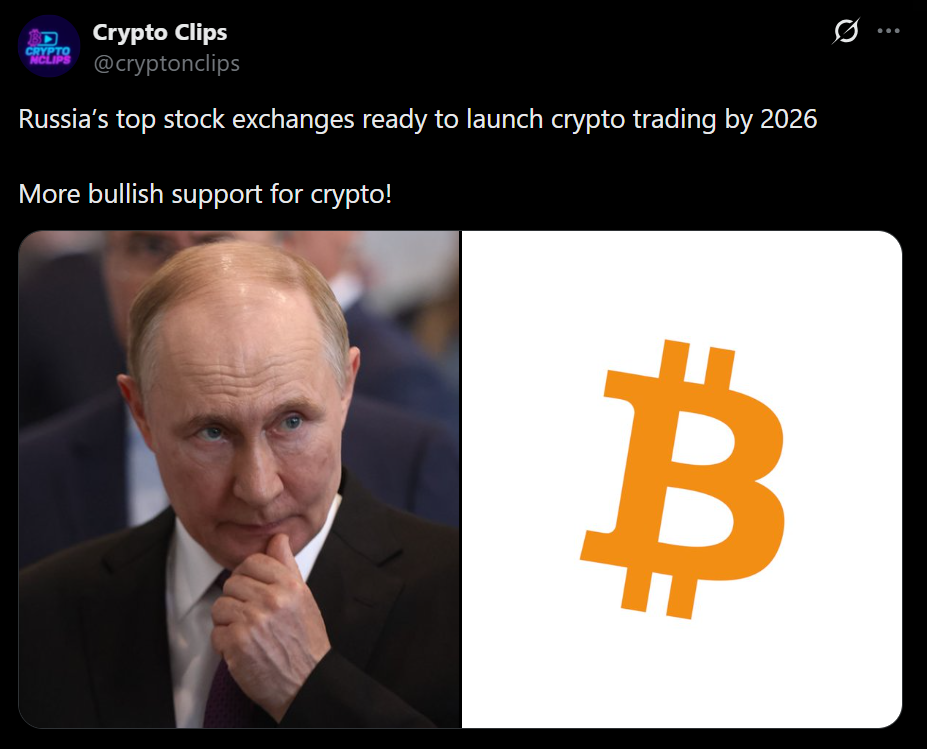
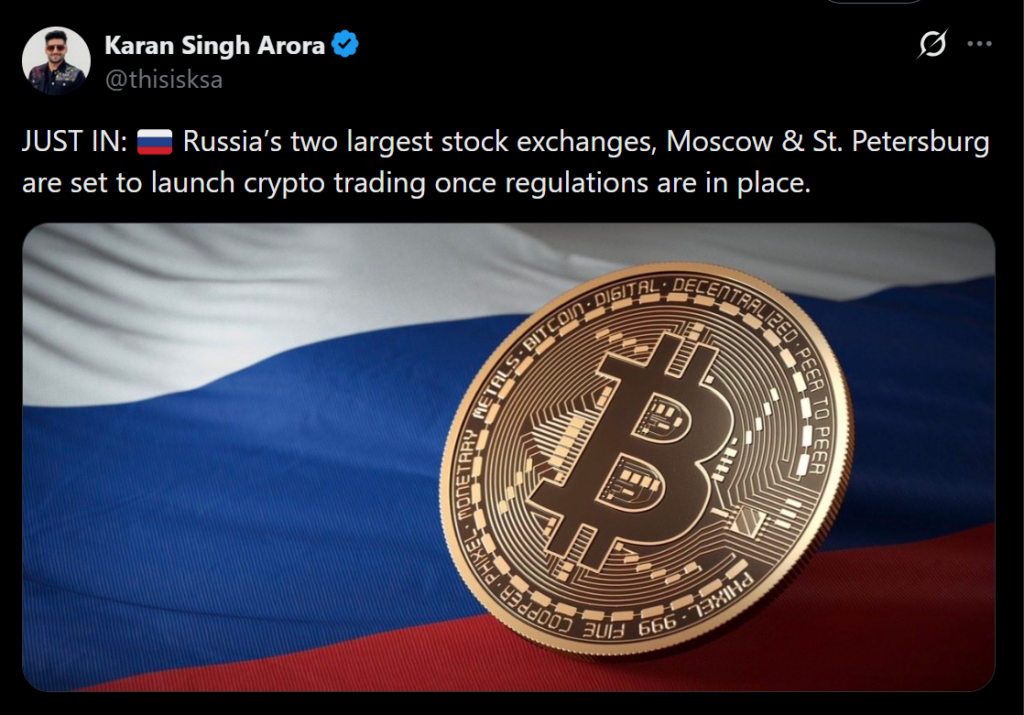
Russia’s two largest stock exchanges, the Moscow Exchange (MOEX) and the St. Petersburg Exchange, are preparing to roll out crypto trading services once the country’s new regulatory framework is finalized. The move follows fresh proposals from the Bank of Russia aimed at formally opening the crypto market to both retail and professional investors under strict oversight.
MOEX and St. Petersburg Exchange Signal Readiness
According to a report from RBC, both MOEX and the St. Petersburg Exchange have reaffirmed that they are technically prepared to support crypto trading. MOEX stated that the proposed rules mirror structures already used in the foreign exchange market, particularly around trading, clearing, and settlement systems. The exchange said it has spent years building the infrastructure needed to support complex digital asset markets.
The St. Petersburg Exchange echoed similar readiness, noting that it has already developed tools and internal systems designed for crypto products. Both exchanges emphasized that actual trading will only begin once the legal framework is fully approved.
How the New Crypto Rules Will Work
Under the Bank of Russia’s proposal, retail investors would be allowed to trade only the most liquid cryptocurrencies and would face a cap of 300,000 rubles per year through approved intermediaries. Professional investors, by contrast, would not face transaction limits but would be restricted from trading anonymous cryptocurrencies.
Crypto will continue to be classified as a high-risk asset, and its use for domestic payments will remain prohibited. The framework also introduces tighter oversight for crypto exchanges, depositories, and custodial services operating within Russia.
Timeline and Market Impact
Lawmakers are targeting July 1, 2026, for the completion of legislative changes, with enforcement measures, including penalties for illegal activity by intermediaries, taking effect from July 1, 2027. In parallel, major brokers and asset managers are reportedly testing custody, accounting, and compliance systems, while exploring products such as spot crypto trading, stablecoins, trusts, and crypto-linked funds.
If implemented as planned, the framework could bring millions of Russian users out of informal crypto markets and into licensed investment channels, significantly reshaping how digital assets are accessed in the country.