
- Ripple is transitioning to a more distributed, community-led funding model for the XRP Ledger in 2026.
- The new strategy expands grants, accelerators, and independent ecosystem participation to reduce centralized control.
- Ripple aims to strengthen long-term XRPL infrastructure by combining capital access with technical and venture support.
Ripple is reshaping how money and support flow through the XRP Ledger ecosystem in 2026. The company is signaling a shift away from a centrally steered funding model toward something more distributed, more community-led — and, arguably, more aligned with crypto’s original ethos. Instead of Ripple acting as the primary gatekeeper of capital, the goal now is broader access: more grants, deeper venture connections, stronger technical backing. It feels like a structural evolution, not just a budget tweak.
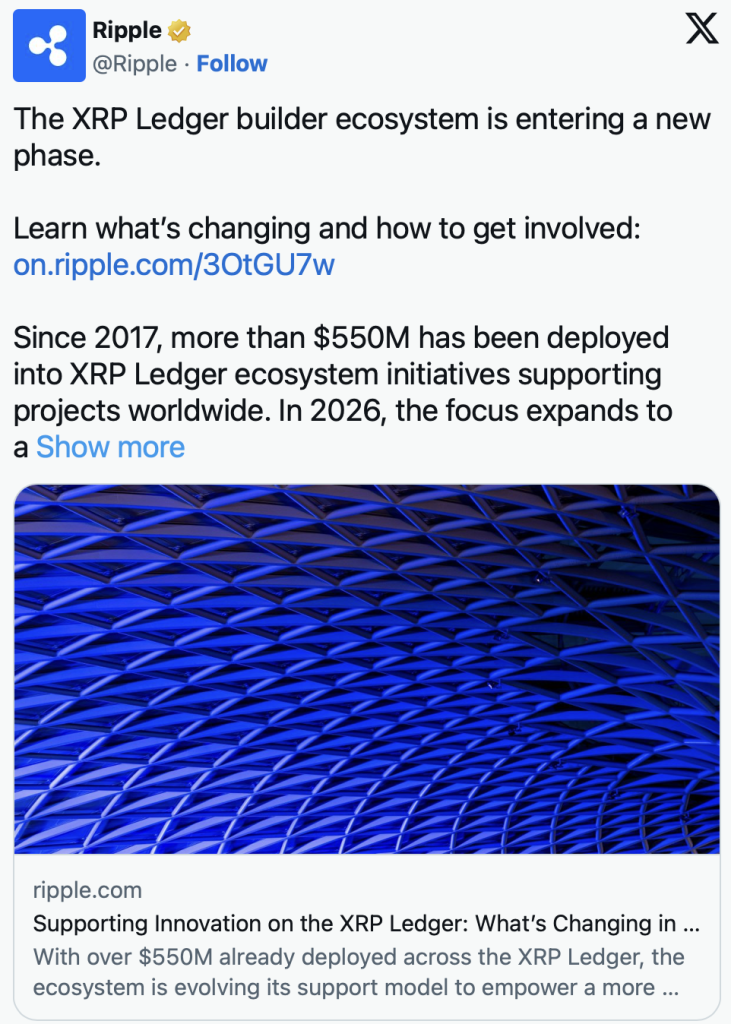
Since 2017, Ripple says it has deployed over $550 million into the XRPL ecosystem. That capital has fueled payment apps, tokenization experiments, DeFi protocols, and the infrastructure layers underneath them. Startups received direct backing, developers got resources, and ecosystem tooling matured along the way. But heavy central sponsorship, while effective early on, can also create gravity — projects orbit one anchor.
A Shift Toward Distribution
For 2026, Ripple plans to widen the funnel. Rather than relying on a few structured funding channels, the company is introducing a more distributed framework where founders can tap into grants, accelerator programs, and external venture networks with fewer bottlenecks. It’s less about a single pipeline and more about a network of doors.
This matters. In blockchain ecosystems, access often determines innovation velocity. If capital, mentorship, and exposure are too tightly concentrated, growth can stall or skew toward familiar faces. By opening up funding routes and encouraging regional participation, Ripple seems to be betting on diversity — geographic, strategic, and technical.
There’s also a philosophical undertone here. Decentralization isn’t just about validators or consensus mechanisms. It’s also about who decides what gets built.
Community-Driven Capital and Accelerators
A core element of the new approach is expanding community-led funding initiatives. Ripple has emphasized that ecosystem members will play a larger role in identifying and supporting promising projects within XRPL. That shifts influence outward, even if Ripple still provides backbone support.
Accelerator programs and regional hubs are also getting more attention. Supporting local developer communities can create organic momentum — different regions build different things, often shaped by local financial systems and user needs. Over time, that diversity can strengthen the overall network.
Instead of one centralized growth engine, the idea appears to be multiple smaller engines running in parallel. Not chaotic, but distributed.
Independent Organizations Step Forward
Another notable change is the increased role for independent ecosystem organizations. These groups are expected to provide funding, mentorship, and strategic guidance without being directly managed by Ripple itself. That separation, even if subtle, reinforces decentralization narratives.
In the broader blockchain industry, there’s a consistent push toward reducing centralized influence over ecosystem development. Ripple’s move seems aligned with that trend. The more independent actors involved, the more resilient the ecosystem can become — at least in theory.
Of course, decentralization in practice is messy. It requires coordination, transparency, and trust. But ecosystems that manage that balance tend to last longer.
Long-Term Infrastructure, Not Short-Term Hype
At its core, this restructuring looks like a long-term infrastructure play. Ripple isn’t just distributing grants; it’s promising technical expertise and access to venture networks so early-stage projects can scale sustainably. Funding without support rarely works. Builders need more than checks.
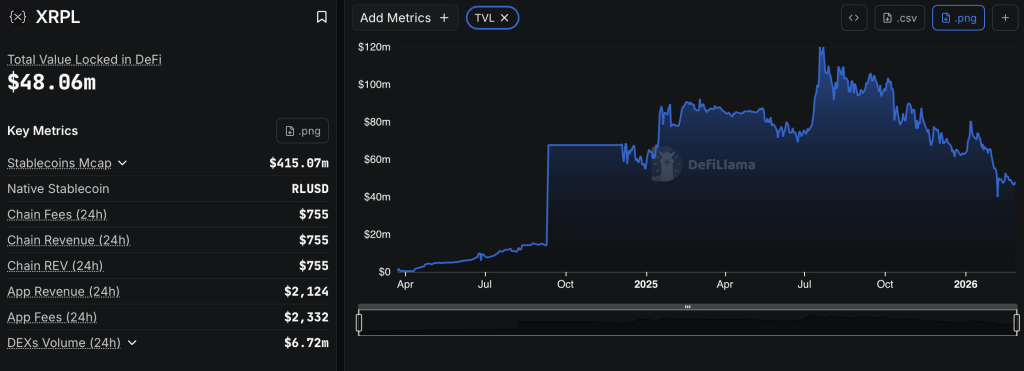
The expanded structure suggests Ripple wants XRPL to mature beyond a company-backed chain into a genuinely self-sustaining environment. Payments, tokenization, DeFi — those verticals don’t thrive on funding alone. They require community depth and institutional bridges.
As XRPL enters its next phase, Ripple’s strategy appears focused on durability over speed. Less central spotlight. More distributed growth. And maybe, just maybe, a more resilient ecosystem because of it.