

- Reid Hoffman believes NFTs could return as identity tools for AI agents
- The LinkedIn co-founder says crypto may solve trust and verification problems online
- Hoffman also warned the crypto industry against becoming too politically one-sided
Reid Hoffman thinks NFTs are coming back, but probably not in the way most people from the 2021 hype cycle expected. Speaking at Consensus Miami, the LinkedIn co-founder argued that the next NFT boom may revolve around AI identity verification rather than speculative JPEG trading.
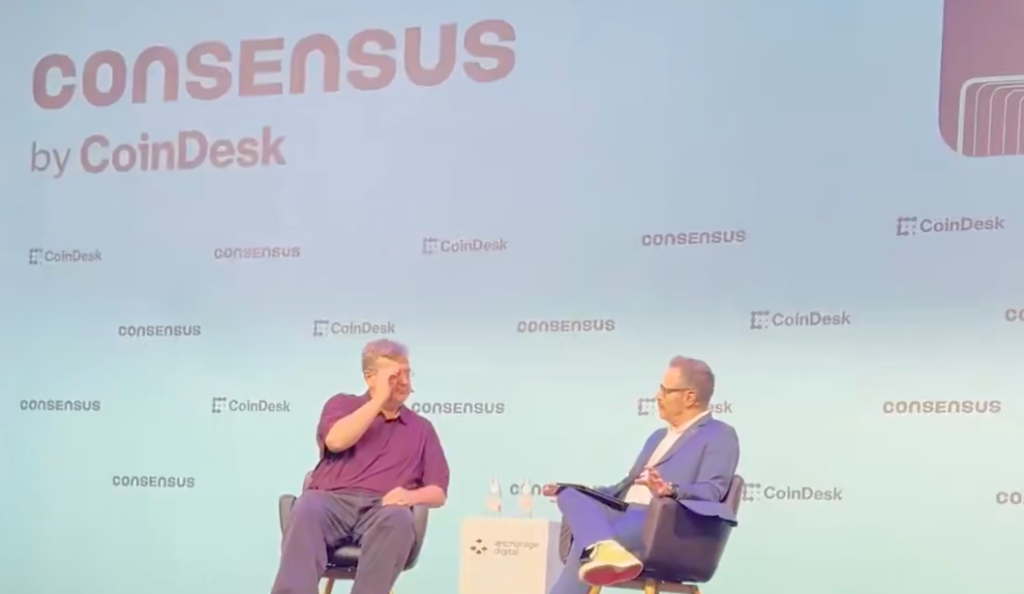
His thesis centers on a growing problem the tech world hasn’t fully solved yet: if millions of AI agents begin interacting online on behalf of humans, how do people actually verify who — or what — they’re dealing with? Hoffman believes crypto infrastructure may end up becoming the answer.
AI Agents Need Identity And Trust
According to Hoffman, the rise of autonomous AI systems creates a serious trust problem for the internet. When AI agents start making transactions, booking services, negotiating agreements, or communicating independently, traditional identity systems may struggle to keep up.
That’s where NFTs and blockchain verification suddenly become useful again. Hoffman framed crypto as a way to establish provenance and trust between agents operating at machine speed across open networks.
“When your agent’s talking to my agent, is it a trustable transaction?” Hoffman reportedly asked during the conference discussion. And honestly, it’s a question the broader AI industry probably hasn’t answered very well yet.
Hoffman Is Putting Real Money Behind The Thesis
This isn’t just theoretical for him either. Hoffman recently purchased a CryptoPunk NFT as a direct expression of his broader AI-and-crypto investment thesis, signaling he sees long-term utility in digital identity assets rather than simple speculation.
For someone who built LinkedIn around real-world reputation and verified identity, the connection actually makes a lot of sense. The AI era complicates trust online in ways social media never fully had to deal with before.
Hoffman also pointed toward deepfakes, bot manipulation, fake engagement campaigns, and AI-generated impersonation as proof that proof-of-humanity systems are becoming increasingly necessary. In his view, crypto may provide the infrastructure layer capable of handling that challenge globally.
Even Hoffman Uses An AI Version Of Himself
Part of what makes Hoffman’s argument interesting is that he’s already experimenting with these ideas personally. He referenced “Reid AI,” an AI-generated version of himself that has reportedly appeared at conferences and events in his place.

That example sounds futuristic, maybe even a little strange, but it also highlights why verification systems matter. As generative AI improves, distinguishing real people from synthetic versions could become far harder than most internet users currently expect.
Hoffman described crypto as the “obvious answer” for establishing trusted digital identity in an AI-driven internet. Coming from someone deeply involved in both AI and social networking, that statement carries a bit more weight than the average crypto prediction floating around online.
Hoffman Also Issued A Political Warning
Interestingly, Hoffman didn’t just focus on technology. He also warned the crypto industry against becoming too politically aligned with one side of the American political spectrum, particularly Republicans.
While acknowledging frustration around previous SEC leadership and crypto regulation, Hoffman argued that fully alienating Democrats would be a long-term strategic mistake for the industry. Regulatory environments change constantly, and ecosystems relying on durable legal frameworks probably benefit more from bipartisan support than short-term political victories.
It was a surprisingly candid moment, especially considering how aggressively parts of the crypto industry embraced Republican alignment throughout 2025.
NFTs May Return In A Very Different Form
Hoffman has reportedly held Bitcoin since 2014 and says he has never sold any of it. When asked about an eventual exit price, he responded by questioning whether such a thing even exists.
That mindset seems tied directly into his broader view of crypto’s future. NFTs as identity infrastructure for AI agents may not recreate the speculative mania of past cycles, but they could evolve into something far more useful and durable underneath the surface.
And honestly, if AI agents really do become part of daily internet life, proving what’s real online may become one of the biggest markets crypto has ever seen.