- PayPal, MoonPay, and M0 launch PYUSDx for branded dollar tokens
- Developers can issue stablecoins without building reserve infrastructure
- PayPal USD remains separate, with over $4.1B in circulation
PayPal is pushing further into crypto infrastructure with the launch of PYUSDx, a new framework built alongside MoonPay and M0. The system is designed to let developers create branded, dollar-pegged tokens backed by PayPal’s existing stablecoin architecture. Instead of starting from scratch, builders can plug into an established reserve and compliance structure.
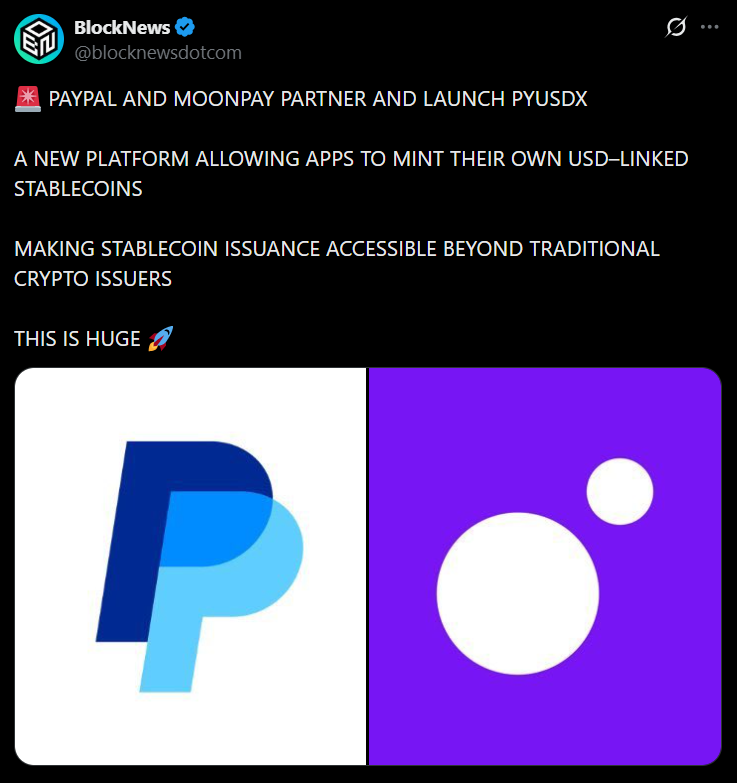
According to PayPal’s head of crypto, May Zabaneh, the next wave of stablecoin growth will unfold at the application layer. That comment signals a shift away from simply issuing tokens toward embedding programmable dollars directly inside apps. The rollout is expected next month, suggesting a rapid move from announcement to execution.
Faster Stablecoin Launches Across Multiple Blockchains
PYUSDx combines M0’s token issuance engine with MoonPay’s operational infrastructure, aiming to compress development timelines dramatically. What once took months of regulatory structuring and backend preparation could now take days. That speed could lower barriers for fintech startups, DeFi platforms, and consumer apps looking to integrate stable digital dollars.
The framework also supports multi-chain deployment, giving projects flexibility across different blockchain ecosystems. Transparent reserve reporting is built into the structure, an important feature as regulators and users increasingly scrutinize stablecoin backing. In theory, this creates a cleaner bridge between traditional payments credibility and crypto-native innovation.
First Builder: USD.ai and AI-Focused DeFi
USD.ai, a decentralized finance protocol centered on AI infrastructure, will be the first project to launch through PYUSDx. It plans to issue a purpose-built stablecoin tailored to its ecosystem needs. That early use case hints at where this model could gain traction, specialized tokens inside vertical platforms rather than one-size-fits-all digital dollars.
Notably, tokens created through PYUSDx will remain distinct from PayPal USD itself. They cannot be held or transferred within PayPal or Venmo wallets, preserving separation between PayPal’s core consumer product and third-party branded assets. This distinction likely helps manage regulatory and operational boundaries.
PayPal USD’s Growing Footprint in Crypto
PayPal USD, introduced in August 2023 through Paxos Trust Company, has steadily expanded its presence in the stablecoin market. With more than $4.1 billion in circulation, it currently ranks among the largest dollar-pegged crypto assets globally. That scale gives PayPal a strong foundation to extend its infrastructure outward.
PYUSDx represents more than a product launch, it reflects a strategic bet. Instead of competing only on stablecoin market share, PayPal is positioning itself as a backbone for application-level digital dollars. If developers embrace the framework, PayPal could become a quiet infrastructure layer beneath a wide range of crypto-native and mainstream