- NFT market suffers from lack of new users, not lack of projects
- Most PFP collections have collapsed, leaving a highly selective market
- Storytelling and cultural relevance are now more important than supply
NFTs don’t have a supply problem anymore. If anything, there are too many projects and not enough reasons to care about them. New collections keep launching, but the reaction feels muted, almost automatic. Mint, list, fade. It’s become a pattern.
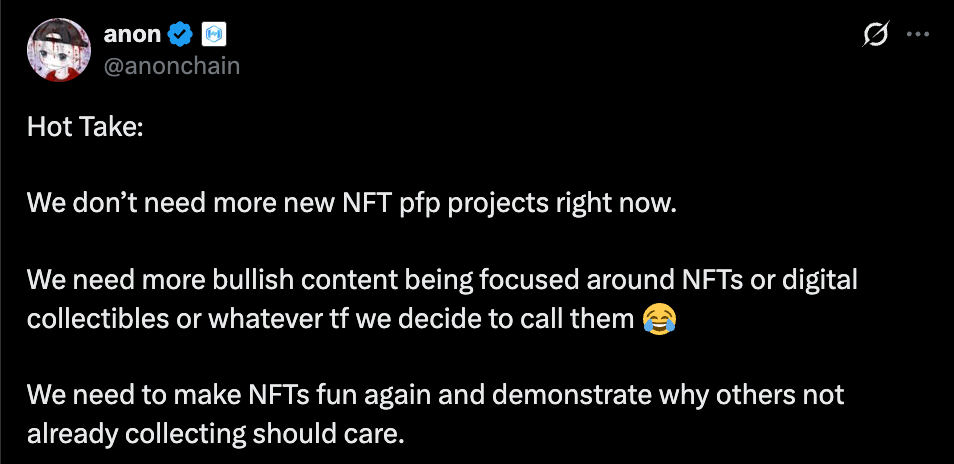
And the data doesn’t exactly argue otherwise. Trading volume is still trailing previous years, and most new launches land in a market that already decided what it values, and what it doesn’t.
The PFP Collapse Wasn’t Temporary
Let’s be honest about it. A huge portion of the earlier NFT wave didn’t just dip, it disappeared. Collections that once minted at meaningful prices now sit with almost no liquidity, or none at all.
What’s left is a much narrower market. A few strong projects with real communities or IP still hold attention, while everything else struggles to stay relevant. It’s less a cycle now, more a filter that already did its job.
Launching Is Easy, Building Attention Isn’t
Part of the issue is how easy it is to launch something. Creating a collection doesn’t take much time anymore. Building something people actually care about… that’s a different story.
And that gap shows. Teams focus on getting something out quickly, but skip the harder part, making it meaningful. Without that, even well-designed projects end up blending into the background.
The Real Problem Is Narrative, Not Supply
The deeper issue isn’t how many NFTs exist, it’s how they’re presented. Right now, the space doesn’t give outsiders much of a reason to pay attention.
Most of the conversation revolves around prices, speculation, or internal debates. That doesn’t attract new participants, it just recycles the same audience. And without new interest, growth stalls.
The Market Feels Closed Off
What we’re seeing now looks less like expansion and more like circulation. The same capital moves between the same collections, with very little fresh demand entering the space.
That creates a kind of closed loop. Active users remain engaged, but the outside world isn’t really watching anymore. And without that external attention, momentum becomes harder to build.
Culture Still Moves the Needle
The moments that break through tend to look different. Not new mints, but cultural signals. Big IP moves, unexpected collaborations, or moments that reach beyond crypto itself.
Those are the things that bring attention back, even briefly. And they highlight what’s missing, not more projects, but more reasons for people to care about them in the first place.
Attention Is the Real Scarcity Now
If the next NFT phase happens, it probably won’t be driven by volume or supply. It’ll come from projects that understand how to capture attention again, not just within crypto, but outside of it.
Because right now, NFTs aren’t short on ideas. They’re short on impact. And until that changes, launching more collections won’t fix much.