- NFT market is splitting between real businesses and fading collections
- Scarcity alone no longer drives value or demand
- Utility and gaming may shape the next phase, but execution is key
The NFT market isn’t dead, but it’s definitely going through something uncomfortable. The hype that once carried everything has faded, and what’s left is a much harsher environment where projects actually have to justify their existence. And honestly, a lot of them can’t.
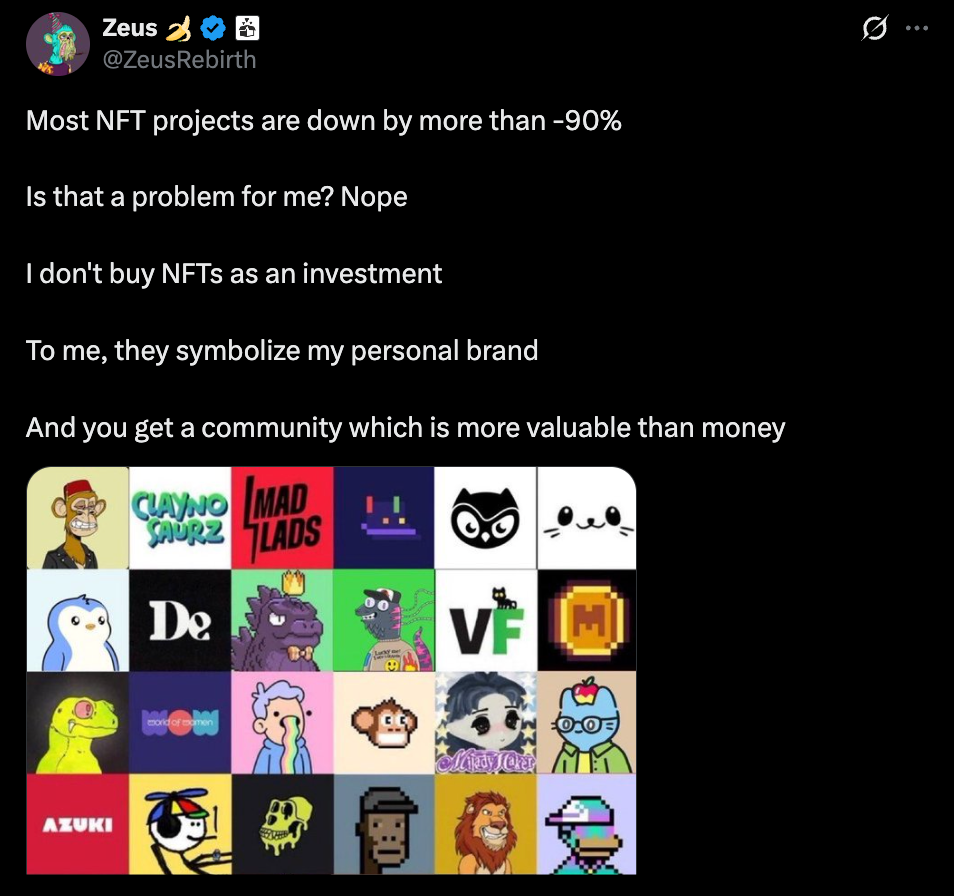
What’s emerging now is a clear divide. A small group of projects is evolving into real businesses, building brands, products, and revenue streams. The rest are… just kind of drifting, trying to pivot into relevance without a clear direction. It’s less of a transition and more of a filter.
Scarcity Alone Doesn’t Work Anymore
For a long time, the core idea behind NFTs felt simple enough. Limited supply equals value. But that only works if people actually want what’s being offered, and that assumption didn’t hold up.
The market has learned, maybe the hard way, that being on-chain doesn’t create demand. It only proves ownership. And ownership without interest doesn’t go very far. Projects that relied purely on scarcity are now scrambling, shifting toward merch, content, or branding without a real foundation to support it.
The Survivors Are Acting Like Real Businesses
The projects that are still holding attention share a common thread, they’re building something beyond the NFT itself. That could mean intellectual property, distribution channels, or actual revenue models. Some are moving into retail, others into media, and a few are experimenting with AI-driven expansion.
The key difference is that they exist outside the blockchain. The NFT becomes an entry point, not the entire product. And that shift feels necessary if anything is going to last.
Gaming and Utility Are Resetting Expectations
Gaming is also going through its own correction. The old “play-to-earn” model collapsed because the incentives didn’t hold up. What’s replacing it is a more grounded idea, “play-to-own,” where assets have actual utility rather than acting like yield mechanisms.
That transition isn’t fully proven yet, but it points toward a direction where NFTs are tied to experiences rather than speculation. And that’s a much harder model to execute, which is why only a few projects are getting it right so far.
Liquidity Isn’t Always a Solution
There’s also growing interest in tokenizing NFT intellectual property, which sounds promising at first. More liquidity, broader access, bigger markets. But it comes with trade-offs that aren’t always obvious.
As assets become more tradable, they attract short-term participants who care more about price than the underlying brand. That can dilute the community and weaken the long-term value the project is trying to build. It’s a balance most teams haven’t fully figured out yet.
The Easy NFT Era Is Over
NFTs aren’t disappearing, but the version that relied on hype and quick flips is. What’s left is something more demanding, less forgiving, and probably more real. Projects now need to give people a reason to care beyond speculation.
And that’s the uncomfortable part. Most weren’t built for that. The market is starting to recognize it, and it’s adjusting accordingly.