
- The Fed chair nomination removed political uncertainty that metals were pricing in
- The selloff was driven by positioning and liquidity, not a shift in fundamentals
- Safe havens briefly behaved like high-risk momentum trades
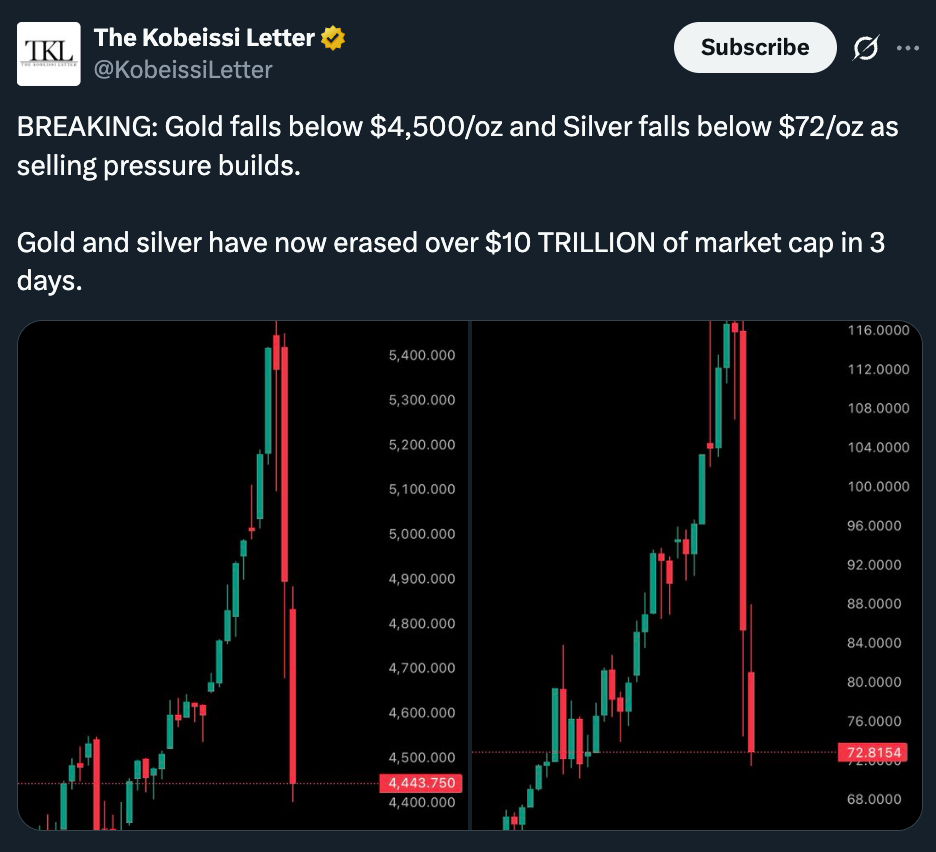
Gold and silver did not unravel because Kevin Warsh outlined some dramatic new monetary doctrine. They unwound because his nomination answered a question markets had been trading for months. Investors were paying a premium for uncertainty, betting that the Federal Reserve would slide deeper into political chaos. Warsh’s selection signaled stability instead. Once that fear premium disappeared, prices had to reset, and they did so violently.
Confidence Replaced Fear, and Liquidity Vanished
The speed of the move matters more than the size. Gold slid roughly 12% from its highs, while silver dropped more than 30% from its peak. Those are not patient reallocations. They are forced exits. As the dollar strengthened on expectations of a steadier Fed, the trade that everyone owned at once suddenly found itself without enough buyers to absorb the rush for the door.
When Safe Havens Turn Into Momentum
Gold and silver had stopped acting like insurance and started acting like emotional bets. They were hedges against politics, war, central banks, and systemic stress all at once. Once one of those pillars cracked, the entire structure collapsed. At the worst point, gold was more volatile than Bitcoin, which should tell you everything about how crowded the positioning had become.
The Setup Was Already There
Silver had surged around 150% over the prior year. Gold was up more than 65%. Moves that clean rarely unwind gently. Risk was already embedded in the price, and the Fed chair headline simply gave traders permission to take profits all at once. The unwind was brutal, but it was also predictable.
Conclusion
This was not a rejection of gold or silver as long-term assets. It was a reminder that even safe havens can turn fragile when they become consensus trades. The Fed chair decision did not change the global outlook. It changed positioning. And in markets, that is often all it takes.