- Markets now expect fewer Federal Reserve rate cuts this year
- Rising oil prices and geopolitical tensions are fueling inflation fears
- Crypto investors are closely watching Fed policy shifts
Expectations for Federal Reserve interest rate cuts this year are quickly fading as rising oil prices fuel fresh inflation concerns. Bond markets have already started adjusting, with traders reducing their outlook for monetary easing in the months ahead. The shift is happening just as global geopolitical tensions intensify, creating additional uncertainty across financial markets.
Interest-rate swaps tied to upcoming Federal Reserve policy meetings now price in roughly 20 basis points of easing by the end of the year. That’s a noticeable drop from about 30 basis points just a day earlier. At the end of February, markets had been expecting at least 50 basis points of cuts, equivalent to two quarter-point reductions.
Oil Prices Are Reshaping Rate Expectations
The change in expectations comes as energy markets react to escalating geopolitical tensions. Since the United States attacked Iran on February 28, investors have demanded higher yields to compensate for the risk that rising oil prices could push inflation higher again.
Treasury markets have responded quickly. The selloff in government bonds continued Thursday, with the 2-year Treasury yield climbing roughly 10 basis points to around 3.76%. Higher yields often reflect investor concerns that inflation may remain elevated for longer than previously expected.
When energy prices spike, the Federal Reserve faces a difficult balancing act. Cutting interest rates could stimulate economic growth, but it may also risk reigniting inflation at a time when policymakers are still trying to keep price pressures under control.
Trump Calls for Immediate Rate Cuts
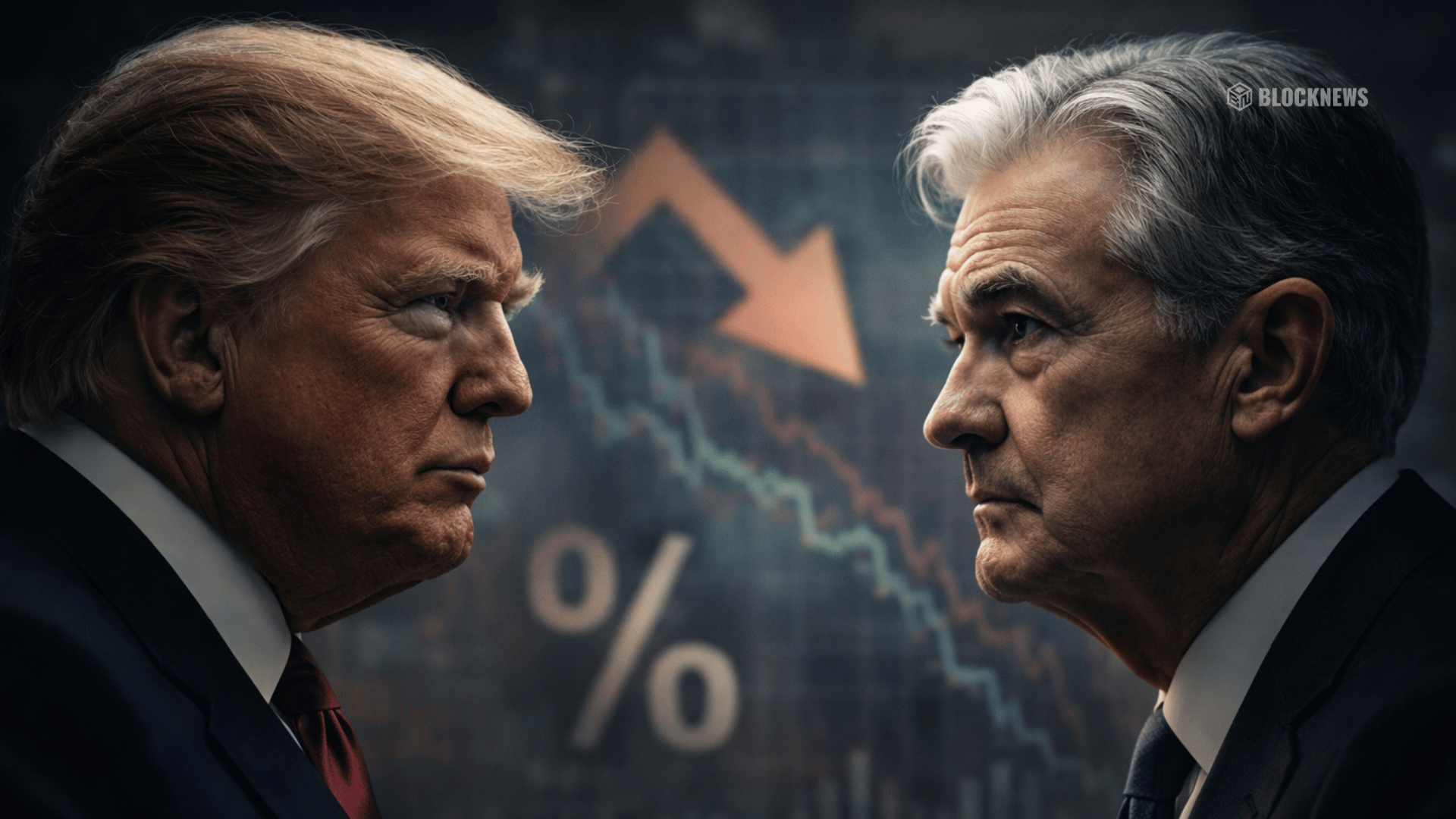
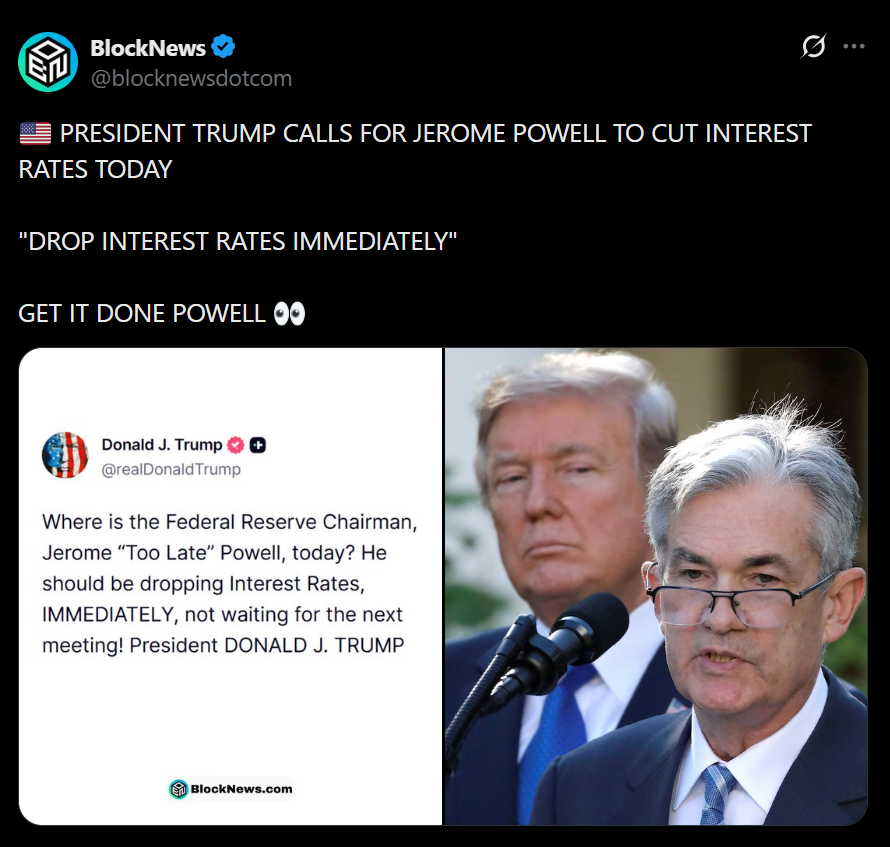
Amid the market turmoil, President Donald Trump publicly criticized Federal Reserve Chairman Jerome Powell. In a social media post, Trump referred to the Fed chair as “Jerome Too Late Powell” and urged the central bank to immediately reduce interest rates instead of waiting for the next policy meeting.
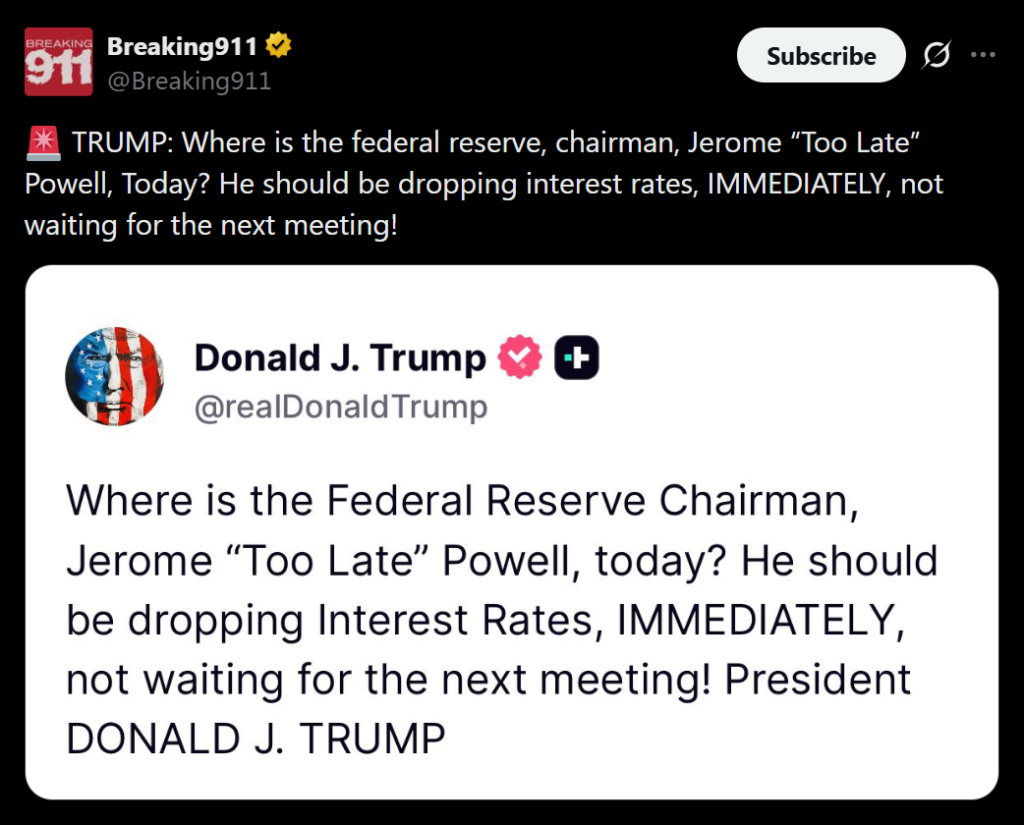
Trump’s comments highlight the growing political pressure surrounding monetary policy decisions. Lower rates generally support economic activity and can boost risk assets, including stocks and cryptocurrencies. However, the Federal Reserve typically moves cautiously when inflation risks remain elevated.
Fed Leadership Uncertainty Adds to Market Tension
Adding another layer of uncertainty, Trump’s nominee to lead the Federal Reserve, Kevin Warsh, is still awaiting Senate confirmation. Until that process concludes, Powell remains in charge of guiding the central bank’s response to the current economic conditions.
For investors, the situation creates a complicated outlook. Markets are trying to balance geopolitical risk, inflation pressures from higher energy prices, and the possibility of future policy shifts depending on who ultimately leads the Federal Reserve.
Why Crypto Investors Are Paying Attention
Changes in Federal Reserve policy often ripple across global financial markets, including crypto. Lower interest rates typically increase liquidity and encourage investors to take on more risk, which can benefit digital assets.
For now, the bond market’s reduced expectations for rate cuts suggest tighter financial conditions may persist longer than previously expected. But if geopolitical tensions ease or inflation begins to cool, the outlook for monetary easing could shift again, something crypto traders are watching very closely.