
- Fed keeps rates at 3.5%–3.75%, signaling tighter conditions ahead
- Only one rate cut projected, limiting near-term liquidity relief
- Crypto and stocks drop as inflation and oil shock concerns rise
The Federal Reserve decided to hold interest rates steady at 3.5% to 3.75%, a move that was widely expected but still impactful once confirmed. Alongside the decision, the Fed released its first Summary of Economic Projections for 2026, showing that policymakers are still only anticipating a single rate cut next year. That’s not exactly the kind of dovish shift markets were hoping for, and you could feel that hesitation almost immediately.
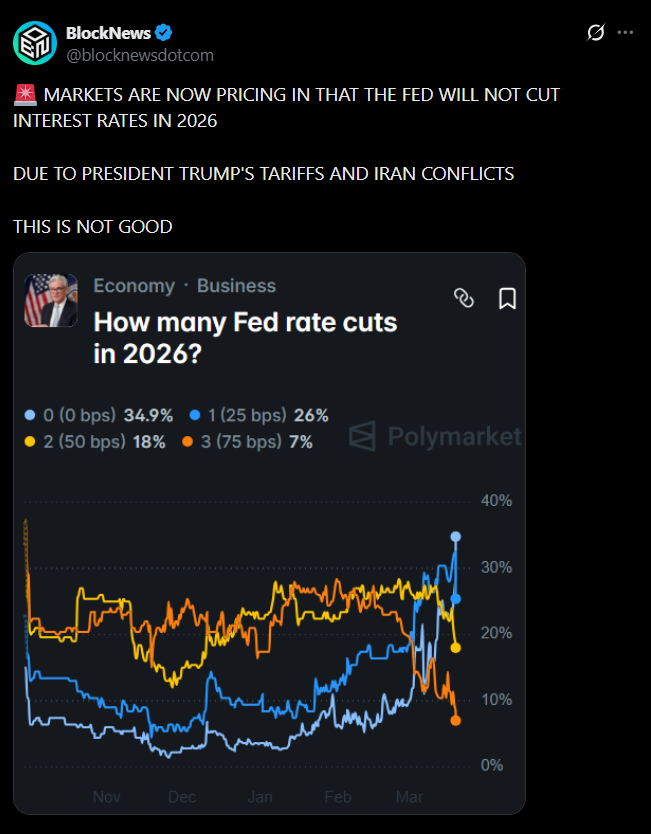
In fact, this outlook hasn’t really changed much from previous expectations. Back in December, the median forecast also pointed to just one rate cut, suggesting the Fed is staying cautious, maybe even stubborn, when it comes to easing policy. For crypto markets, that matters more than it might seem at first glance, because liquidity expectations often drive momentum.
Powell Flags Inflation and Oil Risks
During the press conference, Fed Chair Jerome Powell made it clear that uncertainty remains high, especially with the recent oil shock tied to geopolitical tensions. Rising energy prices complicate the Fed’s path, since they can push inflation higher at a time when progress toward the 2% target has already been slower than expected.
Powell also acknowledged that inflation hasn’t cooled as much as policymakers had hoped. Combine that with signs of a slowing labor market, and you get a pretty tricky situation. The Fed is trying to balance competing risks, but in doing so, it’s keeping financial conditions tighter for longer.
Markets React With Risk-Off Sentiment
Markets didn’t take the update particularly well. Stocks moved lower following the announcement, reflecting concerns that rate cuts may not come as quickly as investors had priced in. The added uncertainty around the Iran conflict and its impact on oil prices only deepened that reaction.
Crypto followed a similar pattern. When liquidity expectations fade and macro risks rise, digital assets tend to face pressure alongside traditional risk assets. It’s not always immediate or dramatic, but the direction becomes clear as sentiment shifts.
What This Means for Crypto Moving Forward
The key takeaway here isn’t just that rates were held steady, it’s that the Fed isn’t in a hurry to ease. With only one projected rate cut and ongoing inflation concerns, the environment remains relatively restrictive for risk assets, including crypto.
If oil prices stay elevated and inflation proves sticky, the Fed could remain cautious for longer than markets expect. That keeps volatility in play and limits the kind of liquidity-driven rallies that crypto often depends on. For now, the macro backdrop is doing most of the talking, and crypto is listening, whether it wants to or not.